BOOK PURCHASE: Discount (above) or PayPal (below)
Click "Buy Now" to continue to PayPal
Click to order eBook - Kindle

Click to order eBook - Nook

Aug
2
RIVER FISHING – GREAT THERAPY
Filed Under Combat PTSD, Events, Fishing Therapy, Healing, Healing Waters, Peace, PTSD treatment, Tears of a Warrior, Veterans | Comments Off on RIVER FISHING – GREAT THERAPY
by Janet J. Seahorn, Ph.D

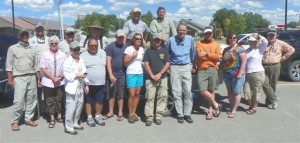
There are few things in life that can take your mind off trouble more than a special day on a beautiful river. Last week the Platte Valley Trout Unlimited Chapter located in Saratoga, Wyoming had the opportunity to take a group of wounded veterans from the Cheyenne VA Medical Center on just such a trip. The excursion began with an amazing barbecue put on by members of the chapter and local volunteers. It seemed like almost everyone in the community wanted to contribute something from ice cream to napkins. Children from 4-H served food, helped clean up, and simply added their youthful energy to the evening.
The next morning began early with breakfast which proved there is nothing wrong with a warrior’s appetite. Then off to the river, which is a logistical bussle of shuttling boats, equipment and people to one of the river’s launch site. Vice-President and project coordinator of the Trout Unlimited Chapter, Steve Hays, was a bundle of nerves as he wanted to make sure every detail of this event went perfectly. Again, all the shuttle drivers, helpers, boats, and guides donated their time and efforts to making the fishing trip an amazing experience.
The guardian angels of fishing trips could not have arranged a more beautiful day for a float. The water was dazzling with light, birds seemed to have arranged their chorus of unique songs for entertainment, and even the fish were cooperative. Private angling lessons were given throughout the day which proved to be quite successful for most of the veterans. Two warriors demonstrated their angling abilities by catching ten or more fish. Since the North Platte River has been running at flood stage since mid-May, having the water and its inhabitants somewhat normal was a real gift.
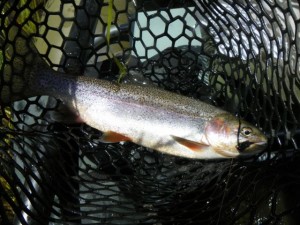
Yet, the most significant result of the float trip was its therapeutic benefits to the wounded warriors. Most of the group had not known each other before the overnight trip. What they found from these precious, short twenty-four hours is recorded in their comments below:
- I can’t believe people care that much about us.
- I had no idea other veterans continue to struggle with PTSD; I thought I was just weak.
- I really needed this… it’s been a long time since I felt I could relax and feel safe.
- The whole experience has been a true blessing.
- This is what makes healing happen.
- That was one of the best days of my life.
Formal therapy can and is very helpful to many military individuals healing from the trauma of combat. But it is only one ingredient of the recipe. Being with others who have suffered similar wounds, knowing that others care and appreciate their sacrifices and experiencing the beauty and serenity of nature offers one a sense of peace, safety, and the faith that perhaps some divine presence may truly be keeping watch over them.

Yep, Fishing Therapy… the new, ground-breaking, effective line of defense against the scars of war.
Jul
26
PERSONAL FORGIVING
Filed Under Combat PTSD, Family, Giving, Healing, Life, PTSD, Trauma | Comments Off on PERSONAL FORGIVING
by Janet J. Seahorn, Ph.D

There is a saying in the bible stating, “Forgive and ye shall be forgiven”. Yet, here’s the dicey part for many of us, some times it is harder to forgive ourselves for things we have and have not done (some of which are more perception than truth) than it is to forgive others.
Military men and women who serve in intense combat zones must learn to identify and face up to their experiences from their emotional position if they are to begin to heal. Putting “these feelings into words or some other symbolic expression”, as Bessel van der Kolk asserts, helps complete the story in a restorative manner. Everyone has things they have done that they wish could be forgotten. The problem occurs when we can’t just forget, or the personal blame continues to grow. The burden gets heavier unless some of the weight is released. We cannot be set free until we understand that we’re not fully responsible for much of the trauma that took place in our lives.
As humans, many of us tend to take too much ownership for circumstances that are far beyond our full control. We simply do the best we can, and sometimes that “best” does not feel good enough. Forgiving ourselves is an important step in the healing process. Without personal forgiveness, we hold too much anger, sadness, and anguish in our minds and bodies. It is little wonder we become emotional and physically drained.
Realistically, I do not condone the open spilling of our feelings. Sometimes when I have been overly urged to do so, I left the exchange even more vulnerable and irritated. And I definitely did not want to be in the presence of that person anytime soon. It is only when we can begin to share with someone who is open to listening and able to keep our words in confidentiality can we feel safe enough to share our story. Trust is crucial. Patience is necessary. Hope for living a better life is essential.
Daniel Siegel writes about the importance of “feeling felt” when sharing emotions. We cannot “feel felt” if, when sharing our stories, we are constantly being interrupted, interrogated for more details, or given advice on how we should or should not have acted or felt. Such disruptions only validate our instincts to suffer in silence. Unfortunately, unspoken suffering only compounds the problem and adds to the burden.
The challenge is finding the right person (or people) at the right time to begin your dialogue. For many of us it may or may not be a close family member or friend. Sometimes talking to a reliable “stranger” can bring clarity to our experience.
Begin to explore who may be your safe sounding board. In doing so, the weight of your story may begin to diminish. You may just realize that carrying this burden is no longer helpful or necessary. Free yourself of the guilt. Free yourself of the pain. Free yourself of a past that can now be accepted, learned from, and honored.
You deserve no less as you live towards that healing place in your mind, heart, and body.
Jul
19
HEALING DAD
Filed Under Combat PTSD, Healing, PTSD, PTSD treatment, Tears of a Warrior, War | Comments Off on HEALING DAD
by Janet J. Seahorn, Ph.D

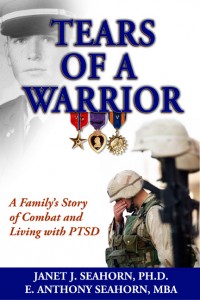
It was Father’s Day and I got to thinking about all of the vets who are fathers and all of the special moments we shared as a family, as well as the times when things weren’t all that peaceful. In our book, Tears of a Warrior, we wrote that the good things far out numbered the bad. Yet, those difficult periods left lasting wounds; wounds that still remind us of the challenges of living with Post Traumatic Stress. Healing the wounds within us and the wounds inflicted on our loved ones can be a life long endeavor – a journey that poses some questions in order to mend the injuries.
First, identify who has been wounded and who do you need to help heal, besides yourself? Which relationships have been most broken by past and/or present actions? These can be spouses, children, siblings, parents, friends, and even co-workers. Identifying your “wounded group” will require a great deal of personal self-reflection and honesty. Not something most of us humans do well. Root-canals are easier to endure than admitting we have verbally harmed someone we care about due our unhealthy behavior.
What exactly needs healing? Things like trust wounds, word wounds, responsibility wounds. What actions impaired the ability of others to trust us? What did we do that makes us question if we can trust ourselves? When have we used words to inflict hurt? Interesting things – words; they can leave wounds that are longer lasting and harder to forget or forgive than many bodily injuries. Unlike physical bruises which can be seen on the outside of our bodies, words bruise the heart in ways that can neither be seen nor easily healed.
If you have been able to get this far, the difficult question of How can I mend these wounds? emerges. It isn’t important to do something huge; start with something simple which may not be all that easy. A phone call, a letter – personally I like Hallmark cards or even the new internet e-cards can be the beginning of saying I’m sorry, or Forgive Me. PTSD has been a bit like the words Jesus used on the cross, “forgive them for they know not what they do”. Because we did not know better, it was hard to do better. Most of us had no idea what PTSD was or how living through war left the veteran with residue that impacted his/her actions for years to come. Now we can get better by knowing more about the demons of combat.
Healing others helps us heal ourselves. It is a way of living forward with hope and personal forgiveness. It may be the only way we can diminish some of the demons allowing us to lead a more productive and peaceful life. Don’t wait another day to give yourself this belated Father’s Day gift. Some who have been wounded by our actions may not be ready or able to give forgiveness. This will be their journey. You can’t force forgiveness, nor can you take responsibility for it once you have assumed ownership of your own past actions. Take a deep breath, make that first step and conquer your fears and procrastinations.
“You may be disappointed if you fail, but you are doomed if you don’t try” (William Shakespeare).
Jul
11
NOW THIS IS RESILIENCE
Filed Under Combat PTSD, Life, PTSD, Tears of a Warrior, War | Comments Off on NOW THIS IS RESILIENCE
by Janet J. Seahorn, Ph.D

This is just one story of one veteran who served in World War II. We received it in a letter from a man who is approaching “89 years young”, as he proudly put it. His name is John and he wrote he has “good genes” and is of Irish and French Basque decent. What was so endearing about this letter is that it was type written, well some of it. Halfway through the letter his typewriter tape went out and he had to continue his story handwritten. The picture of this “young” man sitting at his old typewriter skillfully creating his message is really quite precious.
John’s story is much like countless military veterans. Part of his tale is chronicled in a book by James D. Hornfishcher, Neptune‘s Inferno – the U.S. Navy at Guadalcanal. This particular battle claimed the life of the first two WWII Navy Admirals killed during combat. Because his ship was in enemy territory being stalked by submarines, the rescue ship had to “put him in a metal basket, slung over the side on a long line to a destroyer”. From there he was transported to Fiji for several months of hospitalization. Eventually, John arrived back to the states where he spent over a year in rehab. But this was not the end of his healing journey. After leaving the hospital he was sent to another place in Yosemite National Park which served as a holding location for vets waiting for their discharge papers. Since there was no PTSD ward at the time, John explained, that he was “placed into a long, one room barracks building which was called the All-Messed-Up Ward”.
When John was injured, he was paralyzed on the entire right side of his body. He could not hear well nor speak much, which he humorously stated “much to the pleasure of the other patients… who wants to hear a US Marine Sergeant yak-yak”. His leg was severely injured along with loss of part of his skull. Due to his head injury he suffered many years with epileptic seizures. John admits he has struggled with PTSD (as has his brother who also served in the Marine Corp). Yet, throughout his letter there was a theme of humor, courage, and resilience. This combination of personal moral fiber aided him in living a full life.
One of the last things John wrote, I’m doing quite well, reminded me of the remarkable valor and stamina the vast majority of veterans possess. John wrote to thank us for our book, Tears of a Warrior. He said it helped explain some of what he went through during and after the war. In the end it is we who are honored to hear from someone who has endured so much, given so much in service to his country, and still continues to live with enthusiasm and pride.
Tony and I are deeply humbled to hear from individuals like John. It made those long years and challenges of writing our book worth the time and effort. And we continue to hope and believe that for everyone who has been wounded in any way during service to our country that If we send them, then we must mend them – no matter how long it takes or how much it costs.
John’s life is a testimonial to all of our military heroes.
Jun
30
“Remember Me”
Filed Under American Patriotism, Family, Fourth of July, Tears of a Warrior, Troops, Veterans, War | Comments Off on “Remember Me”
Jun
25
GOOD GRIEF
Filed Under Combat PTSD, Good Grief, Life, PTSD, Tears of a Warrior, Trauma, Veterans, War | Comments Off on GOOD GRIEF
by Janet J. Seahorn, Ph.D

Good Grief – sounds like words Charlie Brown would proclaim when something illogical occurred. When you think about it, he was not that off base using this phrase, Good Grief, because grief, at least the first phase of mourning, is anything but logical. Experiencing grief is not a rational process. It is gut wrenching and emotionally challenging. Grief by its very definition: “deep sadness or mental distress caused by loss, remorse, or bereavement” (Webster’s Dictionary) leaves the sufferer questioning if he/she will or can survive the agony.
Too many of our military men and women have had to bear the loss of friends. Yet, due to circumstances of the battlefield, they cannot take the time, energy, or effort to fully move through the grieving process. Each individual must be able to carry on without the luxury of grieving. In war, there is always another job to do, a new battle to wage, and perhaps even further loss. Add PTSD to the grief process, and the mountain to healing becomes even steeper to climb.
It is little wonder that our young and old warriors return from combat with unresolved issues. Many of these problems center around the grief process or more accurately, lack of resolving the immense weight of unsettled pain. If we were to look at the grief process described by Elizabeth Kubler-Ross’ five stages – denial, anger, bargaining, depression, and finally acceptance – it is pretty easy to identify where & why many can get permanently stuck in one phase or another. To complicate matters, real grief processing requires going in and out of the various stages for a long period, often times skipping phases only to be plunged back to that pit at a moments notice.
Families of vets often state that their loved one is in denial; denial that they are suffering, denial that there is anything wrong with them, and denial that they can handle the situation without help. Then there is anger; anger at the government who sent them to fight, anger at the enemy, anger at a civilian society that has no clue of what they went through, and most devastating is anger at themselves for not being strong enough to overcome the trauma of combat. As far as bargaining, most warriors don’t seem to bargain for much of anything except for a break to live without all of the emotional baggage.
What we see a great deal of, when and if a veteran reaches this next phase is depression. This is the phase that may be the most difficult to get through and endure without resorting to self medication. For many the moments between denial, anger, and depression can be small; often they are mixed together in a whirling mass of chaos. Achieving acceptance is seldom a permanent stage, a stage which many of our wounded warriors never attain even for brief moments.
Dealing with Post Traumatic Stress is dealing with grief. It is not easy; it is not quick; it definitely is not logical; and it is not a journey that any one of us should have to go through alone. Is there such a thing as Good Grief? Truthfully, I am not sure any grief is good, but I have witnessed and have personally gone through mourning that is doable. To be perfectly honest, I am not sure grief made me stronger, but it certainly made me more compassionate and gave me a deeper appreciation of each ordinary day where I can breathe freely without feeling my heart breaking.
And that in and of itself is pretty darn GOOD.
Jun
17
LIVING STORIES
Filed Under Combat PTSD, Life, PTSD, Tears of a Warrior, Trauma, Treating PTSD, Veterans, War | Comments Off on LIVING STORIES
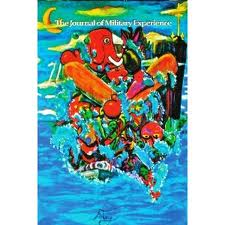
It came in the mail, a book from a professor at Eastern Kentucky University, The Journal of Military Experience. Most publications I get from universities are on topics that deal with academia, you know – ways to teach literacy, how the brain works, and other research topics. This book was different. It wasn’t written by a bunch of stuffy professors based on their special investigative studies. Nope, this book was written by a group of young veterans who had served overseas and were trying to reintegrate into civilian and academic life. Needless to say, many of the stories and poems were composed with emotions that were still raw from combat.
The authors were students in Professor Travis Martin’s writing class. The purpose of his unique course was to help with the initial assimilation phase of university life. “Some of the authors write about the unspeakable things that they have been asked to do, or more accurately, that have been done to them. But some focus solely on that work of translation, making sense of a warrior culture and the mentality of an individual who has been bred, trained, and conditioned by a society in desperate need of a few willing to sacrifice for the many (Introduction).”
The theme in many pieces confirmed how challenging returning from war was for these young warriors. They wrote about who they were before combat and how they had changed from the experience. How seeing friends die before their eyes, how being shot at on a regular basis, how tough it was to determine who would live or perish depending on their interpretation of an approaching car or a family on the side of the road, how these battle experiences made their time during and after conflict more demanding. One marine described “every day someone else would die or get seriously injured. One of my friends lost his legs from a roadside bomb right outside our front gate at 0200 in the morning (Guy Robert Lubin, p. 6-7)”.
Yet, in spite of all of the horror, all the wounds both physical and emotional, not one individual regretted serving his country. Not one person wished he/she did not complete a tour of duty overseas. What some did question, though, was when or if they would ever be free from the fiends of warfare. One author acknowledged “you truly stop caring. You don’t want to shoot, but you will. You won’t think about it, until you get home that is (Bradley Johnson, p. 53)”. He continued, “While you fight and suffer and struggle, you are also changing, becoming someone totally different. The harsh and violent realities of war forces you to change. Emotions are an inconvenience — they distract you — making you feel and think instead of react. A distracted soldier is a dead soldier. My evolution was a great thing on the battlefield, but it is just as much a bad thing when you get home (p. 53)”.
In this book, there are profound words and stories from those few who have given so much for freedom in our country and lands far away. They are “living stories” from real warriors. They ask nothing but a smidgen of understanding and a bit of healing when they return. For every vet past, present or future let us value the sacrifice and honor the service never failing to remember how all gave some, while some gave all.
Jun
13
WHAT YOU DON’T TALK ABOUT
Filed Under Combat PTSD, PTSD, Tears of a Warrior, Trauma, Treating PTSD, Veterans, War | Comments Off on WHAT YOU DON’T TALK ABOUT
by Janet J. Seahorn, Ph.D
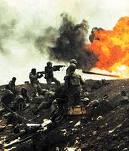
It was something I was not going to do – view the HBO special War Torn.
I tried watching it almost two months ago but didn’t last ten minutes before I had to turn off the DVD. It had too many reminders of suffering associated with the aftermath of combat. Yet, last night I decided to see what it had to say about PTSD, since this has been our mission for the last twelve years – including research & writing.
Throughout the movie there seemed to be a very powerful, recurring theme, a theme of silence. Silence made the veteran a prisoner of his/her own memories. It did not matter what branch of the military a person served – Army, Navy, Marines, Air Force, National Guard…
The role one played during combat was quite expansive, overwhelming individuals who served in all facets of war. From the front lines of combat, to medics, nurses, body baggers, and any person who had participated in the tensions of war. What was similar, however, was the manner in which the experiences were seared on the mind, body, and spirit. This mark of trauma often left the individual with a sense of hopelessness, apprehension, torment, and sometimes shame.
Then, to add insult to injury, when the vet came home… home to a place that he/she would feel safe and normal, returning to civilian life sometimes added greater stress. Many family members and friends simply wanted the vet to be like he was before he left for war. Become normal again.
Perhaps these words might offer some understanding of what isn’t talked about and isn’t said when a war veteran returns home.
THINGS YOU DON‘T TALK ABOUT
By Janet J. Seahorn, Ph.D.
What don’t you talk about,
You survivors of war?
You, who are suppose to be brave,
To be fearless and bold.
You, who have witnessed the best of mankind,
And the worst.
You, who daily endured death;
Who lived with the unknown
The woundedness of others
And the scars within yourself.
What don’t you talk about,
You warriors of battles recent and old?
The panic attacks that grip your throat,
The night sweats from vivid dreams;
Anxieties that propel you to a universe
That seems out of control.
Anger unprovoked and dangerously destructive.
The self-medication… attempts to silence
The voices and erase the gory scenes.
What don’t you talk about
You, who cry with Silent Screams?
You, who cannot seem to find your words,
For words are too simple, too clean
To describe your distress
To others who have no concept of war.
For what you don’t talk about
Your brother and sister warriors understand.
They have been to that place of darkness.
They know – and in that knowing
They are there to walk beside you
If only in spirit.
Perhaps these fellow casualties
Make talk a bit less necessary.
Jun
6
I AM
Filed Under Civilian life, Combat PTSD, Life, Love, Peace, PTSD, Tears of a Warrior, Treating PTSD, Veterans | Comments Off on I AM
by Janet J. Seahorn, Ph.D
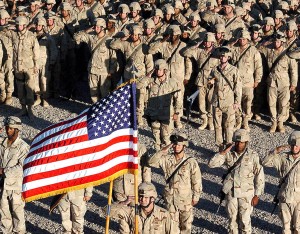
For many of our military men and women who return from combat there is a burning question; a question that asks, “Who am I?” Who am I now that I have seen so much, done so much, and heard the despair of so many? For some there may be a feeling of unworthiness, a gnawing numbness of pain. They seek answers that seem to elude them; answers hidden somewhere between the battle fields and the present.
Every person wants to be validated in the world: to be seen, to be heard, to be felt. Returning from war often leaves a person with a sense of invisibility. A feeling that adds to the question, Who am I … this other person who wanders a world that once was so familiar now feels like a drifter in a land that may not seem recognizable.
Know this one simple truth, You are worthy of love. You are worthy of goodness. You are worthy of a life of joy and personal fulfillment. The trick is not that others view you as worthy. You must believe this for yourself. “You are responsible for your life”. And only You can create and live such a life. You alone must believe that you are worthy to live a good life and a life of meaning.
Combat can take one’s sense of self, but it does not take away one’s need to be a part of something, some mission, some worthy cause. The heartbreaking reality for many veterans is returning from battle with a frame of mind of being untrained to live in civilian society. You will need to work hard to find your path in this world after combat. No one can do this for you. It is a journey each individual will need to travel and seek out.
Some doubt they are up to the challenge. This is purely self deception. If you could be trained to perform all of the incredible feats of a skilled warrior, you certainly have the strength, intelligence and willpower to succeed in becoming your very best “I AM”. The gift has always been yours. It was bestowed on you at birth. The outside world may work hard to convince you otherwise. Some days it may be tempting to give up the search. But carry on. In your hands lies the power to choose.
Choose to accept your very best I AM.
May
29
Memorial Day Remembrance
Filed Under American Patriotism, Combat PTSD, Memorial Day, Tears of a Warrior, War | Comments Off on Memorial Day Remembrance
Remembering All Who Gave Their Lives For Their Country!
A special tribute to a Marine:
http://00f2630.netsolhost.com/farewellmarine.html
