BOOK PURCHASE: Discount (above) or PayPal (below)
Click "Buy Now" to continue to PayPal
Click to order eBook - Kindle

Click to order eBook - Nook

Jan
26
HIDDEN IN PLAIN SIGHT
Filed Under Combat PTSD, Life, Peace, PTSD, TBI & PTSD, Tears of a Warrior, Trauma, War, Wisdom | Comments Off on HIDDEN IN PLAIN SIGHT
by Janet J. Seahorn, Ph.D
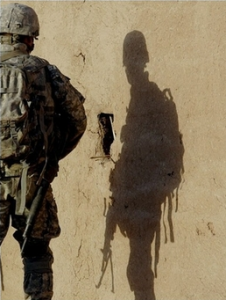
There is a phrase that one hears every now and then, Hidden in Plain Sight. Four simple words that eloquently reveal the complexity of the impact of trauma on one’s mind, heart, and soul. We see the person; we look at the eyes, the body language, the being’s form. The suffering is present in plain sight for all to witness. Yet, few do, lacking the keen observational heart skills required to notice anguish.
There are days I wish I didn’t see it – the faces of children battered by abuse and neglect; the adolescent’s depressive absorption into the ugly world of alcohol and drugs, and the veiled, but ever present ghosts of veterans, young and old carrying their memories of war. They haunt me as the world moves around their pain because it is hidden in plain sight.
Much like ‘Don’t Ask, Don’t Tell’, we are a nation that prefers to maintain our equilibrium at all cost. We tend to be uncomfortable with sorrow even when it stands knocking at our front door asking only for recognition and a bit of compassion.
We say we are a nation of empathy, yet often dismiss the humanity that exists in every person, especially those with whom we don’t agree. We argue we are intelligent, proficient thinkers, yet fight rigorously to disqualify any information that does not align with our personal paradigms/beliefs, whether true or misleading, without accurate evidence or data.
The answers to our current and future problems are available, but for too many they are hidden in plain sight. It will take incredible courage to look into our own minds and hearts searching for what is right and true. It will take courage and honest self-reflection to heal the hidden wounds of the wounded, but it can be done. What lies before us does not need to consume us with fear or apprehension. When confronted, trauma and pain can be overcome and no longer hidden or carried alone.
Light and sunshine are incredible healers.
Dec
9
DO YOU SEE WHAT I SEE
Filed Under Christmas, Combat PTSD, Life, Love, Peace, Tears of a Warrior | Comments Off on DO YOU SEE WHAT I SEE
by Janet J. Seahorn

A favorite Christmas carol asks the questions, “Do You See What I See”? “Do you hear what I hear?” “Do you know what I know?” During this holiday season, where many do not feel so holy; where many do not hear the sounds of joy that carols bring and angels sing; where many have yet to believe that good still exists, perhaps there is a message of gentleness if we are strong enough to trust.
Yes, I realize I am an optimist. Truly, it is one of my best qualities, besides a distorted sense of humor. There would be no “today” for me if these gifts were not part of my being. I am pretty certain I would have given up a long time ago for that choice certainly seemed easier. Yet, I’ve always known giving up wasn’t an option or a model I wanted to give others, especially my sons.
So, what do you see? In this challenging world of war, political disgust, and self-centeredness there are abundant examples of crap. But look around. Beauty is, also, everywhere – in the face of an innocent child, in the brilliance of holiday lights; in the fresh whiteness of snow… it exists if we look. On my refrigerator I have a post-it-note that says, “Focus on the possibilities, not the limitations”. It is life-saving advice.
Next, what do you hear? Undoubtedly I hear the weeping of those in pain both physical and mental. Those who have experienced inconceivable loss. Those who live with the memories of combat past and present. Those who are challenged by sickness. Physical aches are difficult, but emotional wounds are far more exhausting, for emotional pains are the ones others cannot see or hear. These are the silent screams of the soul, and they demand a great deal more stamina. Often these cries seem to overpower the humanity of our being. Such times will demand we listen for what is decent and soothing; a breeze rustling in the leafless trees, a favorite song, a small child giggling over a ringing silver bell, or the quiet gaze of love that says more loudly than any words… we are cared for more than we can imagine.
What do you believe? Do you believe in the seen or what is unseen? Believing is a choice. As a scientist I rely on hard, quantifiable data to answer research questions. However, the world’s most noteworthy gifts cannot be counted or even proven. Gifts such as goodness, love, and miracles are beyond the “proofs” of men, yet they exist. One cannot measure honesty; he cannot measure wonder, nor is he capable of determining the reality of love. Yet, these exist. These are the staples of our days. They allow us to continue living in spite of our frustrations and grief. They are more powerful than any pill, any counseling program, or any doubts.
As you move through your sometimes difficult days, focus on the good things you see; listen for what soothes your heart; believe in your personal power and the vast energies of good which are still present in our lives. And believe, “what is needed is on its way, right now”!
Look, listen, Believe.
Apr
23
Dog—–God
Filed Under Combat PTSD, Dogs, Pets, Tears of a Warrior, Treating PTSD | Comments Off on Dog—–God
by Janet J. Seahorn

Look into the face of your loving four-legged pet, and I would bet you would see the eyes of GOD. A being so unconditionally loving and faithful, that nothing or no one could keep it from being near our sides. We have written several times about the value of pets. For someone living with Posttraumatic Stress or a serious Traumatic Brain Injury, pets can offer a sense of comfort and well-being that are beyond modern medications; and the side effects are far more positive.
We get many comments and videos from our readers testifying to the upbeat effects their pets have had on them. This week a friend sent us a one we had not seen before. We thought many of you would enjoy viewing this short and touching piece. We also included another written story that has appeared over the internet on many occasions. More than likely, most of you have read it, but every time I see it, and am tempted to delete without reading… something pulls me to the picture and I begin viewing it once more, ending always with tear filled Kleenexes.
You see, this last piece is a true chronicle of what many of our service people and their loving pets sacrifice for our country. Not everyone understands that pets pay a high price for their masters’ deployment. Yet, they do, silently, patiently waiting for that one special person to return. There is no greater joy than the homecoming of a beloved member of a family.
So here is to DOG and to GOD: D = Devotion; O = Omnipresent; G = Goodness/Gift; in any order it means the same thing.
Apr
1
Hippity, Hoppity and Snotty Vets
Filed Under Combat PTSD, Easter, Events, PTSD, Tears of a Warrior | Comments Off on Hippity, Hoppity and Snotty Vets
-by Janet J. Seahorn

Gosh, can you believe it is Easter/Passover and once again families gather to celebrate the spirit of the season. Many will also hunt Easter eggs, gorge on chocolate bunnies, and enjoy family dinner and getting together. This is a time to rejoice, but can also be a time of turmoil. There is ample opportunity for our Snotty Vets to practice breathing, self-control, and “looking” cheerful – even if it’s only a facade. Today I woke with the children’s rhyme of “Here Comes Peter Cotton Tale”, but instead of the regular words this is what came to mind:
Here comes Peter Cotton Tail
Hopping down the combat trail,
Hippity, Hoppity, Demons on the way.
Yikes! How weird is that! Yet, the reality is many people who have suffered severe trauma find holidays incredibly challenging. When everyone around appears to be laughing, enjoying company, having a great time, for some with experiences of trauma, all this joy may simply exacerbate the feeling of depression and isolation. You desperately want to join in the festivities and you desperately want to feel normal. So the downward spiral continues.
Last blog I wrote about Snotty Fish and Snotty Vets. In reflection I remembered past family gatherings where my Snotty Vet tried anxiously to fit into the interactions. He participated gallantly until it got to be too much, which is when the teapot began to spout. Too much steam building in a confined container and something has to give. If only we had known about PTSD, its effects and ways of coping, family gatherings could have been much saner and safer for everyone.
Therefore, here are a few suggestions that have worked for us. We discovered these over many years of observing roller-coaster emotions.
- Don’t try and force your Snotty Vet to participate more than he/she is able.
- Allow them to swim in whatever pond helps them to feel safe and calm.
- Plan the loud festivities that can be annoying for many – not just Snotty Vets – to be in places that are outside or in very large surroundings. By being smart, it reduces the tension and permits everyone a chance to find areas that aren’t so irritating.
- Be thoughtful about the length of time anyone has to spend taking part in the activities.
- Be sure to find a good balance in how you celebrate. Be reflective and enjoy some quiet time as well.
Oh, and be sure to have a Happy Easter/Passover. Celebrations are still important to cherish. They can be the occasions that help us bond more tightly and even heal a bit.
And be sure to be kind to bunnies that wear combat boots.
Mar
24
SNOTTY FISH AND PTSD
Filed Under Life, Love, PTSD, Trauma, War | Comments Off on SNOTTY FISH AND PTSD
by Janet J. Seahorn
 This weekend I heard an experienced angler talk about the joys of being in a stream or lake fishing for Snotty Fish. Snotty Fish, he thoughtfully explained, were those fish that were not easy to catch. They were fish that could not be tricked by some ordinary fly or enticing lure. More than likely, such fish had, in some earlier time, been caught before and managed to escape through sheer luck, tenacity, or down right determination. After going through such a traumatic encounter, they were more cautious than most of their finned friends. They understood the consequences of impulsively taking the enticing lure. Therefore, the fisherman who caught (and released) such a Snotty Fish had to be incredibly patient, knowledgeable, and persistent. This particular angler made it clear that catching Snotty Fish was the best and most rewarding way to angle.
Listening to this person talk, I began to comparing how similar Snotty Fish were to veterans who are living with Post-Traumatic Stress. Many of our troops have experienced the traumas of combat. Men and women who have seen and participated in some of humanities worst deeds; deeds that stay etched on the mind and heart. Vets, who when they return to the mainstreams of society, may be unable to trust others, their governments, and even themselves. Yep, Snotty Vets!
Snotty Vets, like Snotty Fish, are often hard to play out. They have experienced lessons in life that few of their fellow countrymen have ever imagined. Such knowledge often makes them wary of their surroundings, including trusting in their own abilities and worthiness. For family and friends, this knowledge can make these Snotty Vets difficult to live with and understand.
Yet, here is the beauty of being in streams with Snotty Vets—they are worth the time and effort to catch and reel back to wellbeing. Health care professionals recognize this fact. Families, friends and communities who walk the path through appropriate support, timely information and love come to empathize with the journey and value the internal strength, courage, and effort that each of them must live out in order to heal.
So you see, Snotty Vets like Snotty Fish are well worth such effort. Simply swimming in their waters help us have greater gratitude for their sacrifice.
Here’s a toast to all of you Snotty Vets, and to all the spouses, children, and siblings of Snotty Vets: “May your new streams be filled with an abundance of peace, joy, and good vigor. May your days bring you fulfillment, and your nights quiet rest. And may you continue to embrace your Snotty strength and leave behind the sorrows of the battlefield. For you are our precious Snotty Vets. We love you. We honor you. And, most of all, we need you to become whole again.”
Mar
9
 by Janet J. Seahorn
Some days life is a real challenge. It tests us in many ways. Ways to be smarter. Ways to be braver. Ways to be more thoughtful. Ways to be kinder and more compassionate. And some days, ways to just keep getting up every morning, breathing through each minute and making it through some dark and lonely nights. Living with Post-Traumatic Stress compounds all of these “tests”. At times it may even seem that the journey is too long or too brutal; that the suffering is unending and the battle unachievable. It is during such times that we must remember we are not alone in our ordeals. Reminding that someone, something (for me it is my faith) is walking beside us telling us quietly that we will be OK. Urging us, “Don’t Quit”. We do not know what tomorrow may bring. But if we Don’t Quit, I do believe in the appearance of a brighter, happier day. Believe you have what it takes to pass any test. And whatever comes your way —Don’t Quit!
Don’t Quit |
|
|
Anonymous |
|
|
|
|
|
Jan
28
Tears of the Children
Filed Under Trauma | Comments Off on Tears of the Children

by Janet J. Seahorn
Normally our blog focuses on the effects of combat trauma to military personnel, their families, friends, and communities. Today is moving to the broader devastation of trauma. Trauma not caused by war and hate, but by nature. Trauma, that even with the greatest technological advances of man, cannot be halted or many times even predicted beforehand. Such is the current state of Haiti.
For me the effects of war trauma on children may be even worse, because it is not due to outside forces of nature, but hate, greed, or lack of compassion for others. Hate which is colored by the darkness of men’s hearts and even nation’s souls. Unlike nature, the torture and killings go on for years, with little hope of relief.
In Haiti, however, what we continue to see are a people doing what they can to help their neighbors and communities. Yes, there is looting and even violence. Desperate people act in desperate ways when one’s life, and the lives of one’s families are at stake. Fighting for the every day things most of us take for granted: water, food, a safe place to sleep, medical care… and the list grows.
When looking at the photos of children, I can’t help but wonder what are they able to understand about this terrible event? How can they make sense of horror? In a country where hundreds of thousands of children were abandoned before the earthquake, who will take care of these babies and children now? Who will hold and comfort them? Who will help to explain the experience and give them the physical and emotional support to heal?
What we currently know about childhood trauma is that it can be more difficult to heal. The brain has not connected the higher order neural networks that help adults sort out the facts of any event. Adults have far more coping skills. Children, have far fewer in their young minds. They have not lived long enough or had enough experiences to compare or sort out the hues of trauma. Their world is very concrete – what one sees is what one understands at a very concrete level.
We used to believe if a terrible act happened early in life, the person could more easily mend. Current neuroscience has proven this belief is a highly inaccurate myth. The earlier the trauma on a young brain, the worse the effects can be if the child is not given the physical and emotionally support needed for healing. Healing that will allowed the child to grow in a world where he/she can still feel safe. Healing that offers hope and resilience from future traumas because they were loved, comforted, and supported when they so desperately need these acts of security.
Therefore, keep all of our children in your hearts and prayers, whether they are in Haiti, Afghanistan, or your own neighborhood. Pray for the mending of our children’s bodies, minds, and hearts. They are the world’s future. We must do all that is necessary to try to ensure that their future is built on a foundation of compassion, kindness, and humanity.
Jan
19
The Nightmare Revisited
Filed Under Life, Peace, Today's War, Trauma, War | Comments Off on The Nightmare Revisited
By Janet J. Seahorn
Last year at this time, Tony and I were in Vietnam and Cambodia. It was a humbling, yet inspiring excursion. As Tony stated many times, he did not go there to heal or recreate the war. He wanted to visit, only to see how things had changed, with hopes that the people and the country were mending.
By all outward appearances hope seemed to be occurring. Yet, what keep coming back to me, were the faces of the old women. We did not see the same number of older men, perhaps because many of this age were killed in the war. The women’s faces were not happy. Their features lined with rivers of anger. It was the eyes that held the emotions, and for many, their emotions were tortuous and hate-filled. What haunts me now are the faces I glimpse in the newspapers of civilians in Iraq and Afghanistan; similar looks living in human bodies experiencing similar horrors of war.
As we continue to read of the escalation of suicides of returning military men and women, I wonder if such unforgettable faces are haunting them. Faces of the enemy, faces of their comrades, faces of the children? In the first few blogs of this New Year, I wrote of Peace. Can it be attained in a person’s mind and heart after experiencing so much? I very much want to believe such a peace is possible. For others, the hideous experiences continue to dig deeper ravines into the soul. To heal, even a bit, these gorges must be filled in gradually.
Perhaps not fully, but even building up the crevasses a little keeps one from falling into the yawning depths of depression, anxiety, and hopelessness. As long as one can look up and see the sky, hope is present. It is when one’s existence is swallowed in darkness that even the tiniest light is diminished. Finding ways to keep the sunlight accessible for our returning vets will be the work of everyone: the nation, its people, families, friends, communities, and most importantly, the veteran.
We have troops leaving daily for the war zone, and others returning. A 2008 Rand Corporation study revealed that 300,000 troops who served in Iraq and Afghanistan had Post-Traumatic Stress, while 320,000 reported probable traumatic brain injuries. Both conditions greatly increase the likelihood of attempted suicide. “According to a Congressional Quarterly compilation in late November 2009, 334 active-duty military service men and women have taken their own lives in 2009” (Edward Pages, 2009: The Year of Soldier’s Suicide), and this does not include those military individuals who have been discharged.
Let us all be sure to look into these eyes of freedom and not dismiss the signs of their sacrifice. Peace and healing is everyone’s work; everyone’s answerability. As a nation, it must be our core mission to mend and heal all those that fought in lands where few of us ever think to venture.
I doubt if many of our returning military personnel have rational thoughts of wanting to return to the combat zone. It took almost forty years for us to do so.
One of our favorite veterans, Michael MacDonald, wrote us the other day relating his response to those who frequently ask him if he ever wants to return to Vietnam for a visit. His reply, “Why, I was just there last night.”
And, for many, this statement is all too true. It is those nights without returning that we pray for in our sleep and dreams. It is those nights without revisiting the nightmares that keep us healing.
Jan
12
Another Perspective on War
Filed Under PTSD, Today's War, Trauma | 1 Comment
by Janet J. Seahorn
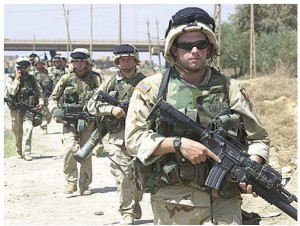
It is a snowy Sunday afternoon. I have been running errands, not because I have a great deal to do after the holidays; to be honest, I am merely trying to keep from thinking about the escalation of the war in Afghanistan. When I got home, Tony had posted a new message on our blog that began with “I seem to spend a lot of time thinking about war, even when I don’t want to. The reality of war. The horror of war…” With this blog he added an article from our local newspaper, The Denver Post. It was another reality check from troops actually involved in war, versus media or political rhetoric.
Every day we get emails, phone calls, or an acquaintance sharing a tragic story about a loved one, friend, or just someone they distantly know who is struggling with Post-Traumatic Stress. For those who have and are serving in the current conflict, the stories are so similar to Vietnam veterans it is down right eerie.
For some individuals the nightmares begin immediately. Others seem OK for the first six months or even a year, and then it begins, the panic attacks, unresolved anger, anxiety, and night terrors. The narratives, however, seem to remain the same. The vet initially attributes the emotions to some external force. He/she claims the feelings aren’t real. Given time, everything will be just fine.
Denial is an interesting strategy and may work for a short time, but sooner or later friends and family members will begin to feel the impact of the warrior’s pain. Owning the trauma is the first step to managing it.
I can’t begin to count how many people who have never served in the military, have never had to sacrifice their physical and emotional lives, have never lived with a parent or sibling who is carrying the war’s trauma in every cell of his body says something like, “there is a silver lining in these wars”, “if we don’t fight them there, we will have to fight them here on American soil”.
It isn’t that these individuals are unkind or uncaring; they merely have not had the experience of combat that comes with a very high personal price tag. The ultimate “Golden Globe of Thoughtlessness”, however, are those who doubt that PTSD even exists, and that if it does, it can be easily treated or overcome with just a little effort and personal fortitude.
OK, I admit, I sound cynical. Perhaps what might appease me a bit is giving all of those “others” a chance to sacrifice a bit of what our veterans are enduring. Perhaps, if the families of those “others” would have to witness and battle the demons in their homes with their loved ones, maybe, just maybe, my irritation would subside a bit. Or, maybe, just maybe, one tour of duty is enough for any warrior.
What I cannot accept is that this current war is being fought by less than one percent of the American population and that one percent isn’t comprised of the well-off and well-to-do. As a country we are passively engaged in a practice that will come to haunt us.
Haunt us as a country; haunt us in our communities; and haunt us as moral beings. For sooner or later, as a nation we will have to face the consequences of our inequitable actions. The price will be expensive and ugly.
I wonder if our country’s leaders and the American people will be willing and able to cover the costs.
Nov
29
Vietnam Today
Filed Under Return To Vietnam, Vietnam Today | 2 Comments
by Lawrence Fuller

This is a guest post by Larry Fuller who is presently in Vietnam on a road of rediscovery. Larry is a friend of a friend (Charlie Dana). Following is a shortened version of his letter home:
Recent storm knocked out power and computer at my hotel, so I have wandered over here to the post office to see about sending some stuff home. Low and behold…I have found some good computers to use. I wonder how much it’s going to cost?!
Since the storm knocked out power, most of us sat in the lobby and talked by candlelight. After everyone decided to go to bed, I decided to go out in the storm (it was just a little storm). I wanted to find this Indian restaurant, strangely named “Omar Khyam’s Restaurant.” I knew the guy. He struck me as an excellent businessman and very organized.
Wearing my Wal-Mart special bright yellow poncho, I wandered the deserted streets and BINGO! There it was…a beacon of Indian de-light! He had the generator running always hopeful for another customer…and I was it!
I pulled off the poncho, hung it on the coat rack in the corner, and found a table facing the street. Outside, the wind was whipping the branches of the trees and the rain was beating against the windows, Inside, it was as cozy as could be with gentle classical Spanish guitar music playing over the speakers. Yes…it was one of THOSE moments!
I decided to order the Lamb Curry with hot masala tea and relax. He and I talked. He was Indian and was one of these guys who just got up from where he was, got out of a bad situation, and had built 8 restaurants throughout Vietnam.
I took my time and enjoyed the meal. The storm lashed the streets and his restaurant’s background music couldn’t have been more appropriate. I had selected one of the more expensive dishes on the menu. After all, it was Australian lamb! I thought, “Dog gone it…I deserve it and am worth every penny.” Filled with the delicious meal, I finally got up, paid the $3.50 bill, donned my trusty poncho and stepped back out into the night.
The street was filled with the bustle of motor-bikes, trucks, bicycles, cars, peddle rickshaws, and other indescribable forms of transportation.
Suddenly, I heard an American voice behind me, “Can you tell me how to get to a park.” I twisted around and noted a gentleman about my age standing there. His name was Lloyd, and he was 60 years of age. He wanted a place where he could just sit and think. He had been an American Army draftee, who had served multiple tours in Vietnam way back when.
I could sense some sort of identity with him and could see on his face that he had struggled mightily with life. He was from Indiana. He needed someone to talk to and I didn’t mind. As a matter of fact I wanted to…talking with someone who cares and could use some help.
He had struggled with the demons that had crept inside him from that War. He had lived a life of alcoholism crashing from one disaster to the next. His latest setback was a home and a bank that had foreclosed on him. No one had helped him with Post-Traumatic Stress Disorder until just lately.
He had been angry with the Army and angry with every thing. He had finally quit drinking 6 years ago and now…every day was a challenge. He said he had returned to where his Vietnamese Army camp was located and found the Buddhist temple where he once entered with a gun.
I didn’t push for details. He said he had just broken down in tears when he left the temple and I think this had been a good turning point for him.
We talked about Heaven and Hell, good and bad, the reason for our existence, and America. We both knew we had an appointment up the road. I said, “Let’s get up and find that park.” He was going to head for Laos the next day.
We found the park and he thanked me. We were both on the road and I am grateful for having met him.
May God bless him.