BOOK PURCHASE: Discount (above) or PayPal (below)
Click "Buy Now" to continue to PayPal
Click to order eBook - Kindle

Click to order eBook - Nook

Mar
31
STEALING SPIRITS
Filed Under Combat PTSD, Human Rights, PTSD, Tears of a Warrior, Wisdom | Comments Off on STEALING SPIRITS
by Janet J. Seahorn, Ph.D

Last week we did a ten day road trip through Colorado, New Mexico, Arizona, and Utah. One place we visited was Monument Valley, a beautiful, hauntingly desolate landscape of red sandstone formations rising up from the thirsty valley floor. This region is a sacred Indian worship site belonging to the Dine tribe. Many sacred locations remain private for ceremonies held by Navajo tribes along the Arizona & Utah border.
Although the valley has been open to the public for decades, I still felt reluctant to enter its sacred domain. It felt somehow like I was stealing a small part of the land’s spirit by just being there. This ground is special to the Navajo Nation, a culture that outsiders can never fully understand or appreciate. The beauty of the land itself is breathtaking. The ancient spirits rustle in the wind.
John Ford was the first major director to film his movies in the Monument Valley area. The film, Stagecoach, starring John Wayne won an academy award. Many more successful movies followed, all of which brought money and jobs along with more people to the valley. The many films with their striking scenery contributed to a rise in visitors who wanted to view the landscape first hand.
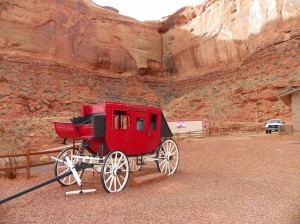
The swarms of tourists came like bees flocking to a new food supply. Only these human insects did not make honey, or contribute to the well-being of the people beyond their money. This is what made me begin thinking again of PTSD. So many common experiences lead me to reflect again on PTSD and its relationship to man’s survival. It is deceptively easy to steal a land or a human spirit. It is a simple recipe – simply take his land; take his dignity; take his humanity, and take his hope. Take his happy memories and replace them with tears and broken lives. By all of the taking, eventually we take his reason for living; we leave behind mangled hearts and broken spirits.
Stealing Spirits is a tragic feat. Preserving them is as necessary as breathing. Each heartbeat is a promise of a new beginning, a new hope, a new and fresh tomorrow – for Spirits are the keepers of our past, our present and our future contributions. They can be shared and nurtured, but they must never be stolen.

Mar
25
LOST IN WAR
Filed Under Tears of a Warrior, Today's War, Trauma, War | Comments Off on LOST IN WAR
by Janet J. Seahorn, Ph.D
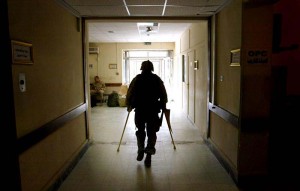
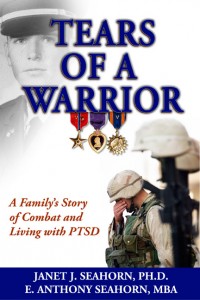
In our book, “Tears of a Warrior: A Family’s Story of Combat and Living with PTSD “, one chapter talks about the “Humpty-Dumpty Effect”. Most people know the children’s nursery rhyme where the poor egg falls off a wall and breaks into numerous pieces that can’t be put back together again. For a veteran, war can be the culprit that pushed Mr. Dumpty off his perch. In our civilian culture we might try and sue for all a person is worth, however in war there are too many different elements to specifically place the blame of a broken body.
The underlying analogy of Humpty-Dumpty is what he lost when he fell and cracked his inner and outer shell. The major damage may be a lost sense of wholeness. One goes into combat young and feeling invincible and often returns in pieces. Pieces when put back will take super gorilla glue to hold together, while some pieces many not mend regardless of the care applied.
Searching for those lost pieces may become a never-ending journey. Putting back the broken eggshells of the body, mind, and heart can be a life-time challenge. The delicate part of the process occurs unexpectedly when hidden memories, ghosts of conflict, and unresolved grief overtake Humpty and rescrambles his being, again and again. It can be a daily occurrence for many vets and their families, and sometimes, in attempting to put the pieces back, we run out of glue.
Finding what was lost in war may be a pointless pursuit, like looking for a coin in a vast sea of sand and rock after it has fallen off a steep cliff. One will never fully retrieve his/her sense of innocence. He will never regain that youthful sense of invincibility known prior to combat. She will never view the world like she did before looking at scenes of devastation, death, and the severely wounded. The security of childhood has been turned into the reality of a sometimes cruel and inhumane world. A world that is different for the veteran than for people back home who have never witnessed war’s bluntness.
Perhaps Humpty may never retrieve or replace his lost pieces or restore the wholeness that existed before war. Yet, being pasted back may bring together a renewed sense of purpose and personal aspirations. Mosaic eggs have their own unique beauty. A beauty that cannot be replicated for each section of the egg is placed in a distinct part of what was once a solid structure. With enough care and support, the shell can once again become sturdy and uniquely whole. As for me, while I am using the sticky stuff, I think I will put a generous sprinkle of glitter and gold that will enable the sunlight to reflect the new dimensions of the outer and inner egg shell.
Maybe our veterans’ youthful wholeness was lost. We will surely grieve its purity. Yet, do not refrain from celebrating the physical and emotional strength of the new Humpty-Dumpty. He, in his full glory, is not lost, only remolded into something with greater substance, courage, compassion, and hopefully a whole lot of sparkle.
Mar
9
UNCOVER THE SUN
Filed Under Combat PTSD, PTSD, PTSD treatment, Tears of a Warrior, Today's War, Treating PTSD | Comments Off on UNCOVER THE SUN
by Janet J. Seahorn, Ph.D

There are so many ways to experience trauma in the world. Combat is just one, but it is one where the impact keeps on giving and giving. For many whose painful experiences occurred once or twice, many seem to be able to get up in the morning and feel grateful for the opportunity to have a fresh new start. The sun shines brighter and the colors of the world are more intense, even if some nights are seemingly unbearable.
The difference between a one time experience and multiple traumatic occurrences is the cumulative effect. The more often an individual faces harrowing life events, the more likely the brain is going to be influenced by those events. Because the brain is sculpted by experience, everything good or bad can make a difference.
We become who we are due to our genetic foundations and our environment. If that environment is nurturing, safe and challenging in a positive way, we have a greater chance to develop into self-confident, cheerful people. If, however, that environment is saturated with violent, unpredictable and dangerous circumstances the brain molds itself into a survival organism in order to hopefully sustain the trauma. The important thing to remember, however, is the age when a trauma occurs. Earlier is not always better.
We know the brain is not fully developed until the mid twenties (especially in males). So what do you think multiple combat deployments do to a developing brain? For many young men and women the outcome is pretty darn complicated. Connections within the brain are changed. Neurotransmitters, those chemicals in the brain that allow us to feel pleasure, prepare for fight or flight, suffer with depression, and other human experiences are changed. The physical organism that controls our behavior is changed. Trauma is serious business with serious effects for many.
For warriors returning from combat, the world is not as bright and welcoming as it was before war. Sense of identity is changed… you leave as a somewhat naive youngster and return as an adult aged beyond your years. PTSD is like having a gray veil placed over the sun. Sure it still shines. Yes, you can feel the warmth of its rays.
Yet, nothing is the same as before you left. Healing from trauma can be the unveiling of the sun. The way to remove that shroud or at least make it lighter is to seek help as soon as possible. You have the strength to Uncover the Sun. More importantly, you deserve to have the full brightness of its rays lighting your days and warming your heart.
Feb
22
Community Event
Filed Under American Patriotism, Human Rights, PTSD treatment, Tears of a Warrior, War | Comments Off on Community Event
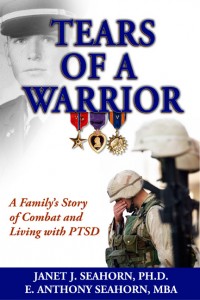
Thought you may be interested to know the Richfield, MN Human Rights Commission is using our book for a community event.
We are very please to learn that “Tears of a Warrior” is generating interest from the general public!
Click on website:
http://www.startribune.com/local/west/116500038.html
Feb
15
WICKED PROBLEMS
Filed Under Combat PTSD, PTSD, PTSD treatment, Tears of a Warrior, Trauma, Treating PTSD, War | Comments Off on WICKED PROBLEMS
by Janet J. Seahorn, Ph.D
No doubt about it, PTSD is a very Wicked Problem. Wicked Problems, by definition, are those dilemmas that cannot be solved easily by using a typical approach. Anyone living with traumatic stress, especially those pressures caused by combat, will attest to the challenges of trying to solve the predicament of moving through his/her life carrying the memories and phantoms of war. If the solution was easy, it would have been found centuries ago. Yet, here we are today, in 2011, and the Wicked Problem still exists.
One of the Wicked Problems of trauma is surviving the depression that can be a part of the conflict. How does a person live with long-term depression that often becomes the new normal after battle? Constance Gibbons, one of our readers, wrote last week and shared how depression has been the new normal for many vets including her husband. After years of having it a part of their daily being, it becomes their after war identity. She stated: Another interesting aspect from those of us observers – spouses, et al – was that universally we noted the levels of sort of a baseline enthusiasm, whereas, the vet thought they were quite fine.
She explained further: As you continue to think of ‘depression’ as it may be portrayed by the vet, maybe think of a sense of resolution, unknowing acceptance, somewhere in a lower zonal level (between overconfidence and fear) from the years of living on the cusp of life and death, at a level of continuing risk so great that without the impact of the continuing penetration, after, into youthful vulnerability, it appears to those of us in observation to be baseline depression…where it is not to the vet; just an absence of heightened stimulation. Wow, now how would anyone solve such a Problem?
Veterans carry many Wicked Problems – ghosts of death and shocks of battle, memories that make if difficult to stay grounded in every day activities, and struggles to avoid the sleepless nights where staying awake is one way to keep the dreams of foreign battles from returning. New therapies and medications have helped lower the impact of PTSD but it has not solved the Problem. I read many blogs and articles relating combat PTSD to the trauma that the average person might experience. Things such as car accidents, rape, assault… all which are terrible and difficult to cope. Yet, these are hard to compare to combat where trauma occurs every day, often numerous times in a day. One of the biggest differences is besides being the prey, in combat you must also become the predator. Instead of being involved in one brutal injury or death, you may experience many.
Fighting the Wicked Problems of war takes work. It requires listening to your gut feelings as well as how others around you perceive your behaviors. The good fight involves muffling the loud voices in the head long enough to examine realistic solutions. Perhaps there will be no absolute solution to PTSD, but every day there are warriors who conquer their demons and live full and meaningful lives. Wicked Problem you may remain, but you will not take more of a warrior’s life than you already stole. You will not win this internal war, even if you succeed in taking an emotional battle now and then. You see, Wicked PTSD Problem, in spite of your persistent, you are no match for the courage and willpower of a WARRIOR.
Feb
2
A HUMBLED JOY
Filed Under American Patriotism, Civilian life, Combat PTSD, Family, Life, Love, PTSD treatment, Tears of a Warrior, Treating PTSD, War | Comments Off on A HUMBLED JOY
by Janet J. Seahorn, Ph.D
They stood before us, this beautiful, young couple. He had just returned home from a tour in Afghanistan, his second time away. They had many things they could have done that would have been much more fun than taking time to visit with us.
She was a student in my fall semester course at the University. At the beginning of the new semester she let me know her husband would be returning home soon and she wanted Tony and me to meet him. Just the request was a humbled joy. Actually meeting them on that cool winter day even meant more.
During our short time together, we did not talk much about his experiences at war except to listen to a few short phrases indicating he had been in some difficult situations.
I didn’t mention that his wife had to take an “Incomplete” for the college course because she became seriously ill and spent several days in the hospital. Somehow, all of this was now unimportant. The only thing we noticed was how the two people standing before us just couldn’t stop smiling and giggling continually as they held hands, grateful to finally be together.
My goodness, this was truly the picture of humbled joy.
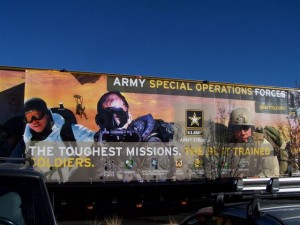
That same day we spoke with an army Special Forces warrant officer who was helping to show students on campus the various skills and equipment used in the military. The young man explained that he had been in the army for sixteen years, joining-up right after high school. Honestly, he didn’t look like he was that old; he smiled widely when I shared my observation with him.
He talked about how joining the military at age seventeen was the best thing he has ever done. The army, he noted, gave him direction, guidance, and supported his development as a confident adult. The interesting detail about our conversation was how much I learned in a short time about his confidence as career military person.
At the beginning of our chat I asked how many times he had been overseas; five – six times if you counted a stint in Romania. The duration of each tour was between three and eight months depending on the mission. During several of his assignments he experienced the reality of war, including several casualties within his unit.
Yet, in spite of the stress, he seemed to be coping with the emotional and physical side effects of combat pretty well. It was challenging, he noted, to reintegrate into “normal” life on each return home, but the army gave him plenty of support and time to decompress.
He pointed out that on several occasions he was given a lengthy mental survey of over 115 items which sometimes highlighted his PTSD tendencies. Nevertheless, because he was career army, his adjustment process appeared to be faster and more comprehensive than veterans who left the service shortly after returning from battle. There does seem to be some significant benefits for the men/women who are in the military long term.
Perhaps being in a community of individuals who have experienced similar battle conditions helps the healing and understanding process. Being around other soldiers who can identify with the pain of combat; others who quietly appreciate the sacrifice of serving our country may lessen the feelings of emotional trauma of being alone in a world where most people haven’t experienced war. This, by itself, would be an immense relief because one wouldn’t have to pretend everything is OK when it isn’t. You wouldn’t have to go through each day feeling lost and alone because there would be a band of brothers surrounding you with knowledgeable support. At any rate, this young soldier certainly gave me some things to think about.
Humbled Joy, invisible, yet real. Thank you.
Jan
26
HIDDEN IN PLAIN SIGHT
Filed Under Combat PTSD, Life, Peace, PTSD, TBI & PTSD, Tears of a Warrior, Trauma, War, Wisdom | Comments Off on HIDDEN IN PLAIN SIGHT
by Janet J. Seahorn, Ph.D
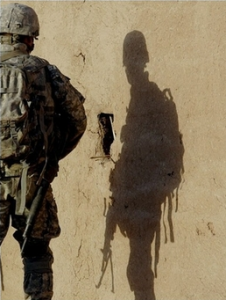
There is a phrase that one hears every now and then, Hidden in Plain Sight. Four simple words that eloquently reveal the complexity of the impact of trauma on one’s mind, heart, and soul. We see the person; we look at the eyes, the body language, the being’s form. The suffering is present in plain sight for all to witness. Yet, few do, lacking the keen observational heart skills required to notice anguish.
There are days I wish I didn’t see it – the faces of children battered by abuse and neglect; the adolescent’s depressive absorption into the ugly world of alcohol and drugs, and the veiled, but ever present ghosts of veterans, young and old carrying their memories of war. They haunt me as the world moves around their pain because it is hidden in plain sight.
Much like ‘Don’t Ask, Don’t Tell’, we are a nation that prefers to maintain our equilibrium at all cost. We tend to be uncomfortable with sorrow even when it stands knocking at our front door asking only for recognition and a bit of compassion.
We say we are a nation of empathy, yet often dismiss the humanity that exists in every person, especially those with whom we don’t agree. We argue we are intelligent, proficient thinkers, yet fight rigorously to disqualify any information that does not align with our personal paradigms/beliefs, whether true or misleading, without accurate evidence or data.
The answers to our current and future problems are available, but for too many they are hidden in plain sight. It will take incredible courage to look into our own minds and hearts searching for what is right and true. It will take courage and honest self-reflection to heal the hidden wounds of the wounded, but it can be done. What lies before us does not need to consume us with fear or apprehension. When confronted, trauma and pain can be overcome and no longer hidden or carried alone.
Light and sunshine are incredible healers.
Jan
17
WAITING FOR UNCLE SAM
Filed Under Tears of a Warrior, Today's War, Veteran Benefits, War | Comments Off on WAITING FOR UNCLE SAM
by Janet J. Seahorn, Ph.D
A film came out this fall called Waiting for Superman. It was a documentary on the state of education and our public/charter schools. Many educators perceived the information as “anti” teachers. As a teacher who has been in the field for many decades, I felt the film had many good points, yet, as most documentaries go, it did not address the issues of educating high needs students in the most accurate manner. So it is when dealing with supporting our troops when they return from combat.
First, let me state up front, I have seen and believe most of the individuals who work directly with our military veterans are committed, caring professionals. Every day they do their utmost to make a difference in healing the vet’s emotional and physical wounds. However, there continues to be incredible hurdles veterans must jump through to get the services they need to move forward. Government agencies, much like any huge organization, have far too many procedures, protocols, and paper work for any person to move through in a sane and timely manner. Paper work gets lost or misplaced; doctor appointments and therapy sessions can take months, even years to get into the structure, and classification methods may or may not accurately assess the circumstances of the person.
Many vets continue to report that too often the system uses over medication to solve a problem without proper supervision. What they are asking for are not more pills, but someone to talk to on a regular basis–someone who will listen and assist him in sorting out his experiences, someone who will provide recommendations for coping with the memories and the hurting.
Now, herein lies a huge obstacle – there simply aren’t enough qualified personnel on board to meet the needs of the enormous number of veterans requesting services. One counselor indicated that in her area there were only five therapist hired to handle a client population of 25,000 veterans. Do the math… that would mean each therapist would be responsible for 5,000 individuals – an impossible mission for any person to accomplish regardless of their expertise and dedication.
Some areas of the country are doing a much better job than others. Some vet centers have more resources and personnel to do the work necessary to make the difference in a timely manner. Every site wants to support their veterans, yet they may not have the means to do this effectively and efficiently. So this message is to our government, our elected officials, and Uncle Sam.
Our military and their families cannot afford to WAIT for the treatments they need to get better. They cannot WAIT weeks or months for a doctor’s appointment when the pain is getting worse every day. And they cannot WADE through the incredible amount of red tape to receive the treatments needed NOW! I know that those running the Veteran Centers and hospitals would love to have fewer forms and a more functional process. Surely, if we try we can do better. We can, with careful thought, provide a system that would better support our troops – past, present, and future.
If we send them, then we must mend them.
Dec
31
SCOOBY DOO AND A NEW YEAR TOO
Filed Under Dogs, New Year, Peace, TBI & PTSD, Tears of a Warrior | Comments Off on SCOOBY DOO AND A NEW YEAR TOO
 by Janet J. Seahorn, Ph.D
Hard to believe it is the end of 2010. What an interesting year this has been. Most of our days have been filled with many blessings of meeting new friends, spending time with old ones and beloved family members, taking part in all of nature’s wonderful opportunities, and just having some time for personal rest and relaxation. To close out this year, I thought I would mention just a few of our many blessings.
While Tony was going through some medical tests at the Cheyenne Vet Hospital last week, I met a very large great Dane named Scooby Doo. He was a rescue dog who became a therapy companion for one of the wheelchair bound vets. While others believed this dog was vicious and untrainable (due to abuse from several prior families), the vet saw goodness and potential. Turns out that love does make a difference and Scooby Doo is living proof.
As stated, spending time with family and friends is always at the top of our list. There are never enough minutes in the year to let others know how much they mean to us. How their phone calls, get-togethers and small interactions are the best rewards of every day.
Being able to attend several veteran’s reunions and conventions humbled us greatly. Meeting with the Black Lions in Las Vegas, Nevada, showed us again the enormous sacrifice vets give. This particular group endured some of the worst combat missions in the Vietnam War, yet they continue to move forward every day with hope and courage. In August we were guest speakers at the annual Nebraska Vets Convention in Norfolk, NE. The veterans and their spouses were so gracious, we enjoyed the entire event.
In June Tony was the keynote speaker for Project Healing Waters’ annual organizational meeting. The conference was held in Steamboat Springs, CO, a truly stunning and perfect setting for an organization dedicated to introducing wounded vets to the beauty and peace of fly fishing. Often times, nature and our four-legged, long tongued companions are the best medicine for a tattered spirit and injured body.
For Memorial Day, we traveled to Evanston, WY to speak to a patriotic community and address the sacrifices made by all veterans from all generations.
The return home from Iraq of the Wyoming National Guard in March was a moment of jubilation that words can’t quite describe. Families who diligently carried on everyday duties without their loved ones were significantly relieved to finally have the tour of duty complete. Then in February, a group of citizens from Ft. Collins purchased and presented a beautiful Quilt of Valor to the Fort Collins Veterans Center. The quilt was made by Donna Roche in Rogers, Arkansas. Her group of quilters sends quilts overseas to various vet hospitals in the US as gifts of comfort and hope to wounded warriors.
We hope your list of items holds similar stories of warm get-togethers, memorable adventures, and quiet gratefulness. Thank you again for your many comments, your support, and most of all your immeasurable service to our country.
Jan and Tony
Dec
9
DO YOU SEE WHAT I SEE
Filed Under Christmas, Combat PTSD, Life, Love, Peace, Tears of a Warrior | Comments Off on DO YOU SEE WHAT I SEE
by Janet J. Seahorn

A favorite Christmas carol asks the questions, “Do You See What I See”? “Do you hear what I hear?” “Do you know what I know?” During this holiday season, where many do not feel so holy; where many do not hear the sounds of joy that carols bring and angels sing; where many have yet to believe that good still exists, perhaps there is a message of gentleness if we are strong enough to trust.
Yes, I realize I am an optimist. Truly, it is one of my best qualities, besides a distorted sense of humor. There would be no “today” for me if these gifts were not part of my being. I am pretty certain I would have given up a long time ago for that choice certainly seemed easier. Yet, I’ve always known giving up wasn’t an option or a model I wanted to give others, especially my sons.
So, what do you see? In this challenging world of war, political disgust, and self-centeredness there are abundant examples of crap. But look around. Beauty is, also, everywhere – in the face of an innocent child, in the brilliance of holiday lights; in the fresh whiteness of snow… it exists if we look. On my refrigerator I have a post-it-note that says, “Focus on the possibilities, not the limitations”. It is life-saving advice.
Next, what do you hear? Undoubtedly I hear the weeping of those in pain both physical and mental. Those who have experienced inconceivable loss. Those who live with the memories of combat past and present. Those who are challenged by sickness. Physical aches are difficult, but emotional wounds are far more exhausting, for emotional pains are the ones others cannot see or hear. These are the silent screams of the soul, and they demand a great deal more stamina. Often these cries seem to overpower the humanity of our being. Such times will demand we listen for what is decent and soothing; a breeze rustling in the leafless trees, a favorite song, a small child giggling over a ringing silver bell, or the quiet gaze of love that says more loudly than any words… we are cared for more than we can imagine.
What do you believe? Do you believe in the seen or what is unseen? Believing is a choice. As a scientist I rely on hard, quantifiable data to answer research questions. However, the world’s most noteworthy gifts cannot be counted or even proven. Gifts such as goodness, love, and miracles are beyond the “proofs” of men, yet they exist. One cannot measure honesty; he cannot measure wonder, nor is he capable of determining the reality of love. Yet, these exist. These are the staples of our days. They allow us to continue living in spite of our frustrations and grief. They are more powerful than any pill, any counseling program, or any doubts.
As you move through your sometimes difficult days, focus on the good things you see; listen for what soothes your heart; believe in your personal power and the vast energies of good which are still present in our lives. And believe, “what is needed is on its way, right now”!
Look, listen, Believe.