BOOK PURCHASE: Discount (above) or PayPal (below)
Click "Buy Now" to continue to PayPal
Click to order eBook - Kindle

Click to order eBook - Nook

Aug
19
GAINING WISDOM
Filed Under Tears of a Warrior, Veterans, Vietnam Today, War, Wisdom | Comments Off on GAINING WISDOM
by Janet J. Seahorn, Ph.D

In the space between an end and a new beginning, life unfolds and we are given a greater understanding of the meaning of our journey.
So what is wisdom? How do I get it? How can I recognize it? Some would describe wisdom as insight, a type of intelligence gained from age, good judgment, level headedness, and knowledge. In my many years I have observed children who seem to have an inner knowing and awareness of the world far beyond their years and I have seen adults who have the impulse control and selfishness of a two year old.
For most of us, we may not always recognize wisdom but we pretty much know when someone does not possess it. Many of the wisest individuals that I know did not gain this trait by living an easy life. Indeed, much of their insight came after living and enduring a great many experiences, both good and difficult. My neighbor, Mary, who is now 104 years young, is a true example of a wise person. She grew up raised by a single mother after her father abandoned the family when she was a child. Her first husband died of a heart attack leaving her with four young children. Life was hard, but she kept working to support her children and herself. There was no time for complaining, only time for doing. Another trait Mary holds is a way of looking at the world in a positive manner. This is not to say she didn’t have her difficult moments, but she didn’t allow these times to last long. As she states, “I didn’t have enough energy to waste it on being negative. I had children to raise and work to do”.
So many of our veterans have the “Mary Factor”. War took much of their youth and innocence but it never took their will to go on, to live a productive life, to contribute to their communities and families. Life after combat has not been easy, yet it has given these warriors a sense of personal knowledge, and insight into the world. Many people who have endured far less do not always develop this trait. Veterans have a different kind of wisdom regarding the world and freedom. They understand sacrifice and pain, but most make a conscious choice to focus on more productive things. And they understand the wisdom of this old Rwandan Proverb:
You can outdistance that which is running after you, but not what is running inside you.”
And so, like Mary, most of us struggle to come to terms with the inside running, and such a journey collects its own wisdom.

Aug
14
WHEN NEEDED, CHOOSE PERSISTENCE
Filed Under Tears of a Warrior, Troops, War | Comments Off on WHEN NEEDED, CHOOSE PERSISTENCE
by Janet J. Seahorn, Ph.D

What is it that keeps someone going when everyone else seems to be giving up? We hear about such individuals on television, read about them in magazines, and if we are really lucky, we even know a few personally. When trying to put together some common traits of these resolute beings, it is interesting to see what it is that keeps them going.
For some it is religion; a deep faith in a higher source that is walking the journey of a demanding life with them. For others it is more about spirit than religion – spirit being defined as the vital force that characterizes a human being as being alive or a sense of self and energy. Yet, for many it is as simple as living for a cause that is greater than the personal comfort of the self. The vast amount of veterans we have been around have a profound abundance of this trait. Perhaps living beyond oneself came as a result of serving their country even when it meant the possibility of death, bodily injuries, and emotional distress.
In combat, soldiers woke up every morning to face a foe that was ever present. Seeing the price of war and dealing daily with personal losses was a constant of their battle experience. There was no such thing as giving-up or giving-in because it meant that it would let their fellow troops down.
Perhaps the greatest battle for many is when they return home. The challenge of trying to reintegrate into a community which has essentially been isolated from war. Families, spouses, children, friends, coworker – most are truly grateful for the warrior’s sacrifice. We try to understand, to be patient and encouraging, yet, there is absolutely no way any of us who have not been in a combat situation can fully comprehend such devastating experiences.
Therefore, choosing persistence is an option that allows the person to move forward. It is a choice that the vet must make every day. It is a choice that spouses, children, families, and friends must make every day. And it is a choice that Winston Churchill proposed in his statement… “Never give in, never, never, never — in nothing, great or small —- never give in except to convictions of honor and good sense.”
And this is the true essence of persistence. And last, a very special quote from Winnie the Pooh,
Promise me you’ll always remember: You are braver than you believe,
And Stronger than you seem,
And smarter than you think.
(A.A. Milne)

Jul
23
I SAW GOD TODAY
Filed Under American Patriotism, Giving, Healing, Healing Waters, Soldier, TBI & PTSD, Tears of a Warrior, Treating PTSD, Wounded Warriors | Comments Off on I SAW GOD TODAY
by Janet J. Seahorn, Ph.D

I saw God today. He appeared in many forms and shapes. Some were tall with crippled arms and legs. Some were young with broken hearts and tangled minds. One was weathered with a long, white-bearded, grizzly face. Amazing how God changes and morphs into such diverse appearances. Yet, each face had eyes that seemed to explain wisdom, pain, and hope.
As with such celestial beings, God tends to surround himself with legions of angels. They support, guide, and maintain an environment of light and joy. You see, God cannot do all the tasks he has to accomplish without some assistance.

Such was my experience with the second annual Wounded Warrior Event held in Saratoga,Wyoming. The faces of God traveled in metal chariots through high mountain ranges and wide fields of swaying hay. When the convoy arrived at their destination they were welcomed by the hosts of the Saratoga Resort. Once settled in rooms filled with cowboy furnishings, God was taken to the beautiful Upper Cedar Creek Ranch owned by Tom and Dixie Arthur. Horses and a special mule named Henry awaited His arrival ready to gently carry God to a pristine mountain lake where he could rest, fish, and replenish his mind, heart, and spirit. Angels continually encircled him, focused on quietly serving and ensuring His few hours on the mountain were peaceful and revitalizing.

The following morning God had one more opportunity to experience the splendor of hisWyoming landscape where He engaged in amazing fishing at Big Creek Ranch. New adventures lead by Mark Dunning facilitated hours of fun and entertainment. The day culminated in an evening barbecue with appreciative community members and the staff of the Saratoga Resort led by general manager, Susan Wallace. Each simply sought one last chance to say thank you. Thank you for your service. Thank you for your sacrifice. Thank you for your courage.
Finally, God was sent on His way with a goodbye breakfast provided by the town’s American Legion Post.
Yes, I saw God today and I was blessed, both by his presence and his multitude of angels who continue to give so much to keep us safe and free. And once again I realized how even God within every individual needs time to rest, to replenish, to experience peace in order to persevere with the journey ahead. As you go through your hectic days, take time to see God in those who pass your way and be grateful for the divine in each being’s special presence.

May
7
NEW TERM FOR PTSD: POST-TRAUMATIC STRESS “DISORDER” becomes “INJURY”
Filed Under Post-Traumatic Stress "Injury", PTSD, PTSD treatment, Tears, Tears of a Warrior, Today's War, War Injury | Comments Off on NEW TERM FOR PTSD: POST-TRAUMATIC STRESS “DISORDER” becomes “INJURY”
by Tony & Janet Seahorn

Wow, double Wow, and Wow again! Finally a more accurate term for Post-Traumatic Stress which leaves off the BIG “D”.
It has been a long time coming and we certainly hope that those in charge of giving terms to the various wounds of war will carefully consider renaming PTSD to PTSI– Post-Traumatic Stress Injury. We have constantly said that Post-Traumatic Stress refers to a reordering of the brain neuro networks. But calling it an injury versus a disorder is a huge step in the right direction.

Think about it, we don’t refer to cancer as a disorder, or a broken bone as a disorder. Trauma caused by outside forces essentially is an injury, however, the injury goes far beyond the mere physical damage of an organism; these wounds also impact the soul, spirit, and emotional stability of the individual and are far more challenging to heal.
For the longest time in the early 19th and 20th centuries, cancer was not openly discussed and considered by some as an illness brought on by an impoverished life style both of the mind and body. Afflicted folks often felt responsible for their illness and were shunned by some in their communities. By gaining a more accurate understanding of any problem we are able to provide better treatment and services for both healing and coping.

And so it may be tentatively happening for those struggling with post-traumatic stress. We have heard from several readers about this change of wording. For those who have not yet read about the change in terminology, we are including this short clip from Sunday, May 6th Denver Post:
PTSD MAY GET NAME CHANGE TO HELP VETERANS
It has been called shell shock, battle fatigue, soldier’s heart, and, most recently, post-traumatic stress disorder, or PTSD.
Now, military officers and psychiatrist are embroiled in a debate over whether to change the name of a condition as old as combat. The potential new moniker, post-traumatic stress injury.
Military officers and some psychiatrists say dropping the word “disorder” in favor of “injury” will reduce the stigma that stops troops from seeking treatment.

Let’s hope those with the power to make such a change will give the new term their best consideration. Word/terms do make a profound difference between how we view and treat those who have given so much to our country – along with other sufferers. Calling combat trauma an injury is far more correct than calling it a disorder.
With any luck we can get it right this time.

Apr
17
CAN YOU HEAR ME NOW?
Filed Under Aging, Brain Injury, Combat PTSD, Events, TBI & PTSD, Tears of a Warrior | Comments Off on CAN YOU HEAR ME NOW?
by Tony Seahorn

Every once in a while we get presented with a special opportunity that may change or at least have an impression on our lives. This happened to me a few weeks back. I was asked to be a member of a panel of veterans who had hearing loss and tinnitus due to combat exposure. The panel was part of the National Joint Defense Veterans Audiology Conference (JDVAC) which is held around the country each year. This year’s event was held at the Omni Hotel in Dallas,Texas.
Of the six veterans participating on the panel, all of us also had PTSD and a couple with TBI. We all agreed that most veterans with severe hearing loss have other scars from war that often add to the severity of individual disabilities.

From the time we arrived we were treated like royalty: beautiful rooms, a basket of goodies delivery shortly after we arrived, and even free coffee and lattes. Unfortunately, Jan was unable to go with me due to her teaching commitments at CSU. I’m not sure whether she was most jealous of the basket of goodies or all the free lattes she could have during my three days at the conference.
Maybe I should backtrack a bit. Ever sinceVietnamI have struggled with tinnitus, ringing in my ears. For the most part I have been able to endure the buzzing in my ears, that is until last November. One night I went to bed with the “normal” ringing. However, in the morning I awoke with the sound being far worse than ever and I had lost most of my hearing in my right ear. My hearing loss was also accompanied by dizziness.
After several doctor visits and antibiotics, I was told that the ringing would probably never get much better and my hearing would not fully return. Fast forward a few months and this special opportunity to be a part of a conference with some of the best hearing specialists in the country.
My panel was made up of eight individuals: two audiologists and six veterans. Each panel member contributed, not just telling their combat story, but how being hearing challenged impacted their lives. The entire session was taped and will be presented in a video and streamed on the sponsor Hamilton CapTel® Web site which will reach hundreds if not thousands of viewers throughout their network.

Following the conference, one veteran wrote in an e-mail …Our feeling is that we have to start somewhere with this important message. Hopefully, as we look back at our endeavors a year from now, we’ll see encouraging progress that not only includes larger veteran audiences for this panel at industry events – but more importantly, increasingly open “solutions” dialog between hearing health care professionals and the veterans they serve.
For all of you vets who are living with a hearing problem, I truly believe help and hope is on the way. I found that support and optimism in Dallas. The experience has been such a blessing. To think I almost didn’t attend this event.
Following is a message from Judi Victor in her capacity of Panel Director:
Hi, JDVAC Holistic Panel Team!
Tina and I are having trouble finding the right words to thank you for your participation in the Holistic Hearing Healthcare Panel at JDVC on Tuesday. Each of you contributed so much to the discussion; we can’t imagine a more articulate, informed, bright or inspiring group. It was, indeed, impressive – and to think that the entire panel had never rehearsed together until a few hours before the actual event is truly amazing!
Even though our “live” audience was not gigantic, please keep in mind that we are editing the video presentation to stream on the Hamilton CapTel® Web site, which will reach hundreds if not thousands of viewers. In addition, the video will be shown in part or in its entirety at other industry events throughout the coming year.
Our feeling is that we have to start somewhere with this important message. Hopefully, as we look back at our endeavors a year from now, we’ll see encouraging progress that not only includes larger veteran audiences for this panel at industry events – but more importantly, increasingly open “solutions” dialog between hearing health care professionals and the veterans they serve.
We know that this event required a huge effort on your parts, not to mention the fact that it took you away from your work, families and many other activities. Please know that your participation is appreciated more than we can ever express.
With warmest regards and deepest gratitude.

Feb
10
A HOLOCAUST OF THE SPIRIT
Filed Under American Patriotism, Holocaust, PTSD treatment, TBI & PTSD, Tears, Tears of a Warrior | Comments Off on A HOLOCAUST OF THE SPIRIT
by Janet J. Seahorn, Ph.D

It is interesting how many people still have not heard of Post Traumatic Stress. It’s as if they have been living under that rock in the Geico commercial. Maybe part of this circumstance is due to the fact that less than 1% of Americans are currently serving in the military. During WWII one could walk down most streets throughout the U.S. and count at least five houses that had a star in the window.

Today, as in the Vietnam War, we no longer have signs that signify to others that a family member is serving overseas. Little is shown to symbolize the sacrifice of the few. Somewhere a child is missing his father or mother each night before she goes to bed. Somebody’s mother may be crying herself to sleep again, worried sick about the safety of her child. A spouse is having to carry on every detail of daily chores by herself/himself and doing it each day with a loneliness that shatters the heart.
Many ask us what it is like living with PTSD. For me, I think the best description is the trauma of combat leaves many vets with a Holocaust of the Spirit. Webster’s Dictionary defines holocaust as a “vast or total destruction, usually by fire; great loss of life or property; a sacrificial offering consumed by fire”. Such a description is pretty accurate when you think about it. During battle, not only is there physical fire, there is the mental and emotional fire — a fire in the heart, brain, and soul. Then there is that word “sacrifice”. Sacrifice is always the consequence of any combat experience: sacrifice for one’s country, sacrifice for unknown people in unknown areas of the world, sacrifice for one’s fellow troops, and sacrifice of families left behind to wait and pray for their loved one’s return.

As with every Holocaust, loss of life is ever present. And that life, if one survives, will never be the same. The fire of battle has consumed what a person was before the experience, and left him with scars that tend to break and reopen with the living of each new day. It is a never ending journey towards healing. Some days are better than others, but not one day is ever the old picture of “normal”.
Yet, here is the important part of any Holocaust to remember … It can be survived! Like the mythical bird, the Phoenix, who was burned beyond all recognition and rose from its ashes to become an immortal body and spirit, many of our PTSD burdened veterans achieve a similar destiny. Both are warriors of distinction and beauty. Both died in their own painful fire, and both became molded into something purer in spirit and stronger in mind and body.
It is easier to endure the fire if you can hold onto something precious to the heart and spirit. Therefore, I included the following old Pueblo Indian Blessing that my brother recently shared with me (365 Days of Walking the Red Road)

Hold on to what is good, even if it is a handful of dirt.
Hold on to what you believe, even if it is a tree that stands by itself.
Hold on to what you must do, even if it is a long way from here.
Hold on to life, even if it is easier to let go.
Hold on to my hand, even if I have gone away from you.

Dec
31
HARD DECISIONS
Filed Under Aging, Healing, Tears of a Warrior, Veteran Benefits | Comments Off on HARD DECISIONS
by Janet J. Seahorn, Ph.D
 “You never change things by fighting the existing reality. To change something, build a new model that makes the existing model obsolete.” -Buckminster Fuller
What is it about change that makes us crazy? Is it the sense of what will be lost against the uncertainty of what might be gained? Is it the reality that in most change situations friendships and services will be altered? Or is it that almost all change requires individuals to deal with the vagueness of questions and conditions that either can’t or are refused answers? At any rate, change demands making decisions that may or may not be made according to what is best for those closest to the resolution. In essence, given our current economy, many decisions are based more on the bottom line of funds, and people are left to make the most of the situation.

For the last several months the veterans and people of Hot Springs, SD have been caught up with a proposal that that will change the way and the location of how VA services are delivered to that area. Currently, Hot Springs has been the home of a large and historically old VA hospital and care center. The plan is to relocate most VA services to Rapid Cityand outsource some services to Fall River Hospital in Hot Springs. The current VA “workforce of 385 employees will be reduced to only 55 by year 2016” (Hot Springs Star, December 20, 2011). It doesn’t take a genius to recognize this type of reduction will greatly effect the resources provided by the hospital as well as impact the economic stability of the area. Since many of the vets in this area are older, few can physically travel to other locations for their health care necessities.

Analyzing the circumstances strictly from a financial perspective, one can understand that newer facilities with upgraded equipment may benefit many of veterans. The cost of renovating a very old facility may or may not be the best or most cost effective alternative. Truthfully, I haven’t studied the proposal enough, nor do I have access to the data and in-depth thinking of the various involved parties. The only perspective I can address is that of the emotional concerns of many veterans and employees of the Hot Springs Area. Presently there is an enormous amount of confusion which leads to anger and fear. The process of making any future decisions does not seem to be very transparent to most of the Hot Springs people. Without such transparency people tend to distrust those making the decision and, therefore, assume the worst.

It is my continued faith and hope that our government will do everything possible to make sure our veterans and their families are given the health care and resources needed to support their present and future well-being. In our book, Tears of a Warrior, we used a quote from Calvin Coolidge, “The nation which forgets its defenders will itself be forgotten”. In remembering and serving these defenders it is vital that their input and needs are at the forefront of any proposal or decision made in their behalf.

“If we send them, then we must mend them.” www.tearsofawarrior.com
Dec
27
The Way
Filed Under Combat PTSD, Dogs, Fishing Therapy, Healing Waters, PTSD treatment, Tears of a Warrior | Comments Off on The Way
by Janet J. Seahorn, Ph.D

It is a slow Sunday afternoon. One of those undemanding days when there is not much pressing to do; this leaves some time to spend on whatever catches my fancy. Tony has taken his four-legged children on a short fishing trip, allowing me some REAL personal time. Since there are several decent movies showing, I decided to go to a film called The Way. It is the story about a father, Martin Sheen, who takes over a journey his dead son began. The task was walking a trail from France to a sacred place in Spain. Unfortunately, the son died in an accident his first day out. Of course, the deeper meaning of any such trek is a journey in finding oneself, whether that test is religious, career oriented, healing, or simply the trial to see if one can achieve such an arduous hike.

So I got to thinking while watching the movie, what is the Way of a Warrior? Is it a way of violence, death and suffering? Is it a way of courage and sacrifice? Is a warrior’s way a way of freedom? Perhaps a warrior’s true north is a way of Faith. Whatever the answer, one thing is certain; the way of a warrior is not easy and definitely not glamorous. More often than not, war makes it even more difficult for the warrior to find his or her way back to any kind of normality and trust of humanity. Finding the way back can be a lifetime journey for many past and present combatants.
One line in the film was pretty reflective, “Life is not about the career you choose but the life you’ve lived”. There can be no doubt that most warriors have lived a variety of lives in one short life time. They have lived the life of a warrior, a friend, a son, a father, a husband, a shattered soul, and a triumphant being. What then will be the rest of a life lived for a warrior? What will be his/her remaining Way?

It is my hope the remaining days of every warrior’s way will be softer, kinder and more peace filled. For those who have suffered years of sadness and remorse, may the new way be one of forgiveness and acceptance. During this Holiday Season and anticipation of a New Year, may every person find a special Way to give of themselves in some endeavor that makes a difference… adopt an animal from a shelter, smile and acknowledge that homeless person on the corner of your downtown street, or simply say a silent prayer for another soul in need of comfort.
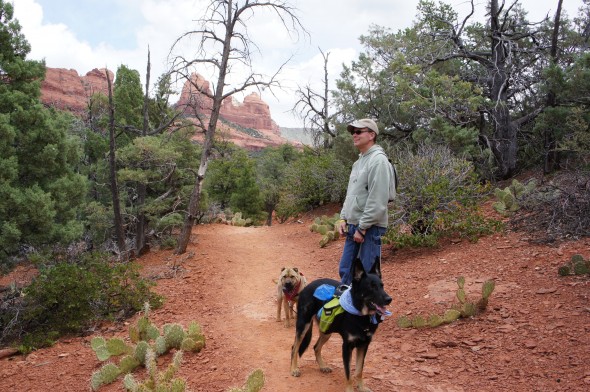
During this season of reflection, find your own unique, individual Way to live with greater joy, less suffering, and fewer reminders of the demons that may have accompanied you home from combat. You and your family deserve a prosperous Way of living each and every one of your future days. Begin NOW!
Dec
5
THE VA BENEFITS ROLLER COASTER
Filed Under Tears of a Warrior, Veteran Benefits, Veterans | Comments Off on THE VA BENEFITS ROLLER COASTER
by Janet J. Seahorn, Ph.D

Holy Smokes! My brain is reeling like an out of control roller coaster. You know the experience, the climbing to the top of the coaster mountain knowing it is going to plummet to the bottom once there. At times it feels stimulating, and then there’s the “I think I am going to lose my stomach” sensation. Well, this scenario somewhat describes how I left after listening for two hours to a presentation on VA benefits. I went with Tony to learn more about how best to negotiate the system and the process. Honestly, it was quite interesting, although, I must admit, I didn’t understand everything the speaker was telling the audience, nor could I keep up with all the “do this not that”, “go here, not there”, “know this exception or else”. Yikes, no wonder many of our veterans and their families get confused. It truly takes an expert in the organization to help lead you successfully through the government maze of regulations.
Following are a few items I gleaned from the session that perhaps some of our readers will find helpful. Keep in mind that the VA is concerned with treating the whole person where other government organizations are mainly focused on the medical issues.
- 1. First, whether you like it or not you will need to have and be somewhat comfortable using a computer since all forms and many interactions are now on-line. If you are one of those who are somewhat computer illiterate, grab a friend or family member to help with the process. A few websites that can be very useful: www.Ebenefits.va.gov (this site gives you access to your vet information) www.Healthmil/PDBR (this is the site for getting the process underway to leave the military).
- 2. Something many veterans do not know is that they are eligible for problems that occur as a result of their major injury or condition. These are called “Secondary Problems“.
- 3. For new vets leaving the military, some States have places were individuals can go and get all of their needs, benefits, sign-up forms, and medical tests done in one setting. Not only does this speed up the process, it cuts down on the frustration of visiting several places over a span of several weeks.
- 4. As you put in for your benefits, understand that it takes a minimum of ten days to be processed before the information shows up on the Ebenifits website, and this only occurs if the VA has all of the needed medical records.
- 5. Now this leads us to getting those medical records…Go and Get Them YOURSELF. If you rely on your doctor’s office sending this information to the VA once it is requested, you may be waiting as long as six months before they get around to sending it. This is not the VA’s fault. Since doctors offices do not get reimbursed for doing this task, some are not very eager to move it forward in a timely manner.
- 6. Understand that once your benefits begin, the government will send your funds to your bank using Direct Deposit. If you don’t have a bank, they will send you a debit card. There will no longer be any CHECKS written to an individual. Understand it is YOUR responsibility to give the VA the correct bank routing number or account number, or address. If you move and forget to send them you new address, you will probably have trouble getting your funds. If your benefits begin on Feb. 1st, your first funds will come through until March 1st. Many organizations work on this type of a timeline.
- 7. If you were a Marine stationed at Camp Lejeune (www.lejeune.usmc.mil) before 1986, immediately go to their website to obtain information on filing a claim regarding medical conditions stemming from a toxic waste situation in the area. This also applies to our current vets who served in Balaud, Iraq where it was common practice to burn their waste, including plastic water bottles. The results of being exposed to the toxic smoke can cause colon cancer, lymphoma, respiratory problems… Down the road similar consequences may come from exposure to the sands in Iraq and Afghanistan.
- 8. Also, did you know that many of our veterans are eligible for a VA home loan that may be far better than those offered by the FHA. This was an AHA for us. Check out www.homeloans.va.gov or www.hopenow.comwebsites or call the Homeownership Preservation Foundation at 1-888-995-HOPE (4673).
- 9. And last, it is very important that every veteran is aware of the processes for filing a claim, receiving benefits, etc. Be sure to read EVERY piece of information or mail that comes to you. Don’t put it aside and think you will get back to it later. Read it immediately. Answer any and all phone calls from your VA centers as soon as possible. And be persistent as long as you take responsibility for what you need to do to help process your claims and benefits.
After listening to so much information and needing a Tylenol or Latte badly, I came to the following conclusions:
One – every vet needs to take the appropriate responsibility for getting his needs met. Blaming won’t get the job done; being proactive has a better chance of success.
Two – and please don’t scoff at this because I am sometimes tempted to do so, try to believe in the VA’s motto, “Grant if you can, only deny if you have to”. If you feel the person you are working with isn’t doing enough, ask for someone else to assist you. Often times getting a fresh pair of eyes and ears can make a huge difference. What I saw and heard today confirmed that there are many individuals in the VA organization who are incredibly dedicated to making a difference to our country’s veterans. We know of many and are grateful for their efforts.
Good Luck and take your patience pills – dealing with any huge organization, especially the government will require an abundance of endurance.
Nov
23
WHAT TO DO ABOUT THE HOLIDAYS…
Filed Under Christmas, Family, Holiday Season, Tears of a Warrior | Comments Off on WHAT TO DO ABOUT THE HOLIDAYS…
by Janet J. Seahorn, Ph.D

It is time to begin a new Holiday Season. Dang, some stores started playing their carols, displaying Christmas ornaments, and advertising the grandness of spending oneself into shopping debt even before Halloween! I truly expected someone dressed as a reindeer or elf to ring my doorbell for trick or treat.
Now, don’t get me wrong I love Christmas. Really! It is my favorite holiday. Almost everything about it is a special time filled with amazing sights, fragrant smells of evergreen trees, bells, carols, and my list goes on and on. I even enjoy buying a few gifts for family and friends, and I make sure that Tony NEVER accompanies me on these shopping excursions. The Grinch is one of his Christmas heroes which, as you can imagine, puts a huge damper on my jolly shopping expeditions.

Therefore, as we begin this new 2011 Holiday Season, I thought I would put down a few ideas of how to survive the coming days.
- Begin your new Weight Watchers diet. Watch others eat less and lose while you wait and enjoy every morsel of goodies you can grab. As military veterans, you had far too many C-Rations or MREs to endure food rations now.
- Don’t start off on the wrong foot at Thanksgiving, give away leftover turkey and celery to guests, but keep the pumpkin pie at all cost.
- If you have to ask for seconds, you are already sitting at the wrong table.
- If you are the wife of an anti-shopping Grinch, pray for them daily. We’re still a month until Christmas. You can even offer to share your Prozac if they become overly anxious during this joyous (hectic) time of year.
- If you are the Grinch, breath deep, meditate, and appreciate that the Holiday season only comes once a year, even if it seems to be coming earlier each year.
- And, last, if you are worried about excessive shopping and overspending, the banks don’t seem to care if anyone follows a budget anymore, so I’m sure they will extend your credit for say, the next thirty years.

Seriously, I definitely understand the challenges of trying to negotiate the many pitfalls and stimulations of the Holidays and not just for veterans. For many, it is never an easy time of year, which is the reason why I decided to begin this season’s blog with a bit of humor. Some of us are going to need to store up as much hilarity as possible if we are to survive the absurdity ahead.
You see, I am really, really, really trying to stay on Santa’s “Nice” list.
