BOOK PURCHASE: Discount (above) or PayPal (below)
Click "Buy Now" to continue to PayPal
Click to order eBook - Kindle

Click to order eBook - Nook

Jan
6
2010 New Year’s Wishes
Filed Under American Patriotism, New Year, Peace, War | Comments Off on 2010 New Year’s Wishes

by Janet J. Seahorn
It’s already time for a brand New Year
Filled with new hope, dreams and some cheer.
For many their prospects are filled with great joy
While others the forecast may seem a bit grim.
Perhaps we can change the Year 20 and 10
And make it a season for our world to mend.
A year of forgiving,
A year of great love,
One of abundance sent from above.
A year without conflict,
A year where wars end,
A time where the goodness of angels commend.
A year of good fortune,
A year without hate,
When lies and untruths and battles abate.
A year where one’s word
Can be totally trusted,
Where nothing is left but goodwill and justice.
A year without fear,
A year where we’ve learned
Those rainbows are just around the next turn.
A year where we find
That we are not lost,
That life must be lived no matter the cost.
A year that we take
One step at a time
Trusting to see and feel the sublime.
A very deep breath
And we’re on our way
To making each moment a true New Year’s Day.
May your coming year be filled with love,
safe-keeping and prosperity.
Nov
6
When Humpty-Dumpty is Mom
Filed Under PTSD treatment, Today's War, Treating PTSD, Women in Combat | Comments Off on When Humpty-Dumpty is Mom
by Janet J. Seahorn

War is hell, and there is no polite way to put it.
But when modern war is fought by women as well as men, it can take an even more challenging toil on a family and community.
As Americans, we are quickly learning that our country and its military facilities are struggling to provide appropriate treatment for its female troops. There are many services for men; yet, we are not prepared to offer some of the same options for women.
This week I had two events occur from two different parts of the country. The first was a disturbing phone call from a friend, who has several family members serving in the military. All have fought in Iraq. Her son has been to both Iraq and Afghanistan on numerous tours of duty.
Her concern, however, was for her female family member. After serving in Iraq the military woman has been home for almost three years, taking care of two small children while working full time in a demanding job. The young mother had been exposed to a great deal while deployed, and has done her best to return to normal life stateside.
Most of the time things are fine, but a few weeks ago, the memories, anxieties, and panic attacks returned with a vengeance. As we have discussed numerous times in our blogs, the ghosts of combat often come back to take up residence in the homes of the military personnel.
Without hesitation, this bright lady and her family sought help through the VA. She has wisely enrolled in our local VA Clinic upon return from combat. This time, however, she would need more intense treatment.
Not a problem, except, that the only facility that could accommodate women only is in another state, making the decision to leave her family and work a great deal more difficult.
The second incident came via an article in the New York Times which was sent to me exactly two days after the first event. Reading over the article’s information was all too familiar. I had heard it just two days before. The article by Damien Cave stated, “Never before has this country seen so many women paralyzed by the psychological scars of combat.
As of June 2008, 19,084 female veterans of Iraq or Afghanistan had received diagnoses of mental disorders from the Department of Veteran Affairs, including 8,454 women with a diagnosis of post-traumatic stress — and this number does not include troops still active, or those who have never used the V.A. system” (Internet, Nov. 1, 2009).
The article continued to comment on what we have heard from many female vets, that because they are women, “people underestimate what these women have been through” (Resick, Internet, Nov. 1, 2009).
Since war has been traditionally fought by men, we have seen the Humpty-Dumpty effect. But what happens when Humpty is Mom? What happens when Mom is the wounded warrior? What happens to the children? What happens to the organizational system of the home: the washing, cooking, cleaning, and daily tasks?
Who steps up to help nurture the nurturer when she needs comfort, care, and support? These are vital questions that need to be explored and addressed.
When Humpty-Dumpty is Mom, she can be put back together; however, the tools and glue may be pink instead of blue.
Oct
20
PTSD Suffering & Control
Filed Under PTSD, Trauma, Treating PTSD | 1 Comment
By Janet J. Seahorn
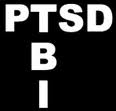
This may be one of the most important blogs that I have written. Important because we are quickly becoming a people who, due to the recent attention on Post Traumatic Stress, are beginning to lump into the same basket all vets who return from conflict challenged by PTSD.
This is a major dilemma. It is vital that we as a nation, as communities, and as families start to have a more accurate description of the effects of combat trauma. Important because without correct information, we cannot help to mend the minds, hearts, and souls of those who suffer.
For that reason, solid facts through research on PTSD lead to better care. The problem, however, occurs when the media focuses only on those individuals who behave in extreme ways. Ways that make news casts, papers, and internet reading more exciting.
For the vast majority of veterans who return from combat tormented by the memories of war, the battle is within and remains there, silently distressing the individual.
But here is what is key to remember; the majority of vets are not personally or professional “out of control”. In fact, they spend a tremendous amount of time and energy trying to remain in control. For many, the periods of distress are when the person is alone, safe within the confines of house and home, or experiencing a severe physical or family crisis.
For most, the only people who see the anxiety and panic are not the outside world, but rather those within the vet’s inner-most circles: spouses, children, siblings, parents, and very close friends.
There are already many young (and some older vets) who are refusing to acknowledge they have a problem, or seek medical interventions even when they realize they need it. And why would they? Fearing they will be labeled and thrown into that “media basket” of dysfunction, they prefer to maintain a mask of silence. This isn’t acceptable, nor is it effective in mending the situation.
Yes, PTSD is a reality for many in our world, not just combat vets. For sure, it is a challenge like any “reordering” of the mind and body. Yet, most individuals move forward to live productive, successful lives. And if the individual gets appropriate medical and professional attention, that life and those who are closest to him/her, the living becomes immensely easier.
So let’s begin to write and tell stories of these quiet, courageous men and women. Stories of heroes and heroines who survive and manage to prosper in many areas of their lives; appreciating the fact that to be a hero requires an extraordinary act of bravery within an ordinary human spirit.
Oct
13
Brain Trauma, Soul Trauma
Filed Under Brain Injury, TBI & PTSD, Trauma | Comments Off on Brain Trauma, Soul Trauma
by Janet J. Seahorn
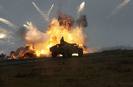 OK, here is something to ponder; can Brain Trauma cause Soul Trauma?
By “brain trauma”, I mean a traumatic brain injury, a verifiable medical condition caused by some insult to the brain, i.e., car accident, falling, hitting one’s head, being in or close to an IED explosion, shaken baby syndrome, stroke… and the list goes on.
Every year over 1.5 million Americans experience some type of traumatic brain injury (TBI).
Personally, I believe the number is higher, as many incidents never get reported because no one knows or realizes that such a trauma has occurred. Which is why all of the information on TBI makes me muse over what actually goes on in the brain/mind, body, and soul when it has been injured?
I think about the mind and wonder how such a magnificent organ can be in command of so much in a person: body, emotions, perceptions…
I think about the soul and wonder how such an invisible concept can make such a difference in one’s life; a difference that gives one strength, courage, and hope to make it through some truly desperate times.
I think about how anyone who experiences a restructuring of the brain after some internal or external trauma can move forward in ways that are nothing short of miraculous. A healing that leaves the brain changed, but the person still functioning.
I think about how the soul and spirit must somehow be part of the healing that takes place in the organ called the brain. How the soul/spirit may give some kind of divine direction to the mind that allows it to mend. In many cases it may not mend itself back to its original state but reorganizes in such a manner that perhaps enhances the individual with greater compassion, humility, and fearlessness.
I’d like to believe that angels watch over us and it is this entity that connects the mind, soul, and heart. Noah benShea thoughtfully noted, “Faith sees around corners”. Maybe these celestial beings are also within the corners of our battered minds, soothing, comforting, and mending.
Most days, though, I am just immensely appreciative that something more powerful than I can ever imagine is taking some charge over all of our well-being, perhaps from that place we call Heaven.
Sep
8
A New Beginning
Filed Under PTSD treatment, Treating PTSD | 1 Comment
-by Janet Seahorn
In a previous blog we wrote about the Wilderness and Healing. Before that we talked about how PTSD + Joy = Peace, Maybe — can move us toward wellbeing.
This week’s focus is a continuation of both ideas, an extension of how we can heal, can move forward and grow healthier. What every suffering person is searching for is a GENISUS – a new beginning, new start, a sort of rebirth.
So this is the big question, “what will be our new beginning after a trauma experience?” Trauma does not have to be the end of living, but a start of living life in a new way. It begins with the seeds we are now and grows into the people we want to become.
Imagine that person, vision it with all the bright pictures, melodies, and glory we can see, hear, and feel in our hearts. New beginnings ask us to examine what we learned from our combat/trauma experience, to go beyond the pain and terrible memories, and to rise above them.
To accomplish this mission will require that we put ourselves fully into the human arena. Isolation is not an option. We cannot lock ourselves away physically or emotionally; that means drugs, alcohol, over-working… are simply not possible choices.
The world is too rich, too interesting, too special to isolate ourselves. Yes, there are horrible things that occur. There is violence, greed, and cruel acts. And for every act of brutality, I believe there are many more acts of kindness, beauty, and love. We must not forget to notice these during our times of darkness. We must attempt to appreciate the goodness in the world. It is present. Just look.
An old saying states, “What we focus on persists”. What do we want to persist? We can focus on those things. Write them up. Put them on our refrigerators, nightstands, even our mirrors. The new us begins today. We choose. By no means will it be easy. The new us will not be perfect, but it will be real.
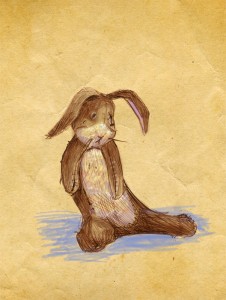
Like the Velveteen Rabbit, he became worn, torn, and aged only through the experience of being touched, loved, and used. And by going through all of his living, he became real. He developed into being alive, for being alive required a multitude of life events both magnificent and sad.
I am sure that if one were to inspect the experiences of the rabbit, he may have been diagnosed with PTSD. And, I am equally sure, that at the end of his days, he would not have traded these experiences for something easier and less physically or emotionally demanding.
He chose life, and so will we!
Aug
18
THE WISDOM OF WARRIORS PAST
Filed Under American Patriotism, Purple Heart | 1 Comment

by Tony Seahorn
Even in the most devastating and pain-filled moments, we have an opportunity to learn something about ourselves, our world, and the human spirit.
Attending the Purple Heart National Convention in Rogers, Arkansas provided an enormous volume of proof supporting this statement. The group was a moving, living sea of purple where great amounts of blood was given in service to our country. Veterans from WWII, Korea, Vietnam, and a few from the current war in Iraq and Afghanistan attended.
It is the Vietnam veteran, however, who have provided evidence of how to do things differently when welcoming a warrior home from combat. These vets had no “welcome home”. Their experience of returning from combat was often met with verbal and sometimes physical abuse. Crowds of protesters were waiting to hurl insults and thoughtlessly displayed signs/banners with obscene language and incredibly cruel remarks and pictures.
What Vietnam vets taught Americans through their touching stories were how badly they were injured – not just by the enemy in a foreign land, but by their own country men. The wound to the soldier was deeper, more personal. It bled into the heart and soul of the veteran and couldn’t heal. Healing requires exposure to the light, the outside air. The Vietnam vets were forced to suppress not only their sacrifice, but their woundedness.
With our present battles in Iraq and Afghanistan, veterans have rallied for a new mission, a promise that never again would our military personnel return home unwelcome. Today there are a multitude of individuals and organizations who support, care and offer hope to serving military members as well as their families. At the Purple Heart Convention we met a few. The “Soldier’s Angels” were there to ensure every military person serving in a combat zone receives care packages, cards, and letters from their fellow Americans. “Quilting for Valor” is another group who painstakingly create beautiful hand-crafted quilts to send to hospitals both in-country and overseas. These quilts cover and comfort the wounded warrior during his/her hospitalization.
And there were others with their own caring mission.
Vietnam veterans taught Americans how words can wound deeper than guns. How lack of support impairs the ability to move forward. And most of all, how to forgive – their country’s leaders, their country men/women, and sometimes even their own families – because they understand that forgiveness heals.
The significant lesson these past warriors, in their aging wisdom learned, then modeled, was the power of absolution, which granted freedom from their emotional woundedness. Then, through such forgiveness, they have and continue to work tirelessly with the American people and the military to meet the needs of the new combat wounded.
America’s new Purple Hearts hopefully feel only the love, support, and generosity of an America who will never again allow our sons and daughters to return home from combat unwelcome.
Aug
12
Wilderness and Healing PTSD
Filed Under Treating PTSD | 3 Comments
 They come at the most unexpected times; the demons, depression, sadness, anxiety… It is the uncertainty of the unwanted feelings, the never knowing for sure when or where they might appear that makes Post-traumatic Stress such a challenge to manage.
Modern civilization, with all of its new technologies, now has more clever and massive means to torture and kill. And our conscious and unconscious psyche knows and understands this fact. So why in the heck would someone with PTSD feel secure and at ease in a large city, a crowded mall, or a traffic-filled highway?
Many times it is these modern places that exacerbate PTSD symptoms. Finding a place of safety to escape and heal may be to retreat to the wilderness. A place where Mother Nature opens her soft arms to surround us with peace, soothe our torn nerves, and comfort us with gurgling mountain streams, meadows splashed with abundant colors, greens so bright that they almost appear painted. Soft breezes and tiny birds sing a lullaby so sweet that we almost weep with gratitude. Compassionate, wilderness spirits seem to enfold our entire bodies and minds with their loving presence.
This summer we have been fortunate to spend a great deal of time in the mountains: camping, fishing, hiking, floating rivers. Each experience reinforced what we have always known – wilderness places heal.
There is a healing that takes place in the wilderness. Where hatred, greed, and meaningless violence cease to exist. When we are surrounded by wilderness our senses open up to drink in the sights, sounds, smells, tastes, and textures that quiet our minds, hearts, and tattered spirits.
Nature allows us to relax, to rejuvenate. It is why we are blessed to visit each special, wild place. We are privileged to experience natural environments and acknowledge the value of these common places becoming our sacred, healing grounds.
Please send us stories of your wilderness, healing places. We would enjoy hearing from you.
May
21
Making a Difference
Filed Under American Patriotism | Comments Off on Making a Difference
 National Veterans Awareness Ride: Day 3 Friday May 15
Posted on the NVAR website: www.nvar.us
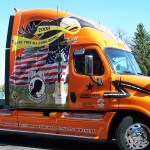
We started the ride today at 7:45 a.m. We lost one rider who returned home but picked up a new one. The weather was very cool after a rain front passed through last night. However, it was sunny and rain free by morning. The morning was uneventful for our 1st and second gas stops. Our third gas stop in Laramie, WY was rather spectacular. We were met there by 32 additional riders from the surrounding area and from Cheyenne. Also joining us was Vince and the Snyder Freight Line Freedom Rider Semi. What a beautifully Painted truck it is. Vince will be going all the way to the wall with us. The line of riders and support vehicles stretched for ¼ mile traveling the 60 miles to Cheyenne. We were met by a police escort on I-80 at Cheyenne and taken to the VA Hospital. As we pulled into the circle drive we noticed the flags flying at half mast. It was in honor and recognition of the fallen police officers of the area. The circle drive was lined with 11 American flags and the grass area had a small flag in the ground for each Vet that died at the hospital last year. It was a very impressive tribute. Tony Seahorn, a very highly decorated Vietnam Vet was the guest speaker. He presented a very moving tribute about some of his experiences in Vietnam and about honoring those who were never accounted for or returned alive. He & his wife co-authored a book called Tears of a Warrior, which is about their family’s story of combat and living with PTSD. His wife Janet, who is a Ph.D read us a poem entitled Angels of Steel. Janet wrote and dedicated this poem to the NVAR, stating “it will never be published for sale in any format”. It is strictly for honoring what we are doing. I wish it were not so long as I would love to share it with all who read this. It is so beautiful and moving it brought many to tears. Check out the web sight www.tearsofawarrior.com. After the ceremony we had a detail place a wreath among the flags of the honored dead, with taps and a 21 gun salute to follow. My friend for the day became Norman. He is a 29 ½ year air force Veteran. After retiring, he became a nurse and worked at the Cheyenne VA before becoming a patient at the home there. Norman had a brother who was a helicopter pilot and was killed in Vietnam. I found out most of this information from his wife who visits Norman every single day. We finished our day off at VFW Post 1881 with a very tasty spaghetti dinner and presented many well deserved certificates of appreciation.
Apr
26
Reflecting on a Comment
Filed Under Treating PTSD | 1 Comment
 Before I begin this blog I want to sincerely thank all of you who are following our book and providing feedback. I am well aware of the time it takes to stay aligned with a variety of online communication. It is humbling to know that individuals and families are finding our website helpful, and we are truly grateful for your comments.
Michelle Rosenthal, a reader of our April 15th blog, commented that she liked the last line:
“If we send them, then we must mend them.”
This has been our motto and theme throughout the book and certainly needs to be fully endorsed by our military, our country, our leaders, and our communities. What was thoughtful about Michelle’s comment was her last line where she asked, “How do we mend them in a way that does not inappropriately bend them?” And that, Michelle, is a billion dollar question – one for which I do not have a tangible response. Yet, I can say this, the solution lies in making a difference – one individual at a time. Healing does not fit every military experience or veteran the same. There are far too many variables. However, a few constants will be required: relentless determination to getting better, standing up and trying again even when staying down seems much easier, support from a variety of people (family, friends, the VA…), and most of all a deep feeling of being loved and worthy of love, when at times we feel quite alone.
For those of us living with someone suffering from PTSD, love does not mean accepting or condoning inappropriate behavior from either person. It means putting proper boundaries on our actions, without battering each other. It means that we love and trust each other enough to know that we can get better and want to get better. It means we believe the relationship is worth the effort, the pain, and frustration as long as there is progress toward emotional healing. And in the end, the mending will more than likely require a bit of bending. Perhaps it is only through the “bending” that genuine healing can take place. The key word in Michelle’s comment was “appropriate” bending. In a heavy wind a tree bends – that is a good thing. I’m simply trusting that the tree will sustain the storm because its roots are deep and firmly grounded in an earth that holds tightly to its foundation. Hopefully, if our spiritual and emotional roots are deep and far reaching, perhaps we can and will sustain the storm within. Nothing is impossible.