BOOK PURCHASE: Discount (above) or PayPal (below)
Click "Buy Now" to continue to PayPal
Click to order eBook - Kindle

Click to order eBook - Nook

Jul
12
TEARS OF A MOTHER
Filed Under American Patriotism, Combat PTSD, Family, Tears of a Warrior | Comments Off on TEARS OF A MOTHER

by Janet J. Seahorn
It came in the mail, a letter from a mother of a young vet who has already served a year of duty in Afghanistan. Even though we receive numerous letters from mothers, wives, vets, and even their children, this one kept coming back to my mind. Her words echoed the immense sacrifice families contribute when their loved one(s) serve in the military.
Given the current state of the economy, many military personnel cannot find employment once they are out of the armed forces. Some are left with few viable options to support themselves and/or their families except to re-enlist. This is the situation her son finds himself in now. Having to think about him returning to Afghanistan where every day becomes a bit grimmer is an alarming prospect.
What made her letter resonate familiar memories in me was going back to a time when I, as a young girl, watched and listened to the emotional rollercoaster my Mom (and Dad) went through while my brother was in Vietnam. Some nights when Dad was working late and she thought I was already asleep, I could hear her muffled crying. I am sure she was sobbing into her pillow to reduce the noise of her tears. It broke my heart because I knew there was little I could do to comfort her worries.
Later, after my brother returned home carrying the burdens of war, my mother faced another challenge – how to soothe, support, and deal with a young man who was very different from the happy-go-lucky son she once knew.
The tears continued as did the worries, for she understood that this new battle waging inside of my brother was just as formidable as those he faced in combat. And she understood, once again, there was little she could do to alter my brother’s new journey. She could be present to offer love and the stability of home, but he must be the one to do the work of emotional healing.
Combat’s wounds continue to take an enormous toil on the entire family, not just the vet. Such grief still continues to be done in silence, for vets and their families have long intuitively understood that few people who have not been in their position have a clue about what is occurring, every part of every day. Even if someone was willing to listen, how could one put into words the many hidden demons that returned as part of the baggage of war?
So many tears, so many wounds, and so much healing work still to be done. As long as war is part of our world, there will always be the sacred “Tears of a Mother”.
We need to remember to keep these gentle souls in our own hearts and prayers, and, perhaps somewhere in the distant future, there will no longer be a need for tears to be shed because of war, greed, or some leaders’ insatiable need for power.
When and if such a state of affairs ever happens, tears might be replaced with joyfulness and peace. We can only hope.
Jun
30
PTSD Series Discussion #5
Filed Under Brain Injury, Combat PTSD, PTSD, PTSD treatment, TBI & PTSD, Tears of a Warrior, Treating PTSD, War | Comments Off on PTSD Series Discussion #5
By Janet J. Seahorn
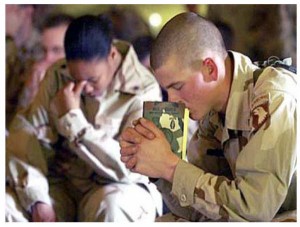
When is it time to seek outside help?
This is pretty easy to answer: You will know if it is time to seek outside help when the behavior of the serviceperson becomes abnormally un-normal. When life becomes a teeter-totter of ups and downs that can’t seem to be controlled no matter how hard you try. When your surroundings and relationships seem unstable and unsafe and you aren’t sure why, get help.
When my husband began experiencing PTSD, neither one of us had a clue what was going on at the time. There was no such thing as Post-Traumatic Stress. War was something that a person went to, came home from and tried to move on. It wasn’t discussed. It wasn’t thought about (or so we once thought and wanted to believe).
No one considered how the events of combat could impact an individual for the rest of his life. If you came home somewhat physically whole, that was a gift. You healed physically, and you lived as if all the horror from battle never happened. The past was the past and it should not impact one’s future. What an absurd assumption.
Now we understand that nothing in our past is ever fully in the past. The good and the difficult follow us wherever we go. We are part of our experiences. With understanding, courage, and information we may gain strength and wisdom to move forward. Getting outside help can guide us in forming the wisdom and understanding needed for healing.
What are some good resources for help with PTSD or TBI?
There are many resources available to our military service men and women. Check with your local Veteran’s Administration Center if you suspect you need support. You may need to be referred to a Veteran Hospital for further testing and diagnosis, especially if you suspect a traumatic brain injury. Every state has several local centers that have been established to help veterans find the appropriate placement and support needed to get the services they may require. (VA Centers are listed in our book)
Don’t stop at NO if you are convinced you have something wrong that necessitates some form of treatment. Sometimes all you need is that one special person who can take your situation seriously enough to get help. Our family personally saw this happen with my brother. He was extremely wary of anyone associated with the government. As a Vietnam vet, his mistrust of a broken, ineffective system made him reluctant to seek help from a military or veteran organization of any kind. Once he decided to seek services he ran into several brick walls. Yet, he kept trying, until he finally found a former army sergeant who took his situation seriously and made things happen.
It only took one person to make a difference. Don’t’ give up or give in to frustration. Keep going. Help is available, but sometimes you may have to fight for it just like you did in battle. If you did it then, you can do it now.
In ending, we want to thank you and your loved ones for your service and sacrifice. You have made a difference that few will understand, or perhaps fully appreciate. Nevertheless, please recognize the depth of your courage, strength and warrior spirit. These are the attributes that sustained you through combat, and now they will do so again in moving you towards healing and a better life.
Jun
24
PTSD Series Discussion #4
Filed Under Combat PTSD, Events, Family, PTSD, Tears of a Warrior, War | Comments Off on PTSD Series Discussion #4
by Janet J. Seahorn
How can we talk about PTSD as a family?
Gosh, this is a tricky question with an even trickier answer. As we have discussed in most of the prior questions, the first step is to acknowledge that upon returning from combat things aren’t quite normal. Become informed about the signs and symptoms of PTSD. Be honest as much as you can about what each of you is feeling. As the service person, you don’t have to go into all of the horrible details of your experiences, but you do and will need to discuss the truth that your military life in a combat zone may have been pretty distressing; that what you saw and did was often unsettling.
As the significant other or spouse, your role initially is to just listen. Try not to ask too many questions. Sometimes it may seem you are prying. Try and wait a bit before going into the details. But it is crucial, as a family, to talk. Silence is simply not an option. It creates distance by making assumptions about behaviors that may not be accurate.
In our book, we describe an incident where a young man who had been in several roadside bombings returned home from Iraq. On a quiet Saturday afternoon, the family decided to take a trip out of town to a favorite shopping center. It was to be a fun outing of togetherness. Things were going well until the young family came to bridge where a man waving for help was standing by the roadside next to a car with a flat tire. The wife suggested they stop and help, however, the young serviceperson immediately turned his vehicle around in the middle of the road, angrily stomped on the gas and headed home. Not knowing what was happening, the wife assumed her husband was acting unreasonably. It was a silent ride back to town. The young vet never told his wife what was going on in his mind. Later, during his scheduled visit to his VA counselor he retold the story. He knew his wife and children were upset with him for ruining their fun afternoon. However, what he saw was not an ordinary man with a flat tire needing help. What his mind and body saw and felt was a possible setup for an IED (Improvised Explosive Device). He had seen this many times during his tour of duty in Iraq. He had two thoughts to keep his family out of harms way: 1) He could shoot the “terrorist” standing on the roadside, or 2) He could, without delay, get his family away from the danger zone. Understanding that shooting the “threat” was probably not the best decision, he chose option two. Makes perfect sense, but without talking he went home angry and upset. And his family had no clue as to what had just occurred.
In our book we advise “If you care, you share”. Sharing creates understanding. Understanding generates compassion. And compassion establishes hope and protects the relationship.
Another word of advice about discussing a concern: Never try and sit down to talk over an issue when one or both parties are in a full pitch of rage or anger. You can’t stop a charging bear… it is already on a mission to attack. You must wait until tempers are calmer and conditions settle down enough to have a reasonably calm and “adult” discussion. If a blaming game begins, stop immediately. Blaming never solves the problem; it only throws more fuel on a hot fire. Use “I” statements such as, “I start to feel afraid when I see you getting angry and I don’t understand why?” or “It is hard for me to go to family events without you. I miss doing things together and want to know what I can do to make it OK for you to attend some of our family get-togethers.”
Most of our family conversations, once we began to understand what we were facing, resulted in a compromise that everyone could agree would make the situation better for all involved. We now try not to live on assumptions by doing a reality check with the person. For family events, every person becomes responsible for him or herself. Sometimes my husband chooses downtime away from a houseful of noisy people. He goes to a quiet room to watch TV or read a book while the rest of us play a rowdy game of Pictionary or Shout It Out. This is a Win/Win for everyone and is absolutely acceptable behavior.
May
25
PTSD Series Discussion #3
Filed Under Combat PTSD, PTSD, PTSD treatment, Tears of a Warrior, Treating PTSD, War | Comments Off on PTSD Series Discussion #3
 Question 4: If I, as a serviceperson, have PTSD, how can I help myself?
First, be honest with yourself. As stated in the last question, do not ignore the signs that you are suffering from serving in combat. Do not pretend that things are fine; that the problem lies with everyone around you such as your spouse, children, neighbors, family, or co-workers. Watch for signs such as increased anger, irritability, depression, and/or isolation from normal family events. Resisting the feelings associated with PTSD only exacerbates the problem. The best thing you can do if you think something is not normal is to visit your Veteran’s Center as soon as possible. These centers have become much more proficient in serving the military population’s needs than they were during past conflicts. Physicians and therapists now recognize and understand in better detail the effects of PTSD and how to treat it. Don’t wait. Help is available. The sooner you get assistance, the sooner your life will begin to move forward in a manner that allows you to live more fully. You deserve to be at peace, to be happy and so does your family. You and your loved ones have given enough in serving your country. Now it is time that your country does something for you. Help is waiting; don’t wait another minute to get it. Life is too precious to be wasted fighting demons from the past. Today is the only thing you have that will make a difference for tomorrow. So use today wisely to gain understanding, healing, and perhaps some peace of mind and spirit.
Other suggestions include spending time outdoors. Nature offers us a tremendous healing environment, especially for emotional wounds. We find hiking, fishing, skiing, and simply just being in the wilderness soothes much of our anxieties and internal tensions. Pets are also a therapeutic comfort. A great deal of research has been conducted that has shown the positive impact animals have on a person’s well being. Because our pets love us unconditionally, are non-judgmental, and provide a sense of safety and security, they are one of the very best options for keeping us sane and healthier both physically and emotionally. A few additional suggestions that we have found quite beneficial are meditation, aroma therapy (no kidding J), body massage, and heavy doses of laughter. Humor is a terrific medication since it is almost impossible to be angry and laughing at the same time. It releases endorphins that alleviate body pain, and provides a huge dose of oxygen to the brain and muscles.
Question 5: What can I, as a family member, do to help someone with PTSD or a TBI?
There can be a major difference between a person suffering from PTSD and someone who has incurred a TBI (traumatic brain injury). A TBI is a physical injury to the brain, where PTSD is more a reordering of the neuro networks in the brain. Many times a person with a TBI may also have some form of PTSD, mainly because he/she was in a situation that caused physical and emotional damage to the individual and/or others in the company. As with all illness and trauma, the more informed you become the better you are at making appropriate decisions in handling the circumstances. Illness and problems must first begin with immediate recognition that something is not quite right. The sooner you recognize the signs of PTSD, the sooner you can begin the healing process. Once again, it is dangerous to ignore the obvious and pretend things will get better with time. Too often, this does not happen by itself. Time can make behaviors and tensions more precarious, destroying personal relationships and family cohesion. No one benefits by waiting. Spouses get tired of walking through the “mindfields” of the traumatized serviceperson. Children suffer because they can’t and don’t’ understand why mommy or daddy are not always the same kind; loving parents they were before war.
When a family member returns from combat with PTSD, everyone close to him must join together to offer support, hope, and comfort. In doing so, however, you must set suitable boundaries that will keep the family safe and well-balanced. If children are involved, they must be at the forefront of your concern. Their physical and emotional well-being is of utmost important. Living with a parent who has untreated PTSD can have long-term, negative consequences on a developing child. Getting immediate treatment for your spouse and yourself will be the best line of defense in moving towards the life you want to live and the family unit you want to be.
May
18
PTSD Series Discussion #2
Filed Under Combat PTSD, PTSD, PTSD treatment, Tears of a Warrior, War | 1 Comment
 Question: 2: Is PTSD different from Combat Stress?
The answer to this question may depend on which study you might read or which doctor is doing the diagnosis. Combat Stress has often been referred to as PTSD. “During the Civil War they called it Irritable Heart. During World War I and II it was referred to as Soldier’s Heart or Shell Shock and other terms described it as Neurosis, Combat Fatigue, or Combat Exhaustion (pp. 66-67, Tears of a Warrior, 2010). Every war has coined a term that seemed to describe a warrior who returned from combat with behaviors and reactions that were not a part of his/her life before the battles. Whatever one might prefer to call the behavior is not important. What is important is if the behavior interferes with the person’s ability to live a normal, happy life or the behavior negatively impacts family, friends, or work, you should get help immediately. Today, PTSD is the accepted medical term for similar symptoms from all wars.
Question 3: If my serviceperson has PTSD, will it better?
Our belief is that those suffering from PTSD can and will get better. Some fortunate few whose trauma is not as intense may be able to heal on their own. Most, however, who have seen too much, done too much, lost too much, may only move towards healing with the outside support of a trained physician or therapist. For many, like my husband, there has been no such thing as a full cure. Nevertheless, appropriate medication, counseling, and self-meditation have been a tremendous help in getting to that “better” place. With “better” understanding of what the person is facing and how those closest to him/her can offer appropriate support, the family can become a safer, stronger and more caring unit. Pretending that nothing is happening or that in some miraculous way tomorrow you will awake and all the bad stuff will be gone, is simply not realistic. It doesn’t just go away, no matter how hard you try. In fact, trying harder often makes the situation worse. The best approach to addressing these ongoing painful ghosts is information, productive action, and the courage to admit something is not quite right. Obtaining the help and treatment needed to move towards better physical and emotional health is the best step to recovery.
May
13
PTSD Series Discussion #1
Filed Under Combat PTSD, PTSD, PTSD treatment, TBI & PTSD, Tears of a Warrior, Treating PTSD, War | Comments Off on PTSD Series Discussion #1
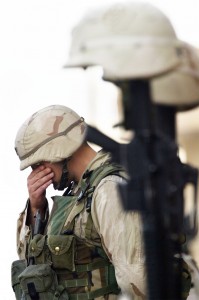 Several weeks ago we were ask to respond to a set of questions regarding Post-Traumatic Stress and combat vets. These responses will be used in a short pamphlet/flip book that will be distributed through another organization. We thought many of our readers might find the questions and our feedback useful. Today’s blog is the first of our five part series. (Part 1 of 5)
•1. How do I know if my serviceperson might be suffering from PTSD? (Symptoms, possibly)
This is a great question with a not so simple answer. Not every person who returns from serving in a war zone ends up with Post-Traumatic Stress. A great deal depends on the amount of time the person spent serving under combat conditions, as well as how many traumatic events occurred during his/her deployment. Most doctors and researchers agree that the more time spent away form home, and the more distressing events experienced during each deployment, the greater the likelihood the person may experience some form of PTSD. If the individual was already predisposed to stressful home or environmental factors before joining the military, PTSD may become even more prevalent. There is no simple formula for why one person develops PTSD while others seem OK. But one thing is certain; it has nothing to do with a lack of strength, courage, or character. Sometimes it is simply the hazard of war due to exposure to unspeakable traumatic events, often in life and death situations.
So what signs might you look for when suspecting someone has PTSD? Since the brain is restructured by every act it experiences, it is sensitive to many good and not so good events. Love, hate, prejudice, kindness, and violence are just a few life experiences. Yet, when the life-threatening events occur over and over again for a long duration of time, or even during one incredibly horrifying event, the mind/brain is seared with the image and emotional feelings become imprinted.
Signs/Characteristics of PTSD:
- ð Hyperarousal and abnormal startle responses
- ð Irritability and/or jumpiness; constantly on guard
- ð Hypervigilance
- ð Nightmares, insomnia, and night sweats
- ð Recurrent traumatic memories or flashbacks
- ð Overwhelming waves of emotions
- ð Survivor guilt
- ð Feeling detached and/or emotionally withdrawn from others
- ð Fragmented sense of self and identity
- ð Panic attacks
- ð Shame
- ð Despair
- ð Lethargic or lack of motivation/interest in life, work, and family
- ð Avoidance of common places, activities
- ð Memory and concentration problems
- ð Sadness and hopelessness about the future
The key here is that a person generally does not have ALL of these symptoms at once. Some come more often than others. One person may have numerous panic attacks, while another may want to isolate himself and not take part in normal daily and family activities. It is the severity and frequency of the symptoms that would suggest a diagnosis of Post-Traumatic Stress.
May
4
Out of the Darkness
Filed Under Combat PTSD, Life, PTSD, PTSD treatment, Tears of a Warrior, Treating PTSD | Comments Off on Out of the Darkness
by Janet J. Seahorn

“Out of the Darkness, into the Light”. These short seven words explain unmistakably the effects of healing the wounds of PTSD. While reading my daily inspirational “quotes”, I came across this one. We see and hear it often in religious sermons. For the many whose lives have been relentlessly challenged by life’s experiences and survived only by the grace of a higher power or some special intervention, we have an intimate understanding of going from darkness to light.
Sometimes we may reflect on how exactly we got to a “lighter” place: lighter by the brilliance of radiance in our days, lighter in our spirits that carry a heavy burden, unseen, unfelt, and often times misunderstood, and lighter in our physical bodies that endured the trauma from our past.
The answer to how we got to the light may not be as important as the blessing, we are here. In reality, we don’t remain in this space of lightness every moment. Yet, when we experience these twinkles of happiness, we feel a profound sense of peace. A peace that lets us know we are not alone in our battles. A peace that validates we are loved and cared for during our conflicts. A peace that leaves us with the hope that when we are thrown back into the abyss, we CAN and WILL be able to climb back up to the light. Just trusting this inner knowing is what gets us through the dark days and nights. It is what enables us to wake each morning with new expectations for the day. Without such trust it would be impossible to continue the journey, for the path is too unpredictable.
Healing Post-Traumatic Stress Disorder is built on the trust that through inner strength and outer resources we can not only survive and mend, we can thrive. Trauma can cause immense changes in our brains and bodies. It is not merely a matter of ‘sucking it up’ that will move us toward better physical and emotional health; it is taking action to get that help needed for healing. For most physical illnesses this is obvious. If one has a life-threatening disease, he/she would get outside, professional help. She would endure the devastating effects of chemo and radiation to survive. He would go through open heart surgery to repair the damaged organ expecting months of rehabilitation and physical therapy. However, with emotional trauma, some in society still seem to attach a stigma. The only weapon for dissolving the stigma is knowledge. And the only way knowledge blossoms is through openness, education, and courage.
You see it will take each of us to continue to share our insights with others. Truthfully, it is far easier to remain silent, hiding our wounds from the eyes of world. Yet, knowledge does not grow in such darkness. It requires light, nourishment, and valor. So it is up to each of us to contribute to the understanding of PTSD and how one can move “out of the darkness, into the light.”
Blessings and continue mending.
Apr
23
Dog—–God
Filed Under Combat PTSD, Dogs, Pets, Tears of a Warrior, Treating PTSD | Comments Off on Dog—–God
by Janet J. Seahorn

Look into the face of your loving four-legged pet, and I would bet you would see the eyes of GOD. A being so unconditionally loving and faithful, that nothing or no one could keep it from being near our sides. We have written several times about the value of pets. For someone living with Posttraumatic Stress or a serious Traumatic Brain Injury, pets can offer a sense of comfort and well-being that are beyond modern medications; and the side effects are far more positive.
We get many comments and videos from our readers testifying to the upbeat effects their pets have had on them. This week a friend sent us a one we had not seen before. We thought many of you would enjoy viewing this short and touching piece. We also included another written story that has appeared over the internet on many occasions. More than likely, most of you have read it, but every time I see it, and am tempted to delete without reading… something pulls me to the picture and I begin viewing it once more, ending always with tear filled Kleenexes.
You see, this last piece is a true chronicle of what many of our service people and their loving pets sacrifice for our country. Not everyone understands that pets pay a high price for their masters’ deployment. Yet, they do, silently, patiently waiting for that one special person to return. There is no greater joy than the homecoming of a beloved member of a family.
So here is to DOG and to GOD: D = Devotion; O = Omnipresent; G = Goodness/Gift; in any order it means the same thing.
Apr
14
Here Today and Sometimes Still Here Tomorrow
Filed Under Combat PTSD, PTSD, Tears of a Warrior, Today's War, War | 1 Comment
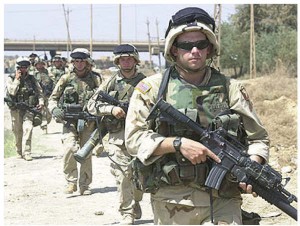
PTSD continues to be everywhere in the news, on TV, and in the movies. The question I have is “Who is listening to all of these stories? Who is concerned about the growing number of new cases resulting from multiple tours of duty in our current wars? Are those in Washington who must attend to severe budget concerns able to do what is necessary? What is right? Is the average American informed enough to care?” Following is information from just one of many data sources on PTSD. It comes from Noel Brinkerhoff (Monday, April 12, 2010), and the information is disturbing.
Nearly 300,000 American troops have served three, four or more times in Iraq and/or Afghanistan, while cases of post-traumatic stress disorder (PTSD) have risen dramatically since the wars began. The possible correlation between these two facts has led to the question of whether it’s fair to send young men and women back into combat again and again, and risk causing long-term mental and emotional problems, not to mention the physical toll.
One U.S. Army study from 2009 found troops in Afghanistan were more vulnerable to developing psychological problems as the number of tours went up (31% for three tours, more than double the rate of those with just one). Another study focused on Iraq showed nearly 15% of Army troops who served two tours suffered from depression, anxiety or traumatic stress; more than double that of a single tour. The PTSD rate was almost 2.5 times higher for two deployments compared with one.
“We just don’t know whether it’s combat exposure, repeated separation from the family or (not enough) time off,” Lieutenant Colonel Paul Bliese, director of the division of psychiatry and neuroscience at the Walter Reed Army Institute of Research, told the Associated Press. “All of those are reasonable explanations.”
Whatever the reason, the ultimate result is that more troops returning home are bringing back with them a whole host of demons and ghosts. These unwanted visitors may never leave the veteran and have significant impact on families, children, and communities. Let us hope that people who can make war decisions are listening, creating effective support services, and making the process as uncomplicated as possible. Let us hope that Americans are willing to provide the physical and mental health funding needed to restore those suffering from combat wounds.
For many families and veterans, the process of getting help becomes so overwhelming difficult that they feel victimized by the very system that should be offering them hope and healing. And let us hope that every politician and every member of our society takes seriously our motto:
If we send them, then we must mend them.
Apr
6
Happy Easter
Filed Under Combat PTSD, Easter, Family, PTSD, Tears of a Warrior | Comments Off on Happy Easter

In our family, Easter is a time to gather and celebrate the Good News. Our last blog focused on the challenges often associated with holidays along with some suggestions for making the day less stressful.
We are happy to report that our Easter celebration was wonderful. We had our sons, several of their friends, Jan’s sister, and two extra dogs for the afternoon. At times it could have been a bit hectic, however by following some of our own suggestions the day went quite well.
As the day went on, Tony made his choices based on how he was feeling and what he wanted to do at the time. Since there were a few basketball games on TV as well as a good movie, he had some quiet time in our lower family room. Most of the guests remained upstairs where goodies were arranged for munching and chatting.
Since the weather was warm with plenty of sunshine, after dinner everyone took a long walk, working off some calories and getting the four-legged visitors out for some exercise. Just being outside in the open air was very therapeutic. It is amazing how calming nature can be in normalizing an otherwise busy gathering.
The evening ended with playing our traditional family games which can be quite loud and annoying for some. So Tony once again spent some quiet time reading and watching March Madness.
What is important is that everyone had a good time, had plentiful opportunities to engage in a variety of activities, and made choices that were appropriate for each person. Long ago we stopped apologizing for any person who decides to make an alternative choice for the day. Each person is responsible for him/herself and each person has permission to do what is best for him/her anytime during the celebrations. By reducing unnecessary expectations, the large gatherings go much smoother.
We are so blessed to be able to spend quality time with family and friends. It is important, therefore, that these special occasions turn out to be special because of the good things that occur, instead of some outburst that will be remembered miserably.
Congratulations family! We made it perfectly through another holiday.