BOOK PURCHASE: Discount (above) or PayPal (below)
Click "Buy Now" to continue to PayPal
Click to order eBook - Kindle

Click to order eBook - Nook

Mar
26
Healing From The Wounds Of War
Filed Under Black Lions, Combat PTSD, Courage, Healing, Military, Pain, Peace, Return To Vietnam, Tears of a Warrior, Trauma, Veterans, Vietnam Today, War | Comments Off on Healing From The Wounds Of War
Two Quotes from Rumi:
(Rumi was a 13th-century poet of immense talent. His work highlights the power of literature in its ability to transcend time, language and geographic locations)
1) Healing doesn’t mean the damage never existed. It means the damage no longer controls our lives.
2) The wound is the place where the light enters you.

Mar
18
How you can honor our Vietnam vets
Filed Under Combat PTSD, Peace, PTSD, Tears of a Warrior, Troops, Veterans, Vietnam Veterans, War | Comments Off on How you can honor our Vietnam vets
Ann McFeatters: How you can honor our Vietnam vets
Guest Post from the Dallas Morning News:
By ANN MCFEATTERS
Published: 05 March 2015 07:27 PM
The man who said his name was Danny arrived at my door with a huge floral box. Inside was one of the most beautiful bouquets I’d ever seen.
Danny was with the Maryland highway department, supervising a crew installing new curbs on my street. He was also a Vietnam veteran who had seen the small blue star in my window, indicating two family members were serving in Iraq and Afghanistan.
Danny came from a generation that provided 9.2 million people who served in the military during the Vietnam era, many of whom came home from war reviled, not thanked for what they gave their country. Like most of his fellow veterans, Danny vowed to show only gratitude to those in military service, no matter what the politics of any current war that service members are called on to fight. Flowers to a stranger were to thank my family.
This month marks the 50th anniversary of the arrival of 3,500 Marines in Da Nang, South Vietnam, beginning 10 years of a terrible conflict that would sear and scar this nation.
In the “lessons learned” department, perhaps the most important is to separate the warrior from the war. Today Americans of all political stripes express sincere appreciation for what the men and women of the armed forces are called on to do for their country, whether the mission is popular or not.
The Vietnam Veterans Memorial on the mall in the nation’s capital, with its awesome wall designed by Maya Lin, engraved with the names of 58,300 people who gave their lives in the jungles of Southeast Asia, was meant as one way toward healing a divided, bitter country.
It has worked. The three-acre memorial with its gardens, wall, Vietnam Women’s Memorial and The Three Servicemen statue, is visited by 4.5 million people a year. Its website, with photos and information on veterans and messages from their friends and families, draws 4 million virtual visitors annually.
The veteran behind the memorial, Jan Scruggs, a man of enormous personality and drive who raised the $8 million needed to begin implementation of it, is retiring this year.
One way the Vietnam Veterans Memorial Fund plans to honor him and all the war’s veterans is to raise money for a $116 million underground education center to display some of the 400,000 personal items left at the wall by visitors, a unique occurrence which stunned the memorial’s founders.
From teddy bears to tear-stained letters, the items, stored in boxes maintained by the National Park Service, which owns the memorial, tell powerful stories.
Approved by Congress with no funding, the education center needs donations from the public if it is to be ready for a ribbon-cutting ceremony in 2020. Most of all, the Vietnam Veterans Memorial Fund wants future generations to learn about the Vietnam era, how decisions were made and what they meant to the nation.
Tomorrow’s fifth-graders must learn they owe a debt to those who came before them and that they, too, must leave a legacy of service, the best way they are able. Technology will give them access to such things as digital oral histories from veterans and TV footage of the first war played out in the nation’s living rooms.
There are 7 million living Vietnam War veterans. Beyond those who died or went missing there, Vietnam veterans are still dying of injuries sustained in the war, such as exposure to Agent Orange and post-traumatic stress disorder. The fund’s CEO, Jim Knotts, a Desert Storm veteran, stresses that these veterans must be honored, and that good health care for all veterans must be a national priority.
Because of space restrictions, the education center will be the last major memorial built on the National Mall. Fifty years after the start of the Vietnam War, it is time to take the next step in honoring those who fought it, whether they wanted to or not.
Here’s to you, Danny, and all those like you.
Dec
16
UNSEEN WOUNDS
Filed Under Black Lions, Combat PTSD, PTSD, Tears of a Warrior, Veterans, Vietnam Veterans, War, Wounded Warriors | Comments Off on UNSEEN WOUNDS
Guest Blog:
by Jim Fountaine, Vietnam Veteran

A man of eighteen years, barely dry behind the ears hears Uncle Sam’s call and in eight short weeks the change is as radical as a caterpillar into a Butterfly. Only this change has no beauty to it. A young boy is transformed into a soldier, an instrument of war.
The days of taking his girl to Lover’s Leap, skipping class to go fishing are gone. He is thrust into a world of violence against his fellow man. He begins to see the ravages of war. He learns to kill, not for sport or for food, but for territory, ideals. He does learn these skills with dedication and without question because he is doing what he is ordered to do!
Then, suddenly, he is thrust in a world of pain, death, blood and pure fear. He sees things that no amount of education or training has prepared him for. His friends are now few and close, yet distant because getting too close will cause pain when that friend is no longer there. The cold, damp, heat, loneliness become his constant companion. Sometimes he tries to deaden the pain with booze. He fights himself to bury what he sees. He keeps doing his job without emotion because he feels if he feels he’ll go nuts.

Then suddenly it’s all over and he sheds his uniform and finds himself back on main street U.S.A. When he sees his old school mates he finds he no longer has anything in common with them. He cannot talk about his experiences because they won’t understand. He finds he has had his youth robbed from him. He no longer trusts those around him with the ease he once did.
He has wounds you cannot see; not wounds of the body but wounds of the soul, the mind and the spirit, and no one can see them. No one can see the scars. He drifts back into a time when he felt the pain for real. He seeks out answers he cannot find. At times he feels out of control, so tries to find things he believes that will give him control like booze, drugs or he buries himself in work almost to the point of exhaustion.
He withdraws from relationships for fear of loss. He rejects authority for that authority brought him harm in the past. He feels alone in a vast world that doesn’t seem to care. He hurts, but no one can see the wounds; no one hears his cries for help. He is judged by people by what they see on the surface. They don’t see the Unseen Wounds in him. They don’t hear his silent cries and all he can do is ask, “Why can’t you see what this is doing to me?”

Jan
10
THE MAN I DIDN’T KNOW
Filed Under Combat PTSD, Family, PTSD, Tears of a Warrior, The Man I Didn't Know, Veterans, Vietnam Veterans, War | Comments Off on THE MAN I DIDN’T KNOW
by Janet J. Seahorn, Ph.D
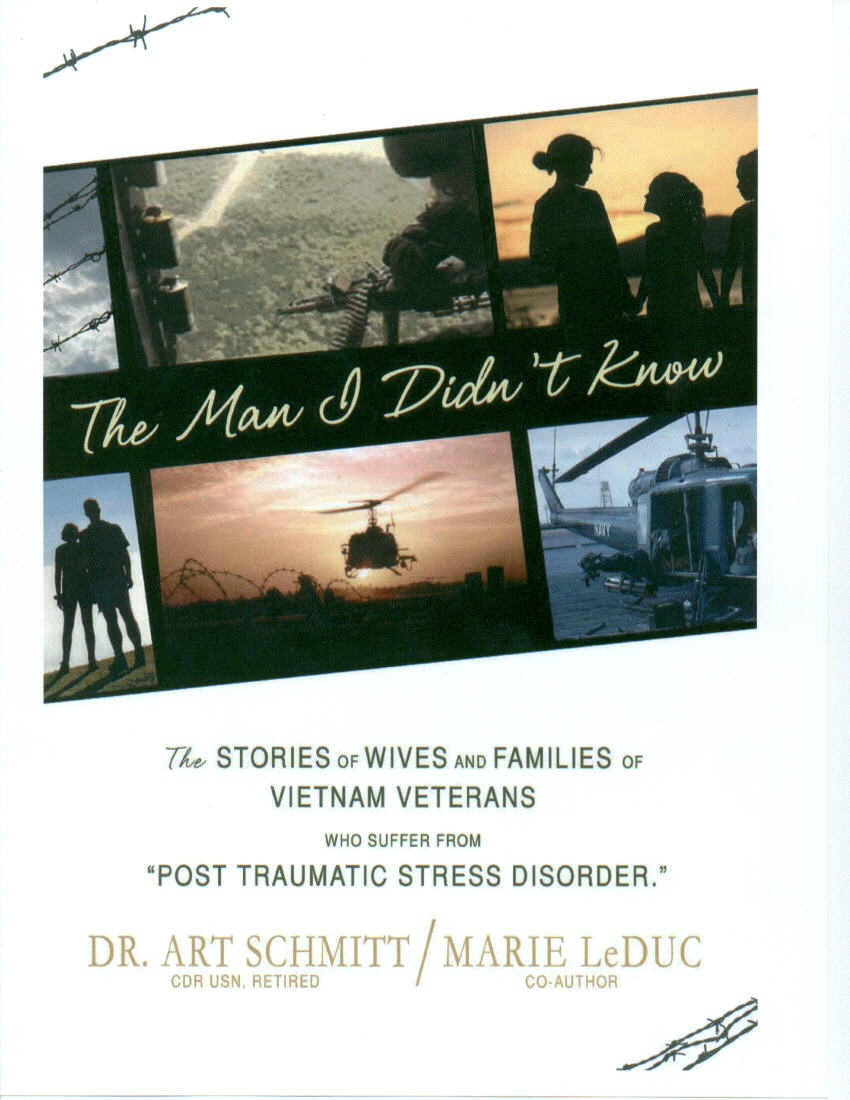
This is the title of a book sent to us by Marie Leduc, the wife of a Vietnam Veteran who co-wrote it with retired naval aviator, Art Schmitt, Ph.D. Later Art got his degree in psychology. The Man I Didn’t Know: The Stories of Wives and Families of Vietnam Veterans who suffer from “Post Traumatic Stress Disorder”, is a collection of stories and poems written from the perspective of those most directly impacted by combat.
The articles are heartrending and the poetry will literally place you in the hearts and souls of the writers. While reading through the many tales I found several statements pretty sobering and thought provoking. Some statements gave me an unusual viewpoint of war, especially the last few wars we have fought and left without a clear victory. I have included several small snippets of some of these in this blog.
- “The United States did not lose the war in Vietnam, the South Vietnamese did. The last American troops left Vietnam on March 29, 1973, (however, the last flight out wasn’t until 1975). We did not lose the war… we stopped fighting” (p. 16). Recently, December 15, 2011 we raised the last American flag as we leftIraq. I wondered if years down the road we will describe this last conflict in a similar manner.
- “There are two kinds of PTSD… acute, which is treatable, and Chronic, which is manageable”. More Vietnam veterans, per capita, suffer from chronic PTSD than from any other war. The reasons for this is unknown, but it may be that it was an unpopular war and the veterans were not welcomed home” (p. 16).
- In another article, To Answer Your Question, by Ed Ruminski, the veteran is trying to explain to his son what combat was like, how time stopped and actions were both quick and in slow motion. How he had to be “constantly watching, listening to my senses”. In the end he merely states, “They call it war, and to answer your question son, yes, I have killed somebody. What I was unaware of was how by that process I just described, I was also killing myself” (p.19). Sadly, many of our Iraq and Afghanistan troops are returning with parallel sentiments.
 These are just a few statements from the book. The various writings describe the wounds of the minds, how scary it can be for a family to negotiate the many behaviors and emotional ups and downs of their beloved warrior, how a mother must learn to cope with the death of her son while visiting the Vietnam Wall to stay connected, and how PTSD affects children when their under developed minds and bodies leave them vulnerable to actions which they may never fully understand. In the end, this last quote by Jacqueline McVicar (p. 85) really says it all.
“His fight was in Vietnam,
Ours is the Vietnam in him.”
Ordering information: ISBN: 1-4196-2452-0 www.booksurge.com 1-866-308-6235
Nov
10
THE CONVERSATION
Filed Under Tears of a Warrior, War | Comments Off on THE CONVERSATION
This is a guest post submitted by Ben Heath:
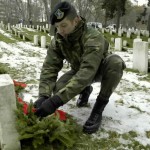
“The conversation was the result of a long day I spent at Arlington to visit three brothers I lost.”
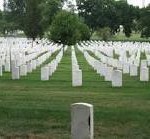
One simple grave among a sea of others. Thousands of them in all directions, collection of brothers gathering for years.
How could a place ever come to be? How much pain? How much suffering, blood, sweat and tears?
This one before me now though, it was different from the rest. It’s the one that had brought me to this place.
You see, this one here was the brother –I still had to face.
It’s a conversation I’d dreaded for years. I knew he’d be there.
Lost in my thoughts, loaded with burdens I thought I had to bear.
It didn’t take him long, not sure if I was really ready.
I was determined to hold my ground. Stand strong. Stand steady.
He was just as I’d remembered, all dirty, hard lookin and thin.
Bastard was just standin there lookin, with that familiar shit eatin grin.
I spent a long minute, trying to talk. Spittin an cussin, choked up, stuttering, not knowin what to say.
How does one express the feelings, the sorrow left from that horrible, horrible day.
Then in an amused voice, I heard him say—At Ease Brother, why you so tense?
We’re all brothers here. You not makin any sense.
The conversation eased some as he let me off the hook.
He could tell I was struggling. I’m sure I had the look.
He said— Look man, I’m gonna lay it all out for you, so listen to me good.
No excuses, No apologies, Move forward. It’s always where we stood.
Every battlefield takes some brothers; some are just bound to fall.
Others gotta keep movin, fight the fight, raise our flag up proud and tall.
They say those of us here, are the heroes. Cause we gave the ultimate sacrifice.
You guys that made it home, Hell, you gotta get on with ya life.
Don’t worry about us brother. We are all at peace here.
You the one got to deal with the memories year after year after year.
You don’t owe us nuthin; just remember one thing I say.
We did it all for the young ones. Be sure you show em the way.
It wasn’t easy for you to come here, shows you still got some of ya bold.
Now go back to your family. I can see you’re shivering from the cold.
Oh yeah!! One more thing I forgot.
One of the perks to this place — Beers always cold.
Go now in piece. Not one more day should you bother.
Cause no matter what. I STILL LOVE YOU BROTHER!!
Ben Heath
Desert Storm Veteran
Apr
14
WHEN STATISTICS ARE WRONG
Filed Under Tears of a Warrior, Vietnam Today | Comments Off on WHEN STATISTICS ARE WRONG
by Janet J. Seahorn, Ph.D
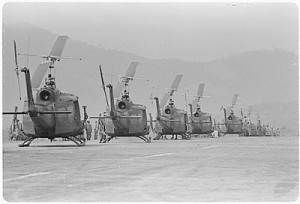
Ok, I’ve been duped and I am not too happy about it. Several of what I thought were reputable websites have been taunting for years that only about 1/3 (850,000) Vietnam veterans were still living. I must it admit it was an unbelievable number which is why I checked it out with other sites to confirm. Turns out all of these sites were wrong, DEAD WRONG!
This weekend Tony and I received his Vietnam Veteran’s of American magazine (March/April 2011). In an article, Not Dead Yet: Mortality Rates Among Vietnam Veterans, Patrick Brady explains where the misleading statistic originated and what the real numbers are… as far as anyone can estimate. It seems the polluted numbers came from a nine-minute video originally posted on YouTube by a group called Veterans Appreciation Alliance. What makes this even crappier is the group was “seeking sponsors and contributions for its Grateful Red, White, & Blue Appreciation Tour” (Brady, p. 29 March/April 2011). This is a pretty despicable way to prey on the hearts and minds of patriotic Americans and makes me even more annoyed. The group’s various websites (yep, they had more than one to capture audiences for their fund rising), even used the Naval Health Research Center as one of its resources. The Center was totally unaware of what was occurring. By the way this particular source was one reason I thought the data was accurate.
So where did this MYTH first originate; according to Brady it came from a phony website, The American War Museum, which seem to disseminate “much false information for reasons only its originator might know” (VVA, March/April 2011). A different site, The American War Library, appears to be run by another one man operation in California by the name of Phillip R.Coleman. Looks as if Mr. Coleman has over two dozen alias such as Otis Willie and Roger Simpson. Yikes!
Now, for the good news according to the Center for Disease Control: “In-country Vietnam veterans accounted for about a third of all Vietnam-era veterans, and if they were dying only slightly faster than the others (veterans serving in the military but not in Vietnam), then the 800,000 era veterans who died from 1960s through 2000 should have included fewer than 300,000 in-country veterans” (Brady, pp. 29-30, March/April 2011). What this really means is only around 325,000 to 350,000 out of 3,566,000 Vietnam veterans serving in-country have died, versus over 2.5 million. Quite a discrepancy in the number of deaths.
Appears many of us were duped by deceitful websites using fancy patriotic names. Thanks to the excellent article by Mr. Brady, I’ve learned my lesson. I am a little wiser, a bit less trusting, and a lot more aggravated at those who try to capitalize on the goodness of others.
Oct
12
Dang – These Stats Are Amazing
Filed Under Black Lions, Combat PTSD, Life, PTSD, TBI & PTSD, Tears of a Warrior, War | Comments Off on Dang – These Stats Are Amazing
by Janet J. Seahorn, Ph.D.
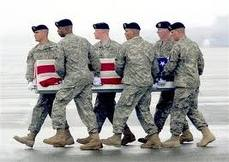
As you might imagine, we have been doing research and accumulating multiple types of data for well over ten years. Much has been on PTSD along with statistics on various numbers of vets who served in different wars, as well as their injury and death counts.
Over the last two weeks we have had numerous individuals send us a variety of articles and information on the Vietnam War. Perhaps the most startling was a number that I checked out through several sites; it was a number that claimed only 1/3 of veterans who served in Vietnam are still alive. This number was part of a 2000 census count, so I can only assume the number is far lower ten years later. The actually statement was “Of the 2,709,918 Americans who served in Vietnam, less than 850,000 are estimated to be alive today”.
Yikes. This is a number neither Tony nor I ever expected. Perhaps we don’t want to admit that we are growing that much older. Or perhaps the numbers may show an underlying concern with the health of Vietnam vets who endured massive amounts of toxic chemicals while serving in the war zone. At any rate, the small number of Vietnam vets still living is a real worry.
Another statistic that we have seen is that of the 9,087,000 military personnel who served from August 5, 1964 – May 7, 1975, only 2,709,918 actually served in Vietnam. Of those who were in Vietnam, only around “40-50% either fought in combat, provided close support or were at least fairly regularly exposed to enemy attack” (Bob Beavis, 2010).
And most alarming in a 1995 census around 9.5 million individuals falsely claimed that they had served in Vietnam when they had not; in the 2000 census almost 14 million individuals falsely made such a claim. Yikes, no wonder the Veteran’s Administration is having a harder time trying to identify who did and did not serve when there are so many “false” claimants in America. As my grandmother would say, “Shame, shame, on all of them”.
Last, and this I find very interesting given the amount of press that has been given to the number of Vietnam vets who were supposedly alcoholics, drug users, and homeless, according to various vet sources (VFW Magazine, the Public Information Office…) there was/is no difference between those populations who served in Vietnam and those who did not.
Also, we often hear about how many Vietnam vets ended up in prison… simply not true. Vietnam vets were less likely to be in or served time in prison – only ½ of one percent (Bob Beavis). Over 82% of Vietnam veterans seemed to have made a pretty successful transition to civilian life in spite of dealing with severe injuries and PTSD.
So congratulations all you Vietnam vets; you have lived a truly exceptional life, served your country with honor, and had the incredible strength and internal courage to continue to live life with high principles and personal pride.
Aug
18
THE WISDOM OF WARRIORS PAST
Filed Under American Patriotism, Purple Heart | 1 Comment
by Tony Seahorn
Even in the most devastating and pain-filled moments, we have an opportunity to learn something about ourselves, our world, and the human spirit.
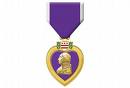
Attending the Purple Heart National Convention in Rogers, Arkansas provided an enormous volume of proof supporting this statement. The group was a moving, living sea of purple where great amounts of blood was given in service to our country. Veterans from WWII, Korea, Vietnam, and a few from the current war in Iraq and Afghanistan attended.
It is the Vietnam veteran, however, who have provided evidence of how to do things differently when welcoming a warrior home from combat. These vets had no “welcome home”. Their experience of returning from combat was often met with verbal and sometimes physical abuse. Crowds of protesters were waiting to hurl insults and thoughtlessly displayed signs/banners with obscene language and incredibly cruel remarks and pictures.
What Vietnam vets taught Americans through their touching stories were how badly they were injured – not just by the enemy in a foreign land, but by their own country men. The wound to the soldier was deeper, more personal. It bled into the heart and soul of the veteran and couldn’t heal. Healing requires exposure to the light, the outside air. The Vietnam vets were forced to suppress not only their sacrifice, but their woundedness.
With our present battles in Iraq and Afghanistan, veterans have rallied for a new mission, a promise that never again would our military personnel return home unwelcome. Today there are a multitude of individuals and organizations who support, care and offer hope to serving military members as well as their families. At the Purple Heart Convention we met a few. The “Soldier’s Angels” were there to ensure every military person serving in a combat zone receives care packages, cards, and letters from their fellow Americans. “Quilting for Valor” is another group who painstakingly create beautiful hand-crafted quilts to send to hospitals both in-country and overseas. These quilts cover and comfort the wounded warrior during his/her hospitalization.
And there were others with their own caring mission.
Vietnam veterans taught Americans how words can wound deeper than guns. How lack of support impairs the ability to move forward. And most of all, how to forgive – their country’s leaders, their country men/women, and sometimes even their own families – because they understand that forgiveness heals.
The significant lesson these past warriors, in their aging wisdom learned, then modeled, was the power of absolution, which granted freedom from their emotional woundedness. Then, through such forgiveness, they have and continue to work tirelessly with the American people and the military to meet the needs of the new combat wounded.
America’s new Purple Hearts hopefully feel only the love, support, and generosity of an America who will never again allow our sons and daughters to return home from combat unwelcome.
Jun
22
A Reunion to Remember
Filed Under Vietnam Reunion | 1 Comment
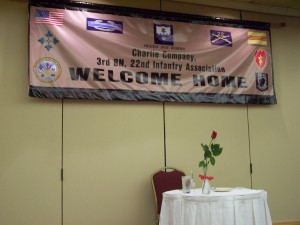 There are all kinds of reunions: high school, family, college, etc. Then there are those reunions that aren’t organized just for celebrations, but more importantly for remembrance, honoring fallen comrades, and healing. The biennium gathering of Vietnam Veterans who served in Charlie Company, 3rd Battalion, 22nd Infantry was one of these. This year it was held in Colorado Springs, CO, and we were invited to be part of the three day events. On Friday we visited Ft. Carson where the group was graciously granted access to several special base training sections including the simulation area where troops were able to practice their shooting skills. Another simulation building housed four look-alike Humvee Vehicles with machine guns, and other high tech equipment. Soldiers practice their driving skills and teamwork prior to deployment (or re-deployment) to assignments in Iraq and Afghanistan. These maneuvers proved far more challenging than any of us ever imagined. It made us realize how incredibly intelligent and efficient our current troops are when being trained for combat. Our young military guides were so enthusiastic about their mission, their work and their willingness to serve their country. Each had been deployed to Iraq or Afghanistan at least once. Many had experienced three deployments with a fourth coming soon. I couldn’t help envisioning the huge sacrifice they were making, as well as the commitment from spouses, children, and parents.
The reunion ended with a banquet on Saturday evening which was far from any I had ever experienced. Before dinner was served, the names of almost one hundred fallen and missing comrades were read by various members of the Regiment. Then, all eyes focused on a round, empty table that sat on the stage with a vase tied with a red ribbon holding a single red rose. A dress military hat sat next to the vase which made the entire scene a poignant reminder of those who would never attend any of these reunions. Since many of our customs and stories are mirrored through metaphors and symbols, I thought you might find the following explanation of the empty table meaningful.
The table is round – to show everlasting concern for our missing men.
The tablecloth is white – symbolizing the purity of their motives when answering the call to duty.
The single red rose – reminds us of the life of each of the missing, and the love ones and friends of these Americans who keep the faith, awaiting answers.
The vase is tied with a red ribbon – symbol of our continued determination to account for our missing.
A slice of lemon on the bread plate – is to remind us of the bitter fate of those captured and missing in a foreign land.
A pinch of salt – symbolizes the tears endured by those missing and their families who seek answers.
The Bible – represents the strength gained through faith to sustain those lost from our country, founded as one nation under God.
The glass is inverted – to symbolize their inability to share the evening’s toast.
The chair is empty – they are missing.
Sometime, perhaps 20 or 30 years from now, the warriors of today will be the old soldiers of tomorrow. Perhaps they will gather to remember, to heal, and to honor those who die in today’s war zones. And likely, they too will honor a single, empty, round table with an inverted glass and a red rose.
Jan
30
Healing Ain’t Easy
Filed Under Treating PTSD | Comments Off on Healing Ain’t Easy
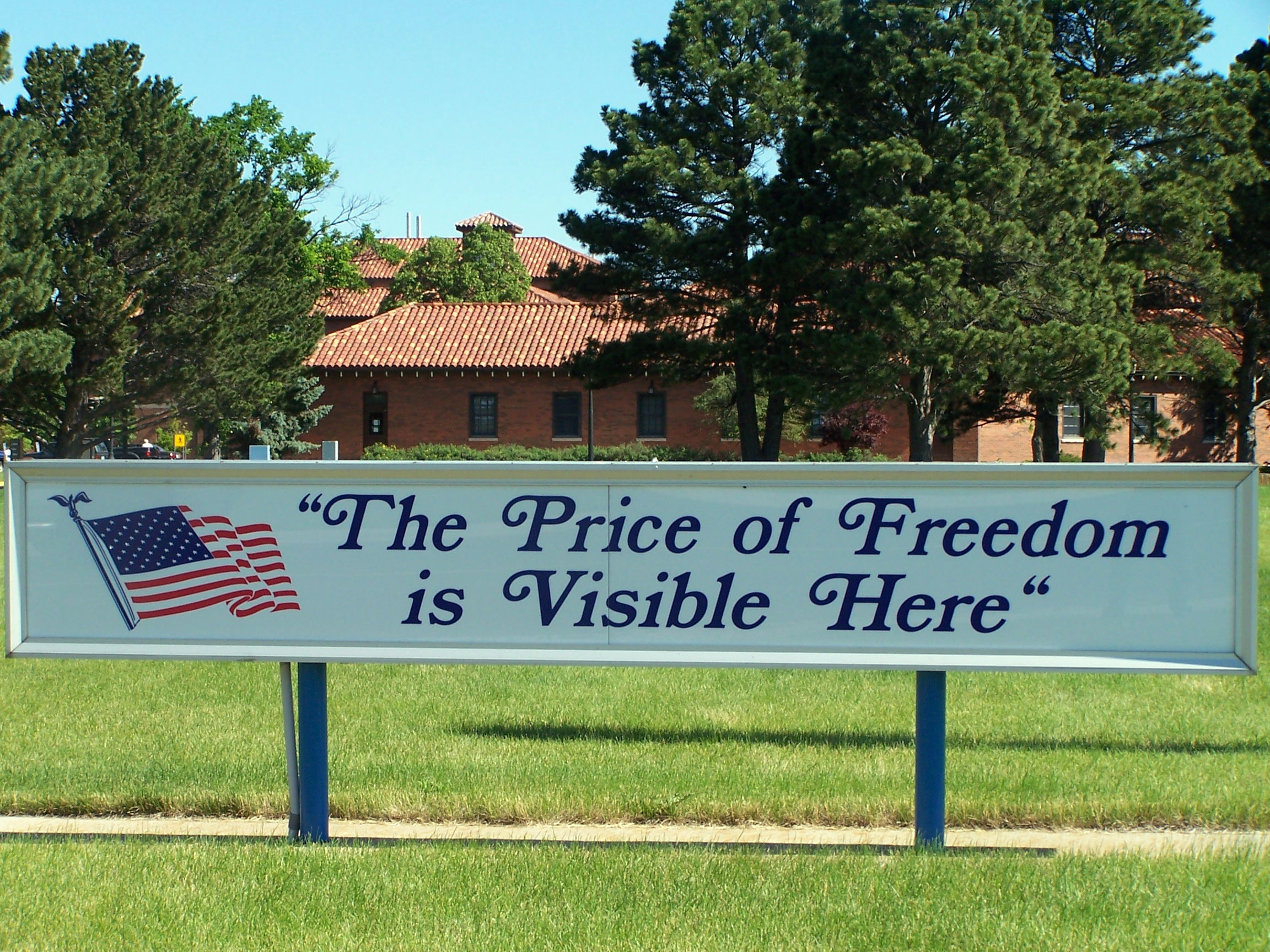
Va Hospital - Cheyenne, WY
Hello everyone. We have been back from our trip to Vietnam/Cambodia for ten days now. Getting our sleep patterns to normalize has been more challenging than getting our daily routines into a new rhythm. Before we left, I mentioned that we learned a few breathing strategies to use just in case Tony was triggered by a sight, sound, smell… from combat. Tony admitted that the breathing was useful on a few occasions, but he never felt that any of the experiences were overwhelming – another milestone in the lifetime journey of healing. Yea! Yesterday, we went to Cheyenne for a second session of EMDR (Eye Movement Desensitization and Reprocessing) with a veteran’s service therapist. EMDR has been used since the 1980’s with individuals who have experienced a wide range of traumatic events ranging from car accidents, rape, domestic violence… and combat PTSD. The purpose of EMDR is to help the individual reprocess the event in a manner that is not as emotionally volatile, thereby, reconciling the experience into something that is more acceptable to the sufferer. Truthfully, we do not know if this particular type of therapy will work with Tony’s PTSD, but it is worth a try. We know of many non-vets who have told us stories of how EMDR helped them. Since I am being allowed to be part of these sessions, I have already had a few significant Aha moments. The first is getting the patient to move from a cognitive processing mode (in the head) to a feeling mode (in the body), which can be incredibly difficult. Modern man (and woman) has an enormous need to control his environment. It makes us all feel a bit safer when we believe in this illusion of “control”. To move from analyzing everything we experience through our heads and think about how our body is responding; i.e., anxiousness, faster heartbeats, headaches, stomach cramps… is something not many of us think about on a regular basis. In fact, we often take a pill to make the emotional cramping go away. EMDR’s focus is on the “body feeling”. In neuroscience terms, it is an attempt to get both body and mind in closer alignment which, hopefully, allows a person to live in a healthier state of being. The second Aha for me was this: The full impact of a stressful event isn’t when the traumatic event took place, i.e., the utter horror of combat, the killing, the IED explosion…It begins far before that event. It begins before the person landed in the foreign country, got into the car, or encountered the threat. All of the sensory information that came before the actual event were also encoded into the body/brain. So Tony’s beginning started when he received his orders to go to Vietnam: as he boarded the plane, when he first walked off the plane, and when he was being processed in Vietnam for his combat assignment. Wow, what a revelation this was to both of us. I thought that we were only dealing with the trauma from the really terrible experiences. No wonder this thing we call PTSD is so powerful and full of ghosts. It began sooner and there were more ghosts than we ever imagined. No wonder so many vets aren’t excited about therapy. It is enormously difficult, scary, and unsettling work. Not only does it take huge amounts of courage and persistence, it takes a strong support system to stand beside, listen, and observe the wounded. This part of the healing journey may be more complex than we ever thought. I’ll keep you posted as we take one small step at a time. I’m thinking this may be a good time to stock up on comfort food and lots of dark chocolate.