BOOK PURCHASE: Discount (above) or PayPal (below)
Click "Buy Now" to continue to PayPal
Click to order eBook - Kindle

Click to order eBook - Nook

Mar
9
UNCOVER THE SUN
Filed Under Combat PTSD, PTSD, PTSD treatment, Tears of a Warrior, Today's War, Treating PTSD | Comments Off on UNCOVER THE SUN
by Janet J. Seahorn, Ph.D

There are so many ways to experience trauma in the world. Combat is just one, but it is one where the impact keeps on giving and giving. For many whose painful experiences occurred once or twice, many seem to be able to get up in the morning and feel grateful for the opportunity to have a fresh new start. The sun shines brighter and the colors of the world are more intense, even if some nights are seemingly unbearable.
The difference between a one time experience and multiple traumatic occurrences is the cumulative effect. The more often an individual faces harrowing life events, the more likely the brain is going to be influenced by those events. Because the brain is sculpted by experience, everything good or bad can make a difference.
We become who we are due to our genetic foundations and our environment. If that environment is nurturing, safe and challenging in a positive way, we have a greater chance to develop into self-confident, cheerful people. If, however, that environment is saturated with violent, unpredictable and dangerous circumstances the brain molds itself into a survival organism in order to hopefully sustain the trauma. The important thing to remember, however, is the age when a trauma occurs. Earlier is not always better.
We know the brain is not fully developed until the mid twenties (especially in males). So what do you think multiple combat deployments do to a developing brain? For many young men and women the outcome is pretty darn complicated. Connections within the brain are changed. Neurotransmitters, those chemicals in the brain that allow us to feel pleasure, prepare for fight or flight, suffer with depression, and other human experiences are changed. The physical organism that controls our behavior is changed. Trauma is serious business with serious effects for many.
For warriors returning from combat, the world is not as bright and welcoming as it was before war. Sense of identity is changed… you leave as a somewhat naive youngster and return as an adult aged beyond your years. PTSD is like having a gray veil placed over the sun. Sure it still shines. Yes, you can feel the warmth of its rays.
Yet, nothing is the same as before you left. Healing from trauma can be the unveiling of the sun. The way to remove that shroud or at least make it lighter is to seek help as soon as possible. You have the strength to Uncover the Sun. More importantly, you deserve to have the full brightness of its rays lighting your days and warming your heart.
Feb
22
Community Event
Filed Under American Patriotism, Human Rights, PTSD treatment, Tears of a Warrior, War | Comments Off on Community Event
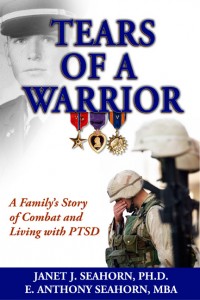
Thought you may be interested to know the Richfield, MN Human Rights Commission is using our book for a community event.
We are very please to learn that “Tears of a Warrior” is generating interest from the general public!
Click on website:
http://www.startribune.com/local/west/116500038.html
Feb
15
WICKED PROBLEMS
Filed Under Combat PTSD, PTSD, PTSD treatment, Tears of a Warrior, Trauma, Treating PTSD, War | Comments Off on WICKED PROBLEMS
by Janet J. Seahorn, Ph.D
No doubt about it, PTSD is a very Wicked Problem. Wicked Problems, by definition, are those dilemmas that cannot be solved easily by using a typical approach. Anyone living with traumatic stress, especially those pressures caused by combat, will attest to the challenges of trying to solve the predicament of moving through his/her life carrying the memories and phantoms of war. If the solution was easy, it would have been found centuries ago. Yet, here we are today, in 2011, and the Wicked Problem still exists.
One of the Wicked Problems of trauma is surviving the depression that can be a part of the conflict. How does a person live with long-term depression that often becomes the new normal after battle? Constance Gibbons, one of our readers, wrote last week and shared how depression has been the new normal for many vets including her husband. After years of having it a part of their daily being, it becomes their after war identity. She stated: Another interesting aspect from those of us observers – spouses, et al – was that universally we noted the levels of sort of a baseline enthusiasm, whereas, the vet thought they were quite fine.
She explained further: As you continue to think of ‘depression’ as it may be portrayed by the vet, maybe think of a sense of resolution, unknowing acceptance, somewhere in a lower zonal level (between overconfidence and fear) from the years of living on the cusp of life and death, at a level of continuing risk so great that without the impact of the continuing penetration, after, into youthful vulnerability, it appears to those of us in observation to be baseline depression…where it is not to the vet; just an absence of heightened stimulation. Wow, now how would anyone solve such a Problem?
Veterans carry many Wicked Problems – ghosts of death and shocks of battle, memories that make if difficult to stay grounded in every day activities, and struggles to avoid the sleepless nights where staying awake is one way to keep the dreams of foreign battles from returning. New therapies and medications have helped lower the impact of PTSD but it has not solved the Problem. I read many blogs and articles relating combat PTSD to the trauma that the average person might experience. Things such as car accidents, rape, assault… all which are terrible and difficult to cope. Yet, these are hard to compare to combat where trauma occurs every day, often numerous times in a day. One of the biggest differences is besides being the prey, in combat you must also become the predator. Instead of being involved in one brutal injury or death, you may experience many.
Fighting the Wicked Problems of war takes work. It requires listening to your gut feelings as well as how others around you perceive your behaviors. The good fight involves muffling the loud voices in the head long enough to examine realistic solutions. Perhaps there will be no absolute solution to PTSD, but every day there are warriors who conquer their demons and live full and meaningful lives. Wicked Problem you may remain, but you will not take more of a warrior’s life than you already stole. You will not win this internal war, even if you succeed in taking an emotional battle now and then. You see, Wicked PTSD Problem, in spite of your persistent, you are no match for the courage and willpower of a WARRIOR.
Feb
2
A HUMBLED JOY
Filed Under American Patriotism, Civilian life, Combat PTSD, Family, Life, Love, PTSD treatment, Tears of a Warrior, Treating PTSD, War | Comments Off on A HUMBLED JOY
by Janet J. Seahorn, Ph.D
They stood before us, this beautiful, young couple. He had just returned home from a tour in Afghanistan, his second time away. They had many things they could have done that would have been much more fun than taking time to visit with us.
She was a student in my fall semester course at the University. At the beginning of the new semester she let me know her husband would be returning home soon and she wanted Tony and me to meet him. Just the request was a humbled joy. Actually meeting them on that cool winter day even meant more.
During our short time together, we did not talk much about his experiences at war except to listen to a few short phrases indicating he had been in some difficult situations.
I didn’t mention that his wife had to take an “Incomplete” for the college course because she became seriously ill and spent several days in the hospital. Somehow, all of this was now unimportant. The only thing we noticed was how the two people standing before us just couldn’t stop smiling and giggling continually as they held hands, grateful to finally be together.
My goodness, this was truly the picture of humbled joy.
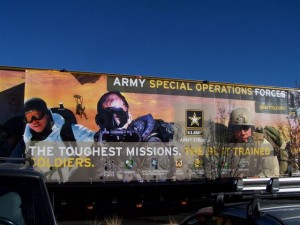
That same day we spoke with an army Special Forces warrant officer who was helping to show students on campus the various skills and equipment used in the military. The young man explained that he had been in the army for sixteen years, joining-up right after high school. Honestly, he didn’t look like he was that old; he smiled widely when I shared my observation with him.
He talked about how joining the military at age seventeen was the best thing he has ever done. The army, he noted, gave him direction, guidance, and supported his development as a confident adult. The interesting detail about our conversation was how much I learned in a short time about his confidence as career military person.
At the beginning of our chat I asked how many times he had been overseas; five – six times if you counted a stint in Romania. The duration of each tour was between three and eight months depending on the mission. During several of his assignments he experienced the reality of war, including several casualties within his unit.
Yet, in spite of the stress, he seemed to be coping with the emotional and physical side effects of combat pretty well. It was challenging, he noted, to reintegrate into “normal” life on each return home, but the army gave him plenty of support and time to decompress.
He pointed out that on several occasions he was given a lengthy mental survey of over 115 items which sometimes highlighted his PTSD tendencies. Nevertheless, because he was career army, his adjustment process appeared to be faster and more comprehensive than veterans who left the service shortly after returning from battle. There does seem to be some significant benefits for the men/women who are in the military long term.
Perhaps being in a community of individuals who have experienced similar battle conditions helps the healing and understanding process. Being around other soldiers who can identify with the pain of combat; others who quietly appreciate the sacrifice of serving our country may lessen the feelings of emotional trauma of being alone in a world where most people haven’t experienced war. This, by itself, would be an immense relief because one wouldn’t have to pretend everything is OK when it isn’t. You wouldn’t have to go through each day feeling lost and alone because there would be a band of brothers surrounding you with knowledgeable support. At any rate, this young soldier certainly gave me some things to think about.
Humbled Joy, invisible, yet real. Thank you.
Dec
31
SCOOBY DOO AND A NEW YEAR TOO
Filed Under Dogs, New Year, Peace, TBI & PTSD, Tears of a Warrior | Comments Off on SCOOBY DOO AND A NEW YEAR TOO
 by Janet J. Seahorn, Ph.D
Hard to believe it is the end of 2010. What an interesting year this has been. Most of our days have been filled with many blessings of meeting new friends, spending time with old ones and beloved family members, taking part in all of nature’s wonderful opportunities, and just having some time for personal rest and relaxation. To close out this year, I thought I would mention just a few of our many blessings.
While Tony was going through some medical tests at the Cheyenne Vet Hospital last week, I met a very large great Dane named Scooby Doo. He was a rescue dog who became a therapy companion for one of the wheelchair bound vets. While others believed this dog was vicious and untrainable (due to abuse from several prior families), the vet saw goodness and potential. Turns out that love does make a difference and Scooby Doo is living proof.
As stated, spending time with family and friends is always at the top of our list. There are never enough minutes in the year to let others know how much they mean to us. How their phone calls, get-togethers and small interactions are the best rewards of every day.
Being able to attend several veteran’s reunions and conventions humbled us greatly. Meeting with the Black Lions in Las Vegas, Nevada, showed us again the enormous sacrifice vets give. This particular group endured some of the worst combat missions in the Vietnam War, yet they continue to move forward every day with hope and courage. In August we were guest speakers at the annual Nebraska Vets Convention in Norfolk, NE. The veterans and their spouses were so gracious, we enjoyed the entire event.
In June Tony was the keynote speaker for Project Healing Waters’ annual organizational meeting. The conference was held in Steamboat Springs, CO, a truly stunning and perfect setting for an organization dedicated to introducing wounded vets to the beauty and peace of fly fishing. Often times, nature and our four-legged, long tongued companions are the best medicine for a tattered spirit and injured body.
For Memorial Day, we traveled to Evanston, WY to speak to a patriotic community and address the sacrifices made by all veterans from all generations.
The return home from Iraq of the Wyoming National Guard in March was a moment of jubilation that words can’t quite describe. Families who diligently carried on everyday duties without their loved ones were significantly relieved to finally have the tour of duty complete. Then in February, a group of citizens from Ft. Collins purchased and presented a beautiful Quilt of Valor to the Fort Collins Veterans Center. The quilt was made by Donna Roche in Rogers, Arkansas. Her group of quilters sends quilts overseas to various vet hospitals in the US as gifts of comfort and hope to wounded warriors.
We hope your list of items holds similar stories of warm get-togethers, memorable adventures, and quiet gratefulness. Thank you again for your many comments, your support, and most of all your immeasurable service to our country.
Jan and Tony
Nov
28
THE JOY CHALLENGE
Filed Under Christmas, Combat PTSD, Family, Joy Challenge, Peace, Tears of a Warrior | Comments Off on THE JOY CHALLENGE
by Janet & Tony Seahorn

It is a bit sad to think of celebrations as a “thing” to “get through”.
Unfortunately, for many people suffering from trauma and loss, that is precisely the case. We had a wonderful Thanksgiving with family and friends. Dinner was scrumptious with tasty fares of turkey, dressing, creamy mashed potatoes, and several great desserts. Laughter was abundant.
Yet, for Tony, the noise, the larger number of people – it was only nine of us total – found it still an effort to make it through the day. After dinner, when we all were playing games, he retired to a quieter room to watch football and relax. Our sons would go down to chat, but it wasn’t the same as having him join us in the fun. After everyone left, Tony felt the familiar pangs of sadness and guilt. He wanted so much to spend more time with everyone, but simply could not manage it. Trauma squeezes an excessive sum of happiness from folks. It is the thief who continually keeps on taking and taking and taking. Unlike the Grinch who stole Christmas, this silent bandit never gives anything back.
It is heartbreaking to watch the joy of this beautiful season being weakened by suffering. Therefore, I am sending forth a challenge to each of our readers; a challenge that may take some real effort each day. This may be a test that will demand some thought and determination if it is to be successful. But most of all, this challenge will only be taken on by those who really do want extra joy in their coming days.
For most us when we are feeling a bit down we have to put forth special attempts to look for the joy around us. At other times, usually when things appear to be quite desperate, we will have to create joy. Normally, the only way we are successful in creating joy is do something joyful for someone else.
To begin this challenge, make a list of things that make you happy, a clumsy puppy, your mates smile, a quiet walk along your favorite path… Whatever it is write it down, then paste a copy on your refrigerator and your bathroom mirror – for obvious reasonsJ
Now, for the next four weeks take time each day to achieve at least ONE thing on your list. If you are absent minded like me, put a mark on the calendar that you made your JOY commitment for the day. Look around carefully, where do you notice someone in need of assistance? Perhaps this is your chance to CREATE joy, doing something for someone else. Taking an action that may take a bit of a burden from a family or person in need. Golly, these are acts that a Grinch would detest, because bandits can’t steal what is being given from the heart.
Finally, and I very much hope Tony and I hear from many of you, sometime before Christmas send us a short message to let us know if this challenge made your holiday season a bit better this year.
If you did perform an “act of kindness”, we would love to hear about that too. In our Christmas week blog we will be a sharing the messages we receive. Do something special this season, take this Joy Challenge.
In doing so, remember this quote by Charles D. Gill,
“Believe that you make a difference. There are many wonderful things that will never be done if you do not do them”.
We wish you twenty-five days of amazing goodness. May this season bring you the joy you so richly deserve.
Seasons Greetings
Nov
23
Humility & Bravery Visible
Filed Under Combat PTSD, Life, PTSD, PTSD treatment, Tears of a Warrior, Treating PTSD, War | 2 Comments
by Janet J. Seahorn, Ph.D
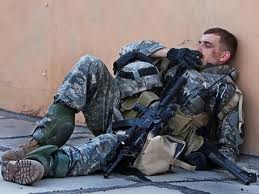
The day was wet and overcast.
Upon arriving at the VA Hospital in Denver, we noticed how many patients seemed to be waiting for a bus or a taxi. Tony didn’t appear overly eager to walk into the building. Just looking at the entrance from the outside made him nervous. Walking inside was even worse. Almost forty years ago, this was the place he went to get help for the nightmares and panic attacks he was experiencing after returning from Vietnam. A young therapist at the time, untrained and unskilled in working with military personnel thoughtlessly told him to be grateful he made it home, and get on with his life. For thirty years, Tony never went back there… or anywhere else for assistance.
Thank goodness we now have a verifiable diagnosis of these frightening memories; it is PTSD, and veteran centers across America are far more proficient in caring and supporting our wounded troops. Nevertheless, Tony had not been back to the Denver VA Hospital until Monday. We were going to talk with troops in the PTSD Unit of the hospital. This is a seven week program where vets get intensive counseling and treatment for their combat traumas. Today there are nineteen men attending the afternoon discussion. Humility can’t quite describe what we feel when we do such meetings.
The majority of the vets were from the Vietnam era with the remaining members from Iraq and Afghanistan. I am pretty sure most people have little understanding of how much suffering each patient has survived; years of torment and silent screams. Each face revealed a unique map of torment. It appeared that every wrinkle held its own story, its own remembrance. Yet, it was the younger warriors who made the most emotional impact. Perhaps this was because they reminded us of our sons. Or perhaps, we were too familiar with the pain they were experiencing and the long journey still ahead. Youthful faces were not yet lined with creases, though their eyes held an even deeper look of anguish. Yesterday’s combat field was not that far from today’s reality. Time had not yet put any distance from the rawness of war. Where several Vietnam vets were willing to talk, the young fighters stayed silent.
At the end of the afternoon, one young marine told me how difficult it was for his mother to understand what was happening to him. He talked about how she just kept saying, “Why don’t you just get better? Why aren’t you back to your old self? You weren’t wounded, what is the matter with you?” and then he said sadly, “she told me, why can’t you just take a pill and be OK?” Then he quietly stated, “I’m trying’ I’m really trying, but I just can’t seem to forget, no matter how hard I try.”
It was heartbreaking to watch him describe his situation. First he endured the many horrors of combat. When he came home, he had to endure the unawareness of the “ordinary” people.
Next, there was the tall, thin youth who sat shifting in his chair seeking a more comfortable position. His back pain was obvious, especially when he cautiously walked bracing his weight with his cane. The sweetest, shyest smile spread over his face as he approached. What he requested was an extra copy of our book, Tears of a Warrior. He wanted to send it to his wife, hoping she might read it before he returned home from the hospital. Perhaps she would gain a better understanding of his condition. Perhaps, by understanding, she would be able to bear the years ahead. Perhaps together they might make it though the dark times still to be faced.
More than ever, I am touched by the courage the young and the old veterans demonstrate. A valor that leads them forwarded searching for a small bit of peace. By making that huge leap of faith to enter this seven week program, they lay bare their demons, hoping by exposure to the light these may leave, or at least become less frightening. For most, I believe this will be true.
Like in combat, sometimes to survive, one must rush towards the enemy fighting with every ounce of power he/she possesses. Healing requires that same force of power – rushing towards the demons, lets them know you no longer will run from them. When the hiding ends the healing begins.
Have a healthy and Happy Thanksgiving.
Nov
14
REMEMBERING VETS
Filed Under American Patriotism, Family, Peace, PTSD treatment, Tears of a Warrior, Veteran's Day, War | Comments Off on REMEMBERING VETS
by Janet J. Seahorn, Ph.D

It is cold outside.
I just got home from my last lecture session. Needless to say it was quite interesting as the entire week I have been battling a bad cold and struggling with losing my voice.
Today, there was no voice. Trying to deliver a lecture with laryngitis is a challenge. Hence, I put all of my “words” on my wonderful PowerPoint and proceeded with the lesson.
Since the week is Veteran’s Day week, I decided I would do something different for my university classes. I would talk about the LITERACY of WAR: the vocabulary, the literature, the stories, and of course, the effects of war on both the veteran and the families.
My first slide said this:
My husband is a Vietnam veteran who was a young officer and served in the jungles between the borders of Cambodia and Vietnam. He witnessed a great deal of bloody battles and lost many men. He has two Purple Hearts. The last one he received after being severely wounded. Out of 130 men, only 19 walked away without any injuries. The rest were either killed or wounded. Yesterday I asked if he would like to be the guest speaker for today’s class since I have no voice. His response is what he said he would tell you,
“My wife thinks I’m not miserable enough, so she wants me to talk about PTSD for 90 minutes.”
He said some other things he might share with you, at which time I decided his services would not be needed! (I would like to keep my job.)
Of course my students thought this was pretty funny, even if it was true. But the purpose of this blog is to share with you what I learned from my students. It is pretty sobering.
Out of 140 students, only five had ever had a college session where the professor talked about or honored veterans on Veteran’s Day.
Most students were interested in the session’s information and videos. A few, however, during the first short video paid more attention to their text messages than to the video. Then I put on a slide, “How well did you listen and honor our veterans during the show?” The room was incredible still. The other short clips received 100% of their attention.
- Young people are not insensitive to veterans, I believe their seeming thoughtlessness is not that at all… it is because the adults around them do not take the time to talk WITH them, or to REMIND them of the sacrifices others have made FOR them. Schools, communities, and parents are the ones most at fault. Many have lived the experience and stayed silent. No longer will I remain soundless. I will always give this presentation in the coming years.
- We did an activity where students moved forward when I asked a question if a relative had served, was injured, or died in a particular war. Many took a step when I mentioned WWII. More stepped forward again when I mentioned Vietnam. And last, when I asked about the Iraq/Afghanistan conflict, I was surprised at how many were impacted. Last, I asked for those who had or were currently serving in today’s wars, four stepped forward. I had them face the class so all would see. Then I began clapping and the entire class gave these four young men a standing ovation for their service. It was an emotional moment for everyone.
At the end of class two of the young men commented that this was the first time anyone had acknowledged and thanked them for their service. Today was the first of what I hope will be many. And just as important 140 young people may stop every now and then, think about those who gave and are giving so much, and say a prayer of gratitude.
Perhaps, when they see a vet or know of a family member who has served they will say Thank You.
A few have already called home and done just that.
Nov
9
THERE WILL ALWAYS BE
Filed Under Family, Peace, Tears of a Warrior, Trauma, Wisdom | Comments Off on THERE WILL ALWAYS BE
by Janet J. Seahorn, Ph.D

It is hard to believe that another holiday season is upon us, beginning with Thanksgiving and ending with the celebration of a New Year. With this period comes the challenge of facing the days with too much to do or too much idle time, too many people to be around or too much loneliness, and the memories of past holidays spent in combat or loss. For some, these are anniversaries of death and destruction. They may not bring joy and goodwill, but sadness and loss.
So, I write today’s blog to remind myself and perhaps others confronted by the days ahead to not be afraid of the darkness. It is not about getting rid of the shadows but getting beyond them. Stepping into sunlight, even a small glint is enough to dispel some of our gloom. As human beings we were not meant to stay in sadness but to shine, in spite of our troubles and hurts. Hard to believe, but nonetheless true.
The only way I can ever get beyond the shadows is to look up; to search for the pure, the just, and the beautiful. To focus on what can be if I keep moving forward. I do not have to center my thoughts only on what has been lost, but what is waiting to be gained if only I believe. Believe in the goodness of others; they abundantly surround us waiting to enter our life. Believe in a more loving world even when the media fill the airways with ugliness. Believe that as we search for the decent we find it in the softness of a breeze, the melody of a song, or the laughter of a child.
A few months ago my sister gave me a CD by the Canadian Tenors. On the album is a lovely song with a chorus all of us can use at sometime in our lives:
There will always be a shining star;
There will always be the rising of the sea;
There will always be an angel watching over me…
And angels voices say to us, these things will never die.
Choose to believe the skies are filled with shining stars even if clouds conceal them. The seas and oceans rise and fall with the changing tides. Most comforting of all is choosing to believe that there will always be angels watching over us… and these things will never die. So if you wander into that dark place, remind yourself of those angels, the thousands of shining stars, and perhaps you will be the tender hand reaching out to hold another being in need of your light.
Nov
2
THE EYES OF TRAUMA
Filed Under Civilian life, Combat PTSD, Life, Tears of a Warrior, Trauma, War, Wisdom | Comments Off on THE EYES OF TRAUMA
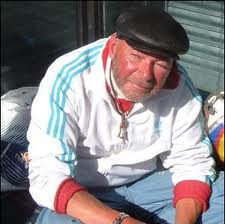
A face conceals many things through silent smiles and quiet words. Yet eyes speak silence louder, clearer than any verbal language. The mouth can easily fake joy, and talk can be nothing more than convincing noise. But the eyes, the eyes can’t fake unfelt laughter or peace. The eyes tell their own story. A story that sometimes screams of sadness; a story that carries the pain of guilt and desperation; a story burdened by trauma inflicted by war, abuse, or neglect.
Perhaps this is why few people are strong enough to stare into another’s eyes without looking away. When doing so we are really checking for evidence that what is said matches what is unsaid. Only eyes can confirm such a truth. We listen more fully, not just with our ears, but with our eyes. Deep listening is what many psychologists such as Daniel Siegel refer to as “feeling felt”. Feeling Felt tells the story teller that he/she matters. That his/her experiences are valued and honored.
Why would I write a blog about eyes? Simple, many, many beings are walking through our world with silent screams. No one seems to notice or take time to pay attention. Few things in life are harder for a human being to sustain than being invisible to others. Homeless people understand, abused children understand, and traumatized vets understand.
Next time you see someone whom you suspect may need to be seen, be brave enough and care enough to listen to what the eyes are saying. It is a humbling tribute that a person has placed his/her trust in your willingness to be with them, even for only a small amount of time.