BOOK PURCHASE: Discount (above) or PayPal (below)
Click "Buy Now" to continue to PayPal
Click to order eBook - Kindle

Click to order eBook - Nook

Dec
12
HO, HO, OH CRAP
Filed Under Christmas, Tears of a Warrior | Comments Off on HO, HO, OH CRAP
by Janet J. Seahorn

It’s hard to believe that Christmas is only a few weeks away. The carols are blaring on many radio stations, decorations in stores have been up way before we killed the Thanksgiving turkey, and advertisement to buy what will put you in the poor house are everywhere making one ask after a purchase, “Why the ### did I buy that” and then “How in the ### will I pay for it”. If one isn’t careful, Christmas can increase PTSD and not just in military vets.
When reading through a list of Post-Traumatic Stress indicators I got to reflecting on how many can be aggravated by the holidays. Therefore, instead of making a Christmas list for Santa, I thought it would be far more attention-grabbing to create a list of PTSD Christmas triggers.
- 1. Easily startled – I couldn’t possibly cover all of these but a few could occur with all the bells tingling, unfriendly Santas, and way tooooo many loud people.
- 2. Easily upset – for Tony a short trip to any shopping center quickly attains this mark.
- 3. Feeling tense or anxious – do I really need to explain this one, really? $$$ worries, memories of unpleasant holidays during combat, too much outside stimulation that no one can control.
- 4. Problems maintaining attention or concentrating – advertisers only need you to remain focused for thirty seconds… long enough to give them your credit card.
- 5. Feeling disorganized – WHO DOESN’T at this time of year?
- 6. Nightmares – and these may not be about combat. Think of the songs we hear that aren’t all that cheery like, Grandma Got Run Over By a Reindeer, any chipmunk song, and if I hear The Twelve Days of Christmas even once I will go bonkers!
- 7. Experience sudden mood swings – Are you kidding; listen to a sad song, watch a funny commercial, open your bundle of bills… most of us are somewhat emotional challenged during this time of year and PTSD only makes it more FUN!
- 8. Hard time dealing with stressful situations – everything is stressful and the only remedy is visit Mother Nature often, stay home and read a good book, or take a Rip Van Winkle nap until January 15th.
- 9. Feeling tired, stomachaches, headaches, aches, aches, and more aches… – have you ever put up a 16 foot Christmas tree, put together some special present that takes an engineering degree to properly assemble, try to learn how to use your new piece of technology… my stomach is already beginning to cringe just writing this section.
Now that you are thoroughly depressed, here’s the good news. The Holiday Season can be a beautiful, inspiring time of year, yet only if we intentional focus our attention on what is important and worthwhile in our lives. Things like family, friends, good health, personal freedoms, loving relationships and adoring four legged companions. Many times if we focus on helping another being some of our worries and aches disappear for a bit and we experience the true meaning and joy of the coming days. So let us welcome back our Ho, Hos, and get rid of the CRAP. Happy, Happy, Happy Holidays to everyone.
Dec
5
THE VA BENEFITS ROLLER COASTER
Filed Under Tears of a Warrior, Veteran Benefits, Veterans | Comments Off on THE VA BENEFITS ROLLER COASTER
by Janet J. Seahorn, Ph.D
Holy Smokes! My brain is reeling like an out of control roller coaster. You know the experience, the climbing to the top of the coaster mountain knowing it is going to plummet to the bottom once there. At times it feels stimulating, and then there’s the “I think I am going to lose my stomach” sensation. Well, this scenario somewhat describes how I left after listening for two hours to a presentation on VA benefits. I went with Tony to learn more about how best to negotiate the system and the process. Honestly, it was quite interesting, although, I must admit, I didn’t understand everything the speaker was telling the audience, nor could I keep up with all the “do this not that”, “go here, not there”, “know this exception or else”. Yikes, no wonder many of our veterans and their families get confused. It truly takes an expert in the organization to help lead you successfully through the government maze of regulations.
Following are a few items I gleaned from the session that perhaps some of our readers will find helpful. Keep in mind that the VA is concerned with treating the whole person where other government organizations are mainly focused on the medical issues.
- 1. First, whether you like it or not you will need to have and be somewhat comfortable using a computer since all forms and many interactions are now on-line. If you are one of those who are somewhat computer illiterate, grab a friend or family member to help with the process. A few websites that can be very useful: www.Ebenefits.va.gov (this site gives you access to your vet information) www.Healthmil/PDBR (this is the site for getting the process underway to leave the military).
- 2. Something many veterans do not know is that they are eligible for problems that occur as a result of their major injury or condition. These are called “Secondary Problems“.
- 3. For new vets leaving the military, some States have places were individuals can go and get all of their needs, benefits, sign-up forms, and medical tests done in one setting. Not only does this speed up the process, it cuts down on the frustration of visiting several places over a span of several weeks.
- 4. As you put in for your benefits, understand that it takes a minimum of ten days to be processed before the information shows up on the Ebenifits website, and this only occurs if the VA has all of the needed medical records.
- 5. Now this leads us to getting those medical records…Go and Get Them YOURSELF. If you rely on your doctor’s office sending this information to the VA once it is requested, you may be waiting as long as six months before they get around to sending it. This is not the VA’s fault. Since doctors offices do not get reimbursed for doing this task, some are not very eager to move it forward in a timely manner.
- 6. Understand that once your benefits begin, the government will send your funds to your bank using Direct Deposit. If you don’t have a bank, they will send you a debit card. There will no longer be any CHECKS written to an individual. Understand it is YOUR responsibility to give the VA the correct bank routing number or account number, or address. If you move and forget to send them you new address, you will probably have trouble getting your funds. If your benefits begin on Feb. 1st, your first funds will come through until March 1st. Many organizations work on this type of a timeline.
- 7. If you were a Marine stationed at Camp Lejeune (www.lejeune.usmc.mil) before 1986, immediately go to their website to obtain information on filing a claim regarding medical conditions stemming from a toxic waste situation in the area. This also applies to our current vets who served in Balaud, Iraq where it was common practice to burn their waste, including plastic water bottles. The results of being exposed to the toxic smoke can cause colon cancer, lymphoma, respiratory problems… Down the road similar consequences may come from exposure to the sands in Iraq and Afghanistan.
- 8. Also, did you know that many of our veterans are eligible for a VA home loan that may be far better than those offered by the FHA. This was an AHA for us. Check out www.homeloans.va.gov or www.hopenow.comwebsites or call the Homeownership Preservation Foundation at 1-888-995-HOPE (4673).
- 9. And last, it is very important that every veteran is aware of the processes for filing a claim, receiving benefits, etc. Be sure to read EVERY piece of information or mail that comes to you. Don’t put it aside and think you will get back to it later. Read it immediately. Answer any and all phone calls from your VA centers as soon as possible. And be persistent as long as you take responsibility for what you need to do to help process your claims and benefits.
After listening to so much information and needing a Tylenol or Latte badly, I came to the following conclusions:
One – every vet needs to take the appropriate responsibility for getting his needs met. Blaming won’t get the job done; being proactive has a better chance of success.
Two – and please don’t scoff at this because I am sometimes tempted to do so, try to believe in the VA’s motto, “Grant if you can, only deny if you have to”. If you feel the person you are working with isn’t doing enough, ask for someone else to assist you. Often times getting a fresh pair of eyes and ears can make a huge difference. What I saw and heard today confirmed that there are many individuals in the VA organization who are incredibly dedicated to making a difference to our country’s veterans. We know of many and are grateful for their efforts.
Good Luck and take your patience pills – dealing with any huge organization, especially the government will require an abundance of endurance.
Nov
1
Tribute To A Soldier
Filed Under Combat PTSD, Presidential Unit Award, PTSD, Tears of a Warrior, Tribute, Troops, Veterans, War, World War II | Comments Off on Tribute To A Soldier
by Deborah A Maffucci
 This blog was sent via an e-mail letter last week. Deborah has kindly allowed us to share her comments with our readers.
Growing up, my knowledge of my dad’s war experience went no further than, “My dad was in WW II and I think he was stationed in England.”
On advice from my therapist, I decided to go to the attic and find my dad’s discharge papers. Oh my!!! After hours of online research (which is amazingly complete) for the first time I realized that my dad was right in the “thick of WWII”
He was 22 years old in 1942 when he joined the USAAF to fight in the European Theatre in WW II. He received four medals and a Presidential Unit Citation. He was at Normandy, the Battle of the Bulge and Rhineland. He was a Technical Sgt. in the 8th Air Force Fighter Command, 66th Fighter Wing, 339th Fighter Group, 504th Fighting Squadron. Oh my stars !!! He was a soldier.
I needed to read about what it is really like to be a soldier. I found your book, “Tears of a Warrior” at my local library and read it almost in one sitting. I couldn’t put it down. A whole world of understanding and compassion for my dad has been felt in my heart. A sense of awakening and belief that I will feel much more true joy and happiness and conquer my life long feelings of anxiety, fear and depression.
I realize now that I am trying to heal from the secondary PTSD that comes from living with a combat warrior and not knowing it. There was no time for my dad to heal because he died in 1969 from cancer. I realize my dad’s war experiences must have been the true source of our family struggle. It wasn’t because my dad didn’t love us, or because he would rather spend all his time at the firehouse, the VFW or the Elks Club, he was a warrior. I understand why he loved being a fireman, he was draw to the danger, why he abused alcohol, to block out his war memories, why he yelled so much, he was a sergeant. All my childhood memories make sense now. Your book has put my life story in prospective. Thank you for that long awaited insight. !!!
My dad was a combat warrior and I never knew it. I just want to give him the biggest hug right now and tell him how proud I am of him. From 1945 until Dec 7th 1969 when he died, he was fighting WWII in his mind and body.
You have truly helped me to understand what happened to my dad in the war and what he must have struggled with after the war. I hold him in a new and special place in my heart.
God bless you,
Debbie Maffucci
P.S. I borrowed your book from the Jesup Library in Bar Harbor, Maine. I believe it was only hours after you so graciously donated a copy to our town. I have recommended it to my counselor to use in her therapy work.
Oct
7
WARRIOR DEDICATION
Filed Under Brain Injury, Combat PTSD, PTSD treatment, TBI & PTSD, Tears of a Warrior | Comments Off on WARRIOR DEDICATION
by Janet J. Seahorn, Ph.D

Here is a question to think about…how many of you would take your entire retirement in one lump sum and then put it into a facility that would serve as a place of support, safety, and relaxation for our country’s vets?
This special place would require quite a bit of work. You would need to paint the walls, put in new furniture that would be comfortable and calming, and develop programs that would facilitate a wounded warrior’s emotional and physical well-being.
Such a facility would need quiet places where an individual could find the best environment to heal. For instance, one room would serve as a large conference room for presentations and discussions. Another would be a smaller area with a number of large reclining couches as well as chair recliners. My favorite happens to be a room with three oversized, state of the art massage recliners.

Each of the two “relaxation” rooms is equipped with head phones to listen to select music of choice under dim lighting. Small water fountains provide a sense of a quiet, flowing river. A large screen TV scrolls messages of hope and inspiration. Every detail was thoughtfully conceived to provide a special place of peace.
And here is the amazing thing, the person who has formed this sanctuary does not charge one cent for a veteran or family member. The Warrior Relaxation Response Center is located on the south side of Colorado Springs, CO, close to Fort Carson military base. It has been open barely a year. To continue to provide these services, the owner, Antoine Johnson, is desperately trying to obtain grants from various organizations as well as the army’s military base.
With a challenging economy, this will be no easy task. As Antoine tells it, “It is a true leap of faith”. He explains that he simply loves the military men and women who served our country. He and his wife spent many years in the army, fought in Desert Storm, and then became teachers. Working with traumatized children became his specialty. Many of the children came from military families torn apart by combat deployments, with parents returning with TBI and PTSD. Antoine saw a calling to help those returning from war to achieve a more stable and balanced life.

Last Thursday we were invited to visit the center and speak to some of the veterans and their families. Young and old were present, each with a story of trauma The flashbacks, the lack of understanding from family and friends who have not had to endure war, the numbing of the senses just to get through the day, and the sometimes overwhelming anxiety of not knowing when the next emotional attack will occur.
Throughout our country there will be an even greater need for more centers like the Warrior Relaxation Response Center A place where an individual can visit to simply be alone and find some solace. A place where he/she will not be judged, asked questions, or encouraged to just get on with living. Sometimes, as Antoine understands, a warrior simply needs a quiet space. Healing takes time, often a lifetime.
For those who want to contribute to support this mission or learn more about the facility please contact Antoine Johnson: http://www.warriorrrc.com
Aug
29
STRENGTHENING THE X FACTOR
Filed Under Family, Spouse, Tears of a Warrior | Comments Off on STRENGTHENING THE X FACTOR
by Janet J. Seahorn, Ph.D
Last week I was honored by being the keynote speaker for the Women’s Luncheon at the annual Nebraska Vietnam Veteran Reunion. It is an interesting phenomenon, keynotes after eating. Most sane societies have a meal then nap for a bit. Yet, in the western world we seem to think people really want and are capable of listening to anything after ingesting a yummy luncheon. Therefore, the challenge of any meal speaker is to entertain while keeping his/her audience awake; a rather formidable task. Added to this test was the seriousness of my topic… talking about the effects of living with a spouse who is suffering with Post Traumatic Stress. Yikes!
Truthfully, this was a wonderful and unique opportunity to be with a large group of women who have endured decades of family and personal events colored by their loved one’s emotional combat trauma. The last thing I wanted was to have people leave the luncheon with more stress and upset stomachs. All of us have had way too much of these frailties. Consequently, I thought the best speech needed to be short, informative, and delivered with humor and solemnity. So here are just a few of the items I believe may be useful to strengthen the next years of these amazing women’s lives.

When I talk about the “X” Factor, it refers to what makes women, women. It is not a coincidence that women have two legs on their chromosomes to stand on versus a man’s one – “Y”. God knew we would need both legs on the “X” to stabilize us on our unforeseeable, earthly journey. Being wives, mothers, sisters… makes us caregivers and caretakers. Trauma from combat both physical and emotional makes this even more evident. “Whether it is our own mothers who stood by us in long-distance torment as we fought on foreign soil, or the mothers of the dead and wounded here as well as in Iraq and Afghanistan, we recognize that most often, it is the women—- mothers/wives… who are left to care for the broken bodies, souls, and societies left in the wake of war.”
Understanding and identifying our own actions may help protect our sanity and bodily health. Here were a few of the behaviors I asked the women to recognize and acknowledge as they interact with their loved one. Think about which of these four DOINGs you use the most:
Doing To: Blaming and Fault Finding
Doing For: Rescuing, Pampering, Becoming like the Bad Behavior
Doing NIL (nothing): Ignoring, Avoiding, Excluding, Rejecting — fuels emotions of shame in the brain
Doing With: Connecting, Clarifying, Restoring
So which category do you fall in most often? Believe me, the first three are quite easy to live in… The Doing With is much trickier to accomplish especially when you are tired, angry, and dealing with your own pain. For this reason I have adopted a powerful quote from St. Francis de Sales. I carry it in my purse. I have it on my kitchen counter, and I pasted it on my bedroom mirror.
“I made a pact with my tongue to never speak when my heart is in distress.”
Some days I am almost mute trying to practice this suggestion.
Aug
15
LUMPY GRAVY
Filed Under Life, Lumpy Gravy, Tears of a Warrior | Comments Off on LUMPY GRAVY
by Janet J. Seahorn, Ph.D
 Have you ever thought about lumpy gravy? Surely you’ve seen it, maybe even had to eat some of it. Most of us prefer our gravy to be smooth and thick, rich with the juices of the meat. So what has Lumpy Gravy got to do with PTSD? Everything! It is a pretty accurate metaphor of life and living with PTSD both as the sufferer and those closest to the pot.
Last night I got to thinking a lot about “Lumpy Gravy”. It all came about as Tony and I were making a turkey dinner for a friend recovering from ankle surgery. We were taking dinner over to him when we came into the dangerous territory of the Lumpy Gravy fiend. I had asked Tony to make the gravy for the meal. Unbeknownst to me, Tony had a very specific way in which he insisted on making HIS gravy. This entailed carefully putting in a handful of flour into the left over juices and stirring it until it was brown with a smooth texture before adding the extra water or milk to the mixture. However, I made the dastardly mistake of having too much liquid in the mixture. The only way to thicken with flour was to put it in a small jar filled with a bit of water, shake rigorously, and then add this concoction to the turkey drippings. As you may have now guessed, this was not the prescribed procedure. Tony responded by dumping a scoop of flour directly into the hot turkey drippings. Walla, BIG, white lumps of flour now floated proudly on top of the mixture almost taunting him saying, “You really messed this one up mister”.
Not a big deal to the normal gravy maker. But to Tony this was not acceptable. Seeing those lumpy, white, floating sprites of flour on top of the gravy was another clever way of the PTSD troll to appear. The remainder of the evening was consumed with hashing over the problem of who, why, what, and how we now had to endure “Lumpy Gravy”.
It sounds ridiculous to most people, even a bit hilarious. Something you might view on a TV sitcom. Yet, spending the evening with the “Lumpy Gravy” demon was not entertaining or fun. It was another darn opportunity to practice patience and understanding, which can wear quite thin on some days. After settling my own temper and trying desperately to hold my tongue, which is not easy or consistently successful, I remembered what Dr. Haug, (Tony’s VA therapist) had explained to me. Tony’s behavior wasn’t about “Lumpy Gravy” at all. It was about the need to do things right, to be accurate, to be correct in the operating procedure. If one was careless and procedures weren’t followed, the operation could be in peril. As trivial as it may seem, “Lumpy Gravy” was a failure in procedure.
So what does “Lumpy Gravy” have to do with Life or PTSD? It is a metaphor of living. Enjoying smooth days that offer a richness of texture and seasoning without too many major LUMPS.
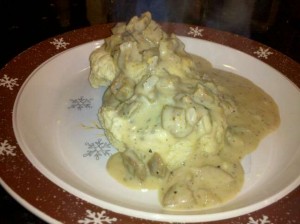
When lumps do appear in a vat of hot gravy it is nearly impossible to whisk them away no matter how vigorously we might attack the mixture. About the best we can do is to remove as many lumps as possible and hope that the gravy is still consumable. Most important is to learn the lesson of what created that “Lumpy Gravy” and try to prevent inviting the demon to dinner too often.
Next time, I am opting to buy my gravy mixture in a jar, already prepared so all that is needed is to heat it in the micro. Bon appetite you “Lumpy Gravy” demon.

Jul
19
HEALING DAD
Filed Under Combat PTSD, Healing, PTSD, PTSD treatment, Tears of a Warrior, War | Comments Off on HEALING DAD
by Janet J. Seahorn, Ph.D

It was Father’s Day and I got to thinking about all of the vets who are fathers and all of the special moments we shared as a family, as well as the times when things weren’t all that peaceful. In our book, Tears of a Warrior, we wrote that the good things far out numbered the bad. Yet, those difficult periods left lasting wounds; wounds that still remind us of the challenges of living with Post Traumatic Stress. Healing the wounds within us and the wounds inflicted on our loved ones can be a life long endeavor – a journey that poses some questions in order to mend the injuries.
First, identify who has been wounded and who do you need to help heal, besides yourself? Which relationships have been most broken by past and/or present actions? These can be spouses, children, siblings, parents, friends, and even co-workers. Identifying your “wounded group” will require a great deal of personal self-reflection and honesty. Not something most of us humans do well. Root-canals are easier to endure than admitting we have verbally harmed someone we care about due our unhealthy behavior.
What exactly needs healing? Things like trust wounds, word wounds, responsibility wounds. What actions impaired the ability of others to trust us? What did we do that makes us question if we can trust ourselves? When have we used words to inflict hurt? Interesting things – words; they can leave wounds that are longer lasting and harder to forget or forgive than many bodily injuries. Unlike physical bruises which can be seen on the outside of our bodies, words bruise the heart in ways that can neither be seen nor easily healed.
If you have been able to get this far, the difficult question of How can I mend these wounds? emerges. It isn’t important to do something huge; start with something simple which may not be all that easy. A phone call, a letter – personally I like Hallmark cards or even the new internet e-cards can be the beginning of saying I’m sorry, or Forgive Me. PTSD has been a bit like the words Jesus used on the cross, “forgive them for they know not what they do”. Because we did not know better, it was hard to do better. Most of us had no idea what PTSD was or how living through war left the veteran with residue that impacted his/her actions for years to come. Now we can get better by knowing more about the demons of combat.
Healing others helps us heal ourselves. It is a way of living forward with hope and personal forgiveness. It may be the only way we can diminish some of the demons allowing us to lead a more productive and peaceful life. Don’t wait another day to give yourself this belated Father’s Day gift. Some who have been wounded by our actions may not be ready or able to give forgiveness. This will be their journey. You can’t force forgiveness, nor can you take responsibility for it once you have assumed ownership of your own past actions. Take a deep breath, make that first step and conquer your fears and procrastinations.
“You may be disappointed if you fail, but you are doomed if you don’t try” (William Shakespeare).
Jul
11
NOW THIS IS RESILIENCE
Filed Under Combat PTSD, Life, PTSD, Tears of a Warrior, War | Comments Off on NOW THIS IS RESILIENCE
by Janet J. Seahorn, Ph.D

This is just one story of one veteran who served in World War II. We received it in a letter from a man who is approaching “89 years young”, as he proudly put it. His name is John and he wrote he has “good genes” and is of Irish and French Basque decent. What was so endearing about this letter is that it was type written, well some of it. Halfway through the letter his typewriter tape went out and he had to continue his story handwritten. The picture of this “young” man sitting at his old typewriter skillfully creating his message is really quite precious.
John’s story is much like countless military veterans. Part of his tale is chronicled in a book by James D. Hornfishcher, Neptune‘s Inferno – the U.S. Navy at Guadalcanal. This particular battle claimed the life of the first two WWII Navy Admirals killed during combat. Because his ship was in enemy territory being stalked by submarines, the rescue ship had to “put him in a metal basket, slung over the side on a long line to a destroyer”. From there he was transported to Fiji for several months of hospitalization. Eventually, John arrived back to the states where he spent over a year in rehab. But this was not the end of his healing journey. After leaving the hospital he was sent to another place in Yosemite National Park which served as a holding location for vets waiting for their discharge papers. Since there was no PTSD ward at the time, John explained, that he was “placed into a long, one room barracks building which was called the All-Messed-Up Ward”.
When John was injured, he was paralyzed on the entire right side of his body. He could not hear well nor speak much, which he humorously stated “much to the pleasure of the other patients… who wants to hear a US Marine Sergeant yak-yak”. His leg was severely injured along with loss of part of his skull. Due to his head injury he suffered many years with epileptic seizures. John admits he has struggled with PTSD (as has his brother who also served in the Marine Corp). Yet, throughout his letter there was a theme of humor, courage, and resilience. This combination of personal moral fiber aided him in living a full life.
One of the last things John wrote, I’m doing quite well, reminded me of the remarkable valor and stamina the vast majority of veterans possess. John wrote to thank us for our book, Tears of a Warrior. He said it helped explain some of what he went through during and after the war. In the end it is we who are honored to hear from someone who has endured so much, given so much in service to his country, and still continues to live with enthusiasm and pride.
Tony and I are deeply humbled to hear from individuals like John. It made those long years and challenges of writing our book worth the time and effort. And we continue to hope and believe that for everyone who has been wounded in any way during service to our country that If we send them, then we must mend them – no matter how long it takes or how much it costs.
John’s life is a testimonial to all of our military heroes.
Jun
25
GOOD GRIEF
Filed Under Combat PTSD, Good Grief, Life, PTSD, Tears of a Warrior, Trauma, Veterans, War | Comments Off on GOOD GRIEF
by Janet J. Seahorn, Ph.D

Good Grief – sounds like words Charlie Brown would proclaim when something illogical occurred. When you think about it, he was not that off base using this phrase, Good Grief, because grief, at least the first phase of mourning, is anything but logical. Experiencing grief is not a rational process. It is gut wrenching and emotionally challenging. Grief by its very definition: “deep sadness or mental distress caused by loss, remorse, or bereavement” (Webster’s Dictionary) leaves the sufferer questioning if he/she will or can survive the agony.
Too many of our military men and women have had to bear the loss of friends. Yet, due to circumstances of the battlefield, they cannot take the time, energy, or effort to fully move through the grieving process. Each individual must be able to carry on without the luxury of grieving. In war, there is always another job to do, a new battle to wage, and perhaps even further loss. Add PTSD to the grief process, and the mountain to healing becomes even steeper to climb.
It is little wonder that our young and old warriors return from combat with unresolved issues. Many of these problems center around the grief process or more accurately, lack of resolving the immense weight of unsettled pain. If we were to look at the grief process described by Elizabeth Kubler-Ross’ five stages – denial, anger, bargaining, depression, and finally acceptance – it is pretty easy to identify where & why many can get permanently stuck in one phase or another. To complicate matters, real grief processing requires going in and out of the various stages for a long period, often times skipping phases only to be plunged back to that pit at a moments notice.
Families of vets often state that their loved one is in denial; denial that they are suffering, denial that there is anything wrong with them, and denial that they can handle the situation without help. Then there is anger; anger at the government who sent them to fight, anger at the enemy, anger at a civilian society that has no clue of what they went through, and most devastating is anger at themselves for not being strong enough to overcome the trauma of combat. As far as bargaining, most warriors don’t seem to bargain for much of anything except for a break to live without all of the emotional baggage.
What we see a great deal of, when and if a veteran reaches this next phase is depression. This is the phase that may be the most difficult to get through and endure without resorting to self medication. For many the moments between denial, anger, and depression can be small; often they are mixed together in a whirling mass of chaos. Achieving acceptance is seldom a permanent stage, a stage which many of our wounded warriors never attain even for brief moments.
Dealing with Post Traumatic Stress is dealing with grief. It is not easy; it is not quick; it definitely is not logical; and it is not a journey that any one of us should have to go through alone. Is there such a thing as Good Grief? Truthfully, I am not sure any grief is good, but I have witnessed and have personally gone through mourning that is doable. To be perfectly honest, I am not sure grief made me stronger, but it certainly made me more compassionate and gave me a deeper appreciation of each ordinary day where I can breathe freely without feeling my heart breaking.
And that in and of itself is pretty darn GOOD.
Jun
17
LIVING STORIES
Filed Under Combat PTSD, Life, PTSD, Tears of a Warrior, Trauma, Treating PTSD, Veterans, War | Comments Off on LIVING STORIES

It came in the mail, a book from a professor at Eastern Kentucky University, The Journal of Military Experience. Most publications I get from universities are on topics that deal with academia, you know – ways to teach literacy, how the brain works, and other research topics. This book was different. It wasn’t written by a bunch of stuffy professors based on their special investigative studies. Nope, this book was written by a group of young veterans who had served overseas and were trying to reintegrate into civilian and academic life. Needless to say, many of the stories and poems were composed with emotions that were still raw from combat.
The authors were students in Professor Travis Martin’s writing class. The purpose of his unique course was to help with the initial assimilation phase of university life. “Some of the authors write about the unspeakable things that they have been asked to do, or more accurately, that have been done to them. But some focus solely on that work of translation, making sense of a warrior culture and the mentality of an individual who has been bred, trained, and conditioned by a society in desperate need of a few willing to sacrifice for the many (Introduction).”
The theme in many pieces confirmed how challenging returning from war was for these young warriors. They wrote about who they were before combat and how they had changed from the experience. How seeing friends die before their eyes, how being shot at on a regular basis, how tough it was to determine who would live or perish depending on their interpretation of an approaching car or a family on the side of the road, how these battle experiences made their time during and after conflict more demanding. One marine described “every day someone else would die or get seriously injured. One of my friends lost his legs from a roadside bomb right outside our front gate at 0200 in the morning (Guy Robert Lubin, p. 6-7)”.
Yet, in spite of all of the horror, all the wounds both physical and emotional, not one individual regretted serving his country. Not one person wished he/she did not complete a tour of duty overseas. What some did question, though, was when or if they would ever be free from the fiends of warfare. One author acknowledged “you truly stop caring. You don’t want to shoot, but you will. You won’t think about it, until you get home that is (Bradley Johnson, p. 53)”. He continued, “While you fight and suffer and struggle, you are also changing, becoming someone totally different. The harsh and violent realities of war forces you to change. Emotions are an inconvenience — they distract you — making you feel and think instead of react. A distracted soldier is a dead soldier. My evolution was a great thing on the battlefield, but it is just as much a bad thing when you get home (p. 53)”.
In this book, there are profound words and stories from those few who have given so much for freedom in our country and lands far away. They are “living stories” from real warriors. They ask nothing but a smidgen of understanding and a bit of healing when they return. For every vet past, present or future let us value the sacrifice and honor the service never failing to remember how all gave some, while some gave all.