BOOK PURCHASE: Discount (above) or PayPal (below)
Click "Buy Now" to continue to PayPal
Click to order eBook - Kindle

Click to order eBook - Nook

Aug
19
GAINING WISDOM
Filed Under Tears of a Warrior, Veterans, Vietnam Today, War, Wisdom | Comments Off on GAINING WISDOM
by Janet J. Seahorn, Ph.D

In the space between an end and a new beginning, life unfolds and we are given a greater understanding of the meaning of our journey.
So what is wisdom? How do I get it? How can I recognize it? Some would describe wisdom as insight, a type of intelligence gained from age, good judgment, level headedness, and knowledge. In my many years I have observed children who seem to have an inner knowing and awareness of the world far beyond their years and I have seen adults who have the impulse control and selfishness of a two year old.
For most of us, we may not always recognize wisdom but we pretty much know when someone does not possess it. Many of the wisest individuals that I know did not gain this trait by living an easy life. Indeed, much of their insight came after living and enduring a great many experiences, both good and difficult. My neighbor, Mary, who is now 104 years young, is a true example of a wise person. She grew up raised by a single mother after her father abandoned the family when she was a child. Her first husband died of a heart attack leaving her with four young children. Life was hard, but she kept working to support her children and herself. There was no time for complaining, only time for doing. Another trait Mary holds is a way of looking at the world in a positive manner. This is not to say she didn’t have her difficult moments, but she didn’t allow these times to last long. As she states, “I didn’t have enough energy to waste it on being negative. I had children to raise and work to do”.
So many of our veterans have the “Mary Factor”. War took much of their youth and innocence but it never took their will to go on, to live a productive life, to contribute to their communities and families. Life after combat has not been easy, yet it has given these warriors a sense of personal knowledge, and insight into the world. Many people who have endured far less do not always develop this trait. Veterans have a different kind of wisdom regarding the world and freedom. They understand sacrifice and pain, but most make a conscious choice to focus on more productive things. And they understand the wisdom of this old Rwandan Proverb:
You can outdistance that which is running after you, but not what is running inside you.”
And so, like Mary, most of us struggle to come to terms with the inside running, and such a journey collects its own wisdom.

Jun
26
LOOKING FOR HOPE
Filed Under Hope, PTSD, Tears of a Warrior, Veterans, War | Comments Off on LOOKING FOR HOPE
by Janet J. Seahorn, Ph.D

For several years we have written about the challenges and “crap” of PTSD. Perhaps it is time to dedicate the remainder of the year to things that are more positive, more inspirational. Yes, the thorny stuff will still be there, waiting for another opportunity to remind us that ### happens. Yet, I am reminiscent of some of the powerful stories from men and women who have overcome torture, isolation, and incredible emotional agony.
One such person is Nelson Mandela, the African leader who was imprisoned by the British for many years, and kept in seclusion for much of his stay. When asked how he kept his sanity he quoted from a poem, Invictus by William Henley. Two of my favorite verses from the poem go like this:
Out of the night that covers me,
Black as the Pit from pole to pole,
I thank whatever gods may be
For my unconquerable soul…….
It matters not how strait the gate,
How charged with punishments the scroll.
I am the master of my fate:
I am the captain of my soul.
Louis Zapparini, a decorated WWII aviator who spent forty-nine days on a raft in the Pacific Ocean only to be captured, thrown in a Japanese prison camp and brutalized by his captures for several years, found hope in forgiveness.
Victor Frankel lost his wife and all of his family members in German concentration camps. In his famous book, Man’s Search for Meaning, he describes the essential nature of being able to survive the unspeakable. It wasn’t the best looking, or the strongest, or smartest that lived through the ordeal.
For many who persisted in the face of enormous adversity it was living for something beyond oneself… having a purpose, an unfulfilled mission to one’s life that must be completed, no matter what the current conditions. This was what kept many going, day by day, and minute by minute.
When things get rough, where do you go to find your Hope? Is it your family or a special loved one? A loyal pet? A walk with nature? A smile from a stranger? Or perhaps an inspirational statement in a favorite book? Hope resides in the both the vast and tiniest of spaces. It can be as massive as a sun filled sky or a small as a butterfly.
It does not define itself in things, but in hearts and minds. It is never an empty box, although there may be times when our spirits feel such a void. Sometimes it is just right in front of us, and other times we must search deep to find and grab Hope’s fingers. It is always there, but our hands must be open to grasp its presence.
Just when the
Caterpillar thought
Her world was over
She became a Butterfly

May
7
NEW TERM FOR PTSD: POST-TRAUMATIC STRESS “DISORDER” becomes “INJURY”
Filed Under Post-Traumatic Stress "Injury", PTSD, PTSD treatment, Tears, Tears of a Warrior, Today's War, War Injury | Comments Off on NEW TERM FOR PTSD: POST-TRAUMATIC STRESS “DISORDER” becomes “INJURY”
by Tony & Janet Seahorn

Wow, double Wow, and Wow again! Finally a more accurate term for Post-Traumatic Stress which leaves off the BIG “D”.
It has been a long time coming and we certainly hope that those in charge of giving terms to the various wounds of war will carefully consider renaming PTSD to PTSI– Post-Traumatic Stress Injury. We have constantly said that Post-Traumatic Stress refers to a reordering of the brain neuro networks. But calling it an injury versus a disorder is a huge step in the right direction.

Think about it, we don’t refer to cancer as a disorder, or a broken bone as a disorder. Trauma caused by outside forces essentially is an injury, however, the injury goes far beyond the mere physical damage of an organism; these wounds also impact the soul, spirit, and emotional stability of the individual and are far more challenging to heal.
For the longest time in the early 19th and 20th centuries, cancer was not openly discussed and considered by some as an illness brought on by an impoverished life style both of the mind and body. Afflicted folks often felt responsible for their illness and were shunned by some in their communities. By gaining a more accurate understanding of any problem we are able to provide better treatment and services for both healing and coping.

And so it may be tentatively happening for those struggling with post-traumatic stress. We have heard from several readers about this change of wording. For those who have not yet read about the change in terminology, we are including this short clip from Sunday, May 6th Denver Post:
PTSD MAY GET NAME CHANGE TO HELP VETERANS
It has been called shell shock, battle fatigue, soldier’s heart, and, most recently, post-traumatic stress disorder, or PTSD.
Now, military officers and psychiatrist are embroiled in a debate over whether to change the name of a condition as old as combat. The potential new moniker, post-traumatic stress injury.
Military officers and some psychiatrists say dropping the word “disorder” in favor of “injury” will reduce the stigma that stops troops from seeking treatment.

Let’s hope those with the power to make such a change will give the new term their best consideration. Word/terms do make a profound difference between how we view and treat those who have given so much to our country – along with other sufferers. Calling combat trauma an injury is far more correct than calling it a disorder.
With any luck we can get it right this time.

May
7
A TIME TO REFLECT
Filed Under Tears of a Warrior, Today's War, Trauma, War | Comments Off on A TIME TO REFLECT
by Janet J. Seahorn, Ph.D

It has been some time now since we heard the disturbing news of the young sergeant who massacred civilians inAfghanistan. According to the media, the individual has been indicted with killing seventeen people, nine of whom were children.
During this time I debated whether or not to broach the subject in our blog. Truthfully, I’m still not certain I want to bring this up again given the enormous amount of media attention. Yet, it seems important to at least give some perspective on what others have been sending us through phone calls, e-mails, etc.
No one would dispute that what occurred was inexcusable. The entire incident is pretty disturbing. However, I continue to wonder who, beside Sergeant Bales is answerable for this horrendous act? Where is the government’s responsibility in choosing to commit our country to two wars yet refusing to enact a draft? Where is the government’s moral accountability in allowing less than 1% of our young men and women and their families to shoulder the enormous burden of continual deployment and redeployment four, five, and six times to various combat zones? Where is the military’s obligation in making sure each troop is in top physical and emotional health before ever being sent back to a war when he/she may not be fully combat ready? And lastly, where is the conscience of each and every American citizen who allows so few to serve in combat and bear the burden of an entire country?
Please understand, I am not trying to be critical, but it is crucial that every aspect of this terrible situation be carefully examined. For you see, these are questions we should all be asking if we are going to do better in the future. Because, unfortunately, in our future there will still be wars. What are the lessons to be learned?
In reality, Sergeant Bales is morally, legally, and physically accountable for this terrible deed. He cannot use the argument of having PTSD as the sole contributor for his actions. Millions of past and present veterans have and are suffering with this condition. Yet few ever commit such violent and unforgivable acts. No, according to what we are being told, these murders were committed by Sergeant Bales for reasons yet to be disclosed. However, each of us must question, who else should bear the consequence of such horrific actions? Are we as a nation pushing some of our troops to the breaking point? War is hell and too much war may be even worse!
Then, as I struggle to come to my own personal conclusion, I am reminded of something I have read many times, “There by the grace of God, go I”.

Apr
17
CAN YOU HEAR ME NOW?
Filed Under Aging, Brain Injury, Combat PTSD, Events, TBI & PTSD, Tears of a Warrior | Comments Off on CAN YOU HEAR ME NOW?
by Tony Seahorn

Every once in a while we get presented with a special opportunity that may change or at least have an impression on our lives. This happened to me a few weeks back. I was asked to be a member of a panel of veterans who had hearing loss and tinnitus due to combat exposure. The panel was part of the National Joint Defense Veterans Audiology Conference (JDVAC) which is held around the country each year. This year’s event was held at the Omni Hotel in Dallas,Texas.
Of the six veterans participating on the panel, all of us also had PTSD and a couple with TBI. We all agreed that most veterans with severe hearing loss have other scars from war that often add to the severity of individual disabilities.

From the time we arrived we were treated like royalty: beautiful rooms, a basket of goodies delivery shortly after we arrived, and even free coffee and lattes. Unfortunately, Jan was unable to go with me due to her teaching commitments at CSU. I’m not sure whether she was most jealous of the basket of goodies or all the free lattes she could have during my three days at the conference.
Maybe I should backtrack a bit. Ever sinceVietnamI have struggled with tinnitus, ringing in my ears. For the most part I have been able to endure the buzzing in my ears, that is until last November. One night I went to bed with the “normal” ringing. However, in the morning I awoke with the sound being far worse than ever and I had lost most of my hearing in my right ear. My hearing loss was also accompanied by dizziness.
After several doctor visits and antibiotics, I was told that the ringing would probably never get much better and my hearing would not fully return. Fast forward a few months and this special opportunity to be a part of a conference with some of the best hearing specialists in the country.
My panel was made up of eight individuals: two audiologists and six veterans. Each panel member contributed, not just telling their combat story, but how being hearing challenged impacted their lives. The entire session was taped and will be presented in a video and streamed on the sponsor Hamilton CapTel® Web site which will reach hundreds if not thousands of viewers throughout their network.

Following the conference, one veteran wrote in an e-mail …Our feeling is that we have to start somewhere with this important message. Hopefully, as we look back at our endeavors a year from now, we’ll see encouraging progress that not only includes larger veteran audiences for this panel at industry events – but more importantly, increasingly open “solutions” dialog between hearing health care professionals and the veterans they serve.
For all of you vets who are living with a hearing problem, I truly believe help and hope is on the way. I found that support and optimism in Dallas. The experience has been such a blessing. To think I almost didn’t attend this event.
Following is a message from Judi Victor in her capacity of Panel Director:
Hi, JDVAC Holistic Panel Team!
Tina and I are having trouble finding the right words to thank you for your participation in the Holistic Hearing Healthcare Panel at JDVC on Tuesday. Each of you contributed so much to the discussion; we can’t imagine a more articulate, informed, bright or inspiring group. It was, indeed, impressive – and to think that the entire panel had never rehearsed together until a few hours before the actual event is truly amazing!
Even though our “live” audience was not gigantic, please keep in mind that we are editing the video presentation to stream on the Hamilton CapTel® Web site, which will reach hundreds if not thousands of viewers. In addition, the video will be shown in part or in its entirety at other industry events throughout the coming year.
Our feeling is that we have to start somewhere with this important message. Hopefully, as we look back at our endeavors a year from now, we’ll see encouraging progress that not only includes larger veteran audiences for this panel at industry events – but more importantly, increasingly open “solutions” dialog between hearing health care professionals and the veterans they serve.
We know that this event required a huge effort on your parts, not to mention the fact that it took you away from your work, families and many other activities. Please know that your participation is appreciated more than we can ever express.
With warmest regards and deepest gratitude.

Mar
15
“Tears of a Warrior” eBook
Filed Under eBook, Events, PTSD, Tears of a Warrior, Today's War | Comments Off on “Tears of a Warrior” eBook
by Tony & Janet Seahorn
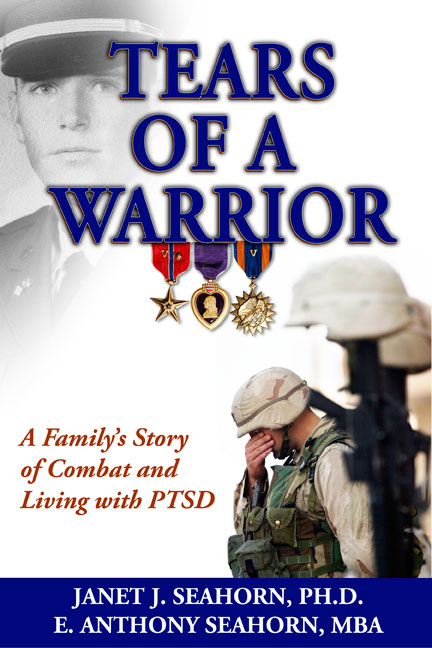
http://www.tearsofawarrior.com/
Mar
12
EXPLAINING PTSD IN A VIDEO
Filed Under Combat PTSD, PTSD, PTSD treatment, TBI & PTSD, Tears of a Warrior, Trauma, Veterans | Comments Off on EXPLAINING PTSD IN A VIDEO
by Janet J. Seahorn, Ph.D
For centuries societies have been trying to explain why warriors return from combat “stranger” than before they had left. In our book, Tears of a Warrior, we wrote about how the Roman’s sent their troops who had recently arrived back from battle to a tranquil farm away from the city to recoup from their emotional wounds.
It seems like every war had its own special term for such suffering; words such as combat fatigue, shell shock, warrior’s heart, etc. However, none of these really explained much about why the individual wasn’t able to put the war behind them and get on with their lives.
Joe Novak, another of our readers sent this YouTube video to Tony. For the person who has never experienced combat, this will be an informative eight minute clip which both “shows” and “tells” the effects of battle. For those who have been to hell and back, you may not need to view the film; you have already lived it. If you do, keep the last message in mind as you continue your healing journey back to your new normal.
http://www.greatamericans.com/video/Vietnam-Vets-and-PTSD;Veterans-Videos
Blessings and, once again, Thank You for Your Service.
Tony and Jan Seahorn
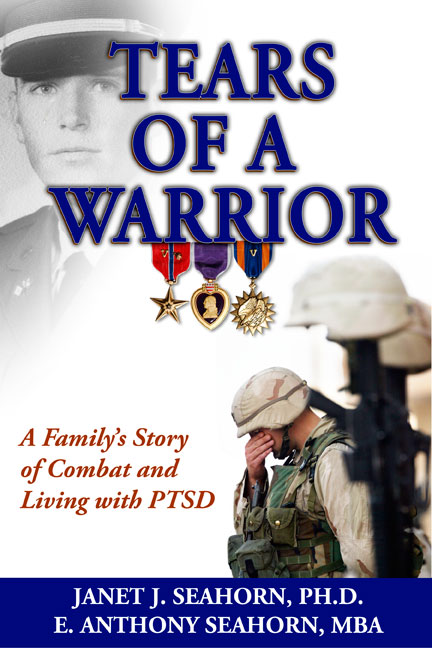
Both KINDLE & NOOK can be ordered directly from our website.
Feb
2
VETS, JOBS AND MISCONCEPTIONS
Filed Under Tears, Tears of a Warrior, Troops, Veterans, War | Comments Off on VETS, JOBS AND MISCONCEPTIONS
by Janet J. Seahorn, Ph.D

Recently, Tony and I visited with a group of veterans from the Military Order of Purple Heart. Attending were vets from WWII, Korea, Vietnam and the current conflicts. While discussing our book, Tears of a Warrior and the issues of PTSD, we got on the topic of how challenging it is for veterans returning from war to find a job. Only in recent times has the issue of work for veterans become clearer.
Many of us thought veterans who came home from serving in WWII were greeted with big parades and wonderful new career opportunities. For years I was under such an assumption. Then I talked with several WWII veterans and what they described was something much simpler. For most, once they returned home they did what historically other veterans had done before them… they went home, tried to find a suitable job and raise a family. Little was written or said about the struggle in finding employment or integrating back into civilian life. For many, there were no parades, no bands welcoming them home, only the test of getting on with life.
Eric Jensen explains in his book about his father, Forever and a Day: The World War II Odyssey of an American Family, how hard it was to find work after the war. As he wrote, many of the jobs were already filled by civilians who had those positions during the war. When the veterans returned there were not as many opportunities for employment as we first believed. Jensen wrote how frustrating it was for his father to have spent so many years away from his family only to return to another struggle – finding a job that would pay enough to support his young family.
Today, too many employers believe erroneously that vets returning from Iraq and Afghanistan may be suffering from PTSD or TBI and are reluctant to hire someone who may be emotionally compromised. We have written on several occasions how this is simply not the case for the majority of combat personnel. Military personnel have proven over and over again that they are bright, committed and competent employees. Given a task, they will make sure it gets completed in a satisfactory manner. They will show up daily, even when they are tired or under the weather. Veterans are some of the most proficient and capable members of an organization.

Part of the healing process of our soldiers, both young and old is to value their sacrifice for our country by honoring them with suitable jobs. One struggle we can help them avoid is a struggle to find work. As a country and as a community perhaps offering employment can be a step of vast significance.
In addition to mending them, “If we send them, let’s then employ them” when they return.

Jan
10
THE MAN I DIDN’T KNOW
Filed Under Combat PTSD, Family, PTSD, Tears of a Warrior, The Man I Didn't Know, Veterans, Vietnam Veterans, War | Comments Off on THE MAN I DIDN’T KNOW
by Janet J. Seahorn, Ph.D
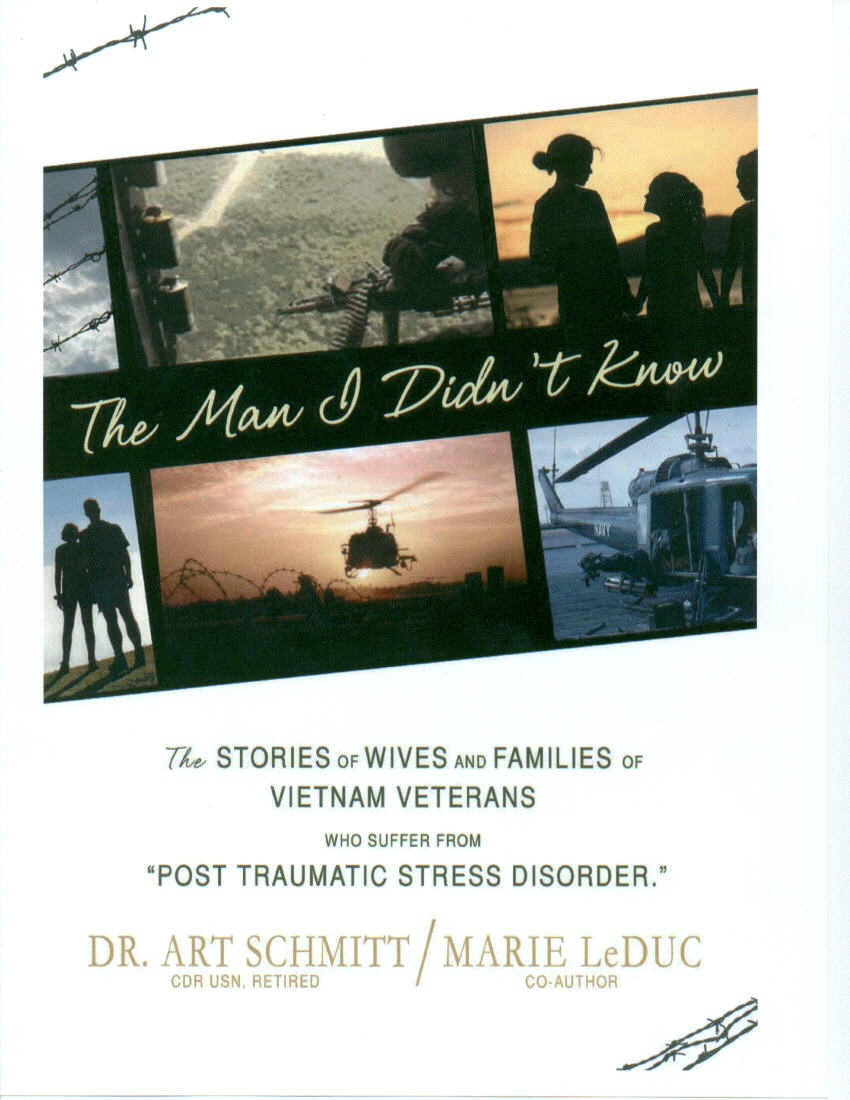
This is the title of a book sent to us by Marie Leduc, the wife of a Vietnam Veteran who co-wrote it with retired naval aviator, Art Schmitt, Ph.D. Later Art got his degree in psychology. The Man I Didn’t Know: The Stories of Wives and Families of Vietnam Veterans who suffer from “Post Traumatic Stress Disorder”, is a collection of stories and poems written from the perspective of those most directly impacted by combat.
The articles are heartrending and the poetry will literally place you in the hearts and souls of the writers. While reading through the many tales I found several statements pretty sobering and thought provoking. Some statements gave me an unusual viewpoint of war, especially the last few wars we have fought and left without a clear victory. I have included several small snippets of some of these in this blog.
- “The United States did not lose the war in Vietnam, the South Vietnamese did. The last American troops left Vietnam on March 29, 1973, (however, the last flight out wasn’t until 1975). We did not lose the war… we stopped fighting” (p. 16). Recently, December 15, 2011 we raised the last American flag as we leftIraq. I wondered if years down the road we will describe this last conflict in a similar manner.
- “There are two kinds of PTSD… acute, which is treatable, and Chronic, which is manageable”. More Vietnam veterans, per capita, suffer from chronic PTSD than from any other war. The reasons for this is unknown, but it may be that it was an unpopular war and the veterans were not welcomed home” (p. 16).
- In another article, To Answer Your Question, by Ed Ruminski, the veteran is trying to explain to his son what combat was like, how time stopped and actions were both quick and in slow motion. How he had to be “constantly watching, listening to my senses”. In the end he merely states, “They call it war, and to answer your question son, yes, I have killed somebody. What I was unaware of was how by that process I just described, I was also killing myself” (p.19). Sadly, many of our Iraq and Afghanistan troops are returning with parallel sentiments.
 These are just a few statements from the book. The various writings describe the wounds of the minds, how scary it can be for a family to negotiate the many behaviors and emotional ups and downs of their beloved warrior, how a mother must learn to cope with the death of her son while visiting the Vietnam Wall to stay connected, and how PTSD affects children when their under developed minds and bodies leave them vulnerable to actions which they may never fully understand. In the end, this last quote by Jacqueline McVicar (p. 85) really says it all.
“His fight was in Vietnam,
Ours is the Vietnam in him.”
Ordering information: ISBN: 1-4196-2452-0 www.booksurge.com 1-866-308-6235
Dec
27
The Way
Filed Under Combat PTSD, Dogs, Fishing Therapy, Healing Waters, PTSD treatment, Tears of a Warrior | Comments Off on The Way
by Janet J. Seahorn, Ph.D