BOOK PURCHASE: Discount (above) or PayPal (below)
Click "Buy Now" to continue to PayPal
Click to order eBook - Kindle

Click to order eBook - Nook

Nov
9
THERE WILL ALWAYS BE
Filed Under Family, Peace, Tears of a Warrior, Trauma, Wisdom | Comments Off on THERE WILL ALWAYS BE
by Janet J. Seahorn, Ph.D

It is hard to believe that another holiday season is upon us, beginning with Thanksgiving and ending with the celebration of a New Year. With this period comes the challenge of facing the days with too much to do or too much idle time, too many people to be around or too much loneliness, and the memories of past holidays spent in combat or loss. For some, these are anniversaries of death and destruction. They may not bring joy and goodwill, but sadness and loss.
So, I write today’s blog to remind myself and perhaps others confronted by the days ahead to not be afraid of the darkness. It is not about getting rid of the shadows but getting beyond them. Stepping into sunlight, even a small glint is enough to dispel some of our gloom. As human beings we were not meant to stay in sadness but to shine, in spite of our troubles and hurts. Hard to believe, but nonetheless true.
The only way I can ever get beyond the shadows is to look up; to search for the pure, the just, and the beautiful. To focus on what can be if I keep moving forward. I do not have to center my thoughts only on what has been lost, but what is waiting to be gained if only I believe. Believe in the goodness of others; they abundantly surround us waiting to enter our life. Believe in a more loving world even when the media fill the airways with ugliness. Believe that as we search for the decent we find it in the softness of a breeze, the melody of a song, or the laughter of a child.
A few months ago my sister gave me a CD by the Canadian Tenors. On the album is a lovely song with a chorus all of us can use at sometime in our lives:
There will always be a shining star;
There will always be the rising of the sea;
There will always be an angel watching over me…
And angels voices say to us, these things will never die.
Choose to believe the skies are filled with shining stars even if clouds conceal them. The seas and oceans rise and fall with the changing tides. Most comforting of all is choosing to believe that there will always be angels watching over us… and these things will never die. So if you wander into that dark place, remind yourself of those angels, the thousands of shining stars, and perhaps you will be the tender hand reaching out to hold another being in need of your light.
Nov
2
THE EYES OF TRAUMA
Filed Under Civilian life, Combat PTSD, Life, Tears of a Warrior, Trauma, War, Wisdom | Comments Off on THE EYES OF TRAUMA
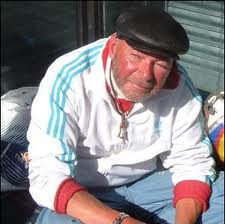
A face conceals many things through silent smiles and quiet words. Yet eyes speak silence louder, clearer than any verbal language. The mouth can easily fake joy, and talk can be nothing more than convincing noise. But the eyes, the eyes can’t fake unfelt laughter or peace. The eyes tell their own story. A story that sometimes screams of sadness; a story that carries the pain of guilt and desperation; a story burdened by trauma inflicted by war, abuse, or neglect.
Perhaps this is why few people are strong enough to stare into another’s eyes without looking away. When doing so we are really checking for evidence that what is said matches what is unsaid. Only eyes can confirm such a truth. We listen more fully, not just with our ears, but with our eyes. Deep listening is what many psychologists such as Daniel Siegel refer to as “feeling felt”. Feeling Felt tells the story teller that he/she matters. That his/her experiences are valued and honored.
Why would I write a blog about eyes? Simple, many, many beings are walking through our world with silent screams. No one seems to notice or take time to pay attention. Few things in life are harder for a human being to sustain than being invisible to others. Homeless people understand, abused children understand, and traumatized vets understand.
Next time you see someone whom you suspect may need to be seen, be brave enough and care enough to listen to what the eyes are saying. It is a humbling tribute that a person has placed his/her trust in your willingness to be with them, even for only a small amount of time.
Sep
28
SUICIDE: DID YOU KNOW?
Filed Under Combat PTSD, Life, PTSD treatment, Tears of a Warrior, Trauma, Treating PTSD, War | 1 Comment
by Janet J. Seahorn, Ph.D
Did you Know:
·
Suicide is one of the leading causes of death in America. Every year it takes more lives than auto accidents.
· Suicide impacts kids as young as five and as old as ninety-five.
· The rate of suicide in the armed forces continues to grow with each deployment.
· Current statistics show an active-duty suicide every 36 hours – 18 veterans a day dies by their own hand (Lily Casura, Napa Valley Register, 9/19/2010).
· Women vets are two – three times more likely to commit suicide than non-veteran women (American Psychiatric Association)
· Suicide is more than an emotional state; it is a physical condition as well.
· Depression is treatable… suicide is not —– the final step has already been taken.
Combat is an unhealthy enough challenge. Yet, when a veteran returns home, the struggle may be even worse. Worse because there are fewer people to talk to who understand what he/she has gone through. Worse because during combat one didn’t always have time to think about the horrors of war; now at home, there is often too much time to think. And worse, because depression of any kind is a hidden desperado that becomes a very real physical condition, few understand and address the issue.
In so many cultures, including American, we have been led to believe that depression is something that is strictly emotional. Something that we can easily get over if we just put our “minds” to it. It invades every cell of the body. It steals the good hormones such as serotonin, endorphins, dopamine… and replaces them with a whopping dose of cortisol – one of the stress hormones that cause fight, flight, or freeze. Unfortunately for many, the way one may must fight or fight depression is suicide.
One reason this issue is so important to me is it hits close to home. In the city of Fort Collins, Colorado, suicide has already been the cause of over 39 deaths this year – far more than those who die in traffic accidents. One of those statistics was a close friend of a student in my university class. Imagine sitting in class and getting a text message stating your close friend has taken her life. When I was teaching middle school many years ago, a wonderful young man decided to end his life before he ever had a chance to begin his life. His parents were certain their child’s death was an accident, even though evidence indicate the young man made three different attempts at ending his life before one finally worked.
It is important we all know more about this topic, Suicide. Like any enemy, the more we know about our opponent, the better we can fight the battle and win. So I’ll end with one of my favorite quotes by Emily Dickinson, “Not knowing when the dawn will come, I open every door.” Try to keep opening new doors; sunshine is waiting behind one of them. 
Sep
21
FAMILY STRENGTH
Filed Under Family, PTSD, Tears of a Warrior, Treating PTSD, Wisdom | Comments Off on FAMILY STRENGTH
by Janet J. Seahorn, Ph.D
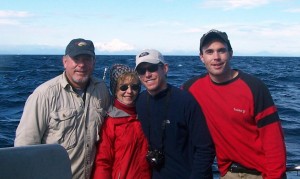
It is obvious that living with PTSD is a challenging journey. We hear so much about what doesn’t work, I wanted to take this time to talk about what does. The media seems ready to publicize the ugly side of trauma, yet it fails to show the other face of the family story – the good side. What those of us who have and are still learning from the PTSD experience, is the fact that the unpredictability of the memories and behaviors are what makes the struggle so darn difficult.
So what does work? 1). Listening. Gosh, this is something few people do very well, including those who don’t have to live with PTSD. 2). Sharing. Sharing what is needed for others to recognize where each member of the family stands. Sharing doesn’t mean spilling every tiny detail of your existence, only the things that are required for understanding. 3). Problem Solving. One person is rarely the only source of a family conflict. The biggest trick to effective problem solving is to spend 10% of time defining and discussing the problem and 90% of the time working it out. For many of us, we often do just the opposite. Last, and probably the most important, is the deep desire to get better and be better. No excuses. No blaming; just a lot of personal and joint effort.
If we pay close attention to what is working, as well as what isn’t, we may be able to replicate those positive moments. Focus on duplicating what we are doing right. Even if these strategies don’t work all the time, for most of the daily living together, it may be “good enough”. And right now, I’ll take that as personal success.
Sep
5
IF YOU’RE NOT OK, THEN WE’RE NOT OK
Filed Under Black Lions, Brain Injury, Combat PTSD, Family, Life, PTSD, PTSD treatment, Tears of a Warrior, Treating PTSD, War | Comments Off on IF YOU’RE NOT OK, THEN WE’RE NOT OK
by Janet J. Seahorn
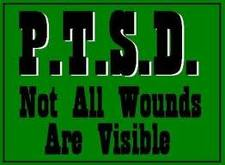
Every day there are more and more wounded victims of war. These are the spouses, the children, the parents, the sisters and brothers of the veteran… and the list grows. It is one reason that we continually urge those impacted by serving in a war zone to get help as soon as possible if they begin to feel the “fall out” effects of combat.
There are centuries of evidence that prove this point. When a person returns from a traumatic experience and normal life is no longer normal, those around will become part of the trauma. It is an obvious statement, yet, there are too many veterans and families that refuse to acknowledge and deal with the situation.
It is like having an elephant in the room that no one wants to recognize or admit is there. The unrealistic thinking goes something like this… “If I just ignore the large problem, it will eventually go away”. The only problem with the problem is that it does not go away, in fact, it often grows bigger and bigger. And it begins to become more active. Imagine having a raging elephant in the room charging around with its large tusk and huge trunk. Wow, and I haven’t even mentioned all the crap it leaves lying around. It feeds on everything in sight, so eventually your house is a mess and you don’t have a safe place to hide from the growing beast.
Human nature seeks coherence and peace, even in the most chaotic of times. It is always looking for that which is safe and enjoyable. It craves stability and excitement, joy and delight. When these are absent for long periods of time, it is easy for depression and hopelessness to set in. You see, if someone you deeply care about is not OK, then it is quite challenging for you to be OK. And if both of us are not OK, then WE, as a couple, a family, a relationship, are not OK! Herein lies the hard choice — you can either accept the “crap” and continue on the path you may currently be on, or you can make another choice. A choice that can lead to healing. A choice that may allow the relationship to be more positive and loving. A choice that begins to do something about THAT elephant in the room.
Either way, we all choose which way we will continue our journey. Whatever choice we make will not be an easy path. However, one definitely has more constructive possibilities than the other. We persistently mention that if children are involved, than getting the elephant out of the room is crucial to their well-being and healthy development. As adults, we make our own choices, but children are subject to the outcomes of our choices. More than likely, they don’t get to have a voice; they are the helpless victims of our selection, good and bad. Therefore, think deeply about what you are and are not doing. Your children’s lives depend on which options you make.
For some of us, we didn’t have the information about PTSD, TBIs (Traumatic Brain Injuries), and other impacts of war. We did the best we could; at least, we want to hope we did. New military personnel have better information. They can and must make better choices, if not for themselves, for their children and the future of our next generation. Healthy life truly depends on this choice.
Aug
11
STAYING OUT OF THE SAD SACK
Filed Under Combat PTSD, Family, Healing Waters, Peace, Pets, PTSD treatment, Tears of a Warrior, War | Comments Off on STAYING OUT OF THE SAD SACK
by Janet J. Seahorn
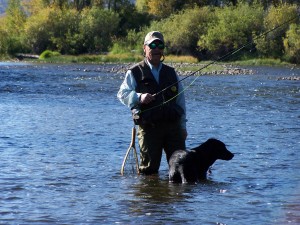
A few weeks ago we had the rare opportunity for my family to get together and spend some quality time floating, fishing, and just chilling out in Wyoming.
During one of our chats, my brother, a Vietnam Navy vet, started talking about how hard it is to stay out of the “Sad Sack”, especially when his PTSD starts rearing it’s nasty head.
Although it is not realistic to expect that any of us can totally avoid jumping into this particular “sack”, it is wise to try and do something more inspiring than hanging out in the land of gloom.
Go for a walk, listen to music, write, or take up pottery or painting… or fishing. Anything that can help take your mind off of the misery.
One Vietnam vet I recently heard from talked about some of the projects he has done and continues to do for the children in Vietnam.
So far he has built one kindergarden in honor of his best friend who was killed in combat forty years ago. He has another one in process, and has helped do the fund raising and building of a library to honor another high school classmate killed during the same conflict. By giving something positive back to the world, he declares, allows him to keep his ghosts in line. Gosh, organizing, fund raising, and constructing these amazing projects is a pretty impressive way to stay out of the Sad Sack.
I must admit that some of our sibling conversations made me go into the “Jovial, Laughing Sack” which seemed to annoy the others in the car just a much as if I were in the Sad Sack.
Seems like when only one person in the group finds a subject humorous, others give you that disgusting look that says “stuff” the mirth. Dang, now I couldn’t open my Sad Sack and couldn’t stay in my Laughing Sack, which, by the way, made me burst into even more hilarity
At any rate, the whole point of this message is that we live in and wear many sacks throughout our days. Some we consciously choose, a few tackle us when we least expect them, throwing our emotions into chaos. The challenge is to get out of the bad stuff as quickly as possible.
The lesson is to trust our faith and strength, realizing that just as the crappy stuff sometimes engulfs us, the wonderful, comical, and joyful is waiting for us to return to the good stuff. In a recent blog, Ancient Wisdom, we wrote about being strong.
So here it is, being strong will not prevent you from somersaulting into the Sad Sack, however, being strong will be the only thing that will get you out into something better.
You have the power and strength to reduce the size of your sacks, whichever ones you choose. Good Luck.
Jun
30
PTSD Series Discussion #5
Filed Under Brain Injury, Combat PTSD, PTSD, PTSD treatment, TBI & PTSD, Tears of a Warrior, Treating PTSD, War | Comments Off on PTSD Series Discussion #5
By Janet J. Seahorn
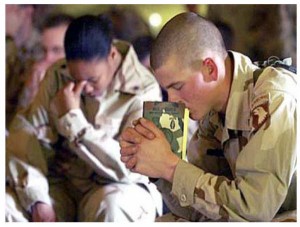
When is it time to seek outside help?
This is pretty easy to answer: You will know if it is time to seek outside help when the behavior of the serviceperson becomes abnormally un-normal. When life becomes a teeter-totter of ups and downs that can’t seem to be controlled no matter how hard you try. When your surroundings and relationships seem unstable and unsafe and you aren’t sure why, get help.
When my husband began experiencing PTSD, neither one of us had a clue what was going on at the time. There was no such thing as Post-Traumatic Stress. War was something that a person went to, came home from and tried to move on. It wasn’t discussed. It wasn’t thought about (or so we once thought and wanted to believe).
No one considered how the events of combat could impact an individual for the rest of his life. If you came home somewhat physically whole, that was a gift. You healed physically, and you lived as if all the horror from battle never happened. The past was the past and it should not impact one’s future. What an absurd assumption.
Now we understand that nothing in our past is ever fully in the past. The good and the difficult follow us wherever we go. We are part of our experiences. With understanding, courage, and information we may gain strength and wisdom to move forward. Getting outside help can guide us in forming the wisdom and understanding needed for healing.
What are some good resources for help with PTSD or TBI?
There are many resources available to our military service men and women. Check with your local Veteran’s Administration Center if you suspect you need support. You may need to be referred to a Veteran Hospital for further testing and diagnosis, especially if you suspect a traumatic brain injury. Every state has several local centers that have been established to help veterans find the appropriate placement and support needed to get the services they may require. (VA Centers are listed in our book)
Don’t stop at NO if you are convinced you have something wrong that necessitates some form of treatment. Sometimes all you need is that one special person who can take your situation seriously enough to get help. Our family personally saw this happen with my brother. He was extremely wary of anyone associated with the government. As a Vietnam vet, his mistrust of a broken, ineffective system made him reluctant to seek help from a military or veteran organization of any kind. Once he decided to seek services he ran into several brick walls. Yet, he kept trying, until he finally found a former army sergeant who took his situation seriously and made things happen.
It only took one person to make a difference. Don’t’ give up or give in to frustration. Keep going. Help is available, but sometimes you may have to fight for it just like you did in battle. If you did it then, you can do it now.
In ending, we want to thank you and your loved ones for your service and sacrifice. You have made a difference that few will understand, or perhaps fully appreciate. Nevertheless, please recognize the depth of your courage, strength and warrior spirit. These are the attributes that sustained you through combat, and now they will do so again in moving you towards healing and a better life.
Jun
24
Healing Waters & Wounded Warriors
Filed Under Healing Waters, Tears of a Warrior, Trauma, Treating PTSD, War | 1 Comment
 by Janet J. Seahorn
How do we mend a wounded body or soul? How do we take a step forward in healing a spirit that has been battered by the trauma of battle? One possibility is to introduce the wounded warrior to a place of cooling waters, a place where fish are abundant and one can float through the waters which hum a soothing lullaby of serenity. Project Healing Waters is a volunteer organization that is dedicated to supporting the mending process of military personnel and veterans who have been impacted by the effects of combat. And it uses waters and fly fishing to achieve its mission.
The idea originated when its founder, Ed Nicholson, a veteran of previous war, was himself being treated at Walter Reed Medical Center in Washington D.C. when he noticed a number of young warriors sitting idly in the waiting room. Ed decided to invite several to go fishing with him. On that first excursion, he discovered how this simple fishing experience made a huge difference both physically and emotionally with the young vets. Where eyes were once vacant, there was now a light of excitement; where physical energy was almost stagnate, a resurgence of vigor returned; and where a life seemed consumed by pain and hopelessness, Mother Nature breathed her message of rebirth and Trust into the mind, heart, body, and soul of the wounded warrior.
Ironically, the Healing Waters Foundation has found that the greatest challenge is getting Wounded Warriors to the program. Recruitment is a huge obstacle, partly because of the physical and emotional needs of the individuals, and partly because of the legal ramifications of the vet centers/hospital treating the individuals. Gosh, I never imagined the number of logistical barriers faced by organizations wanting to help make a difference.
Project Healing Waters tries to work through a VA therapist to identify prospective participants. By having a solid system in place, both the support organization and the VA centers can offer a clearer, more holistic approach to healing. The intervention received by the vet can then be measured and assessed as to what works best and why. This knowledge can then be shared with other VA centers and hospitals across the United States.
Ancient cultures have long understood that wounds of the body and soul need a holistic approach for healing to occur. Medications, cognitive therapies, surgeries simply aren’t enough. Where medications have some difficult side effects, nature offers only blessings. Where daily life often brings disorder, there is an order in nature – a way in which all things seem divinely connected from a single rain drop to a flowering mountain meadow. Where days feel misaligned, nature realigns the soul and spirit, letting us knows that all is as it should be. And where our day- by-day activities may seem bounded by the constraints of “to do lists”, nature chants a song of freedom, encouraging us to spread our wings and soar – even if these wings feel shattered.
So, if you are a disabled vet, knock down the door of your local VA center or hospital and request that your medical personnel get you aligned with a volunteer from Healing Waters. This can also be a breathtaking opportunity for you and your family.
Healing Waters volunteers serve as mentors and companions to our country’s wounded warriors. Their mission is uncomplicated – it is merely about healing and mending minds, bodies, and spirits – one unhurried cast at a time – one soothing river somewhere in America. Casting, Healing. Casting, Healing. Casting, Healing, and the wounds begin to slowly mend.
HEALING WATERS
My soul was battered by combat’s horrors,
So I went to the water to heal.
Wounds covered by flesh with war torn scars,
I went to the water to heal.
My heart was broken unable to feel,
I went to the water to heal.
And the water murmured softly–
Be at peace my precious son
Your soul is safe,
Your battles are done.
My waters shall cool and soothe your weary heart,
You came to me
Your healing can now start.
Not knowing where to turn for comfort or for calm,
I went to the water to heal.
The deafening clatter of ghosts from the past,
I went to the water to heal.
The strain of the city made my sanity reel,
I went to the water to heal.
And the water murmured softly
Sit beside me and be still,
Listen to my tranquil song
Let your soul be filled.
My waters shall comfort your torn and tattered soul.
You came to me
I will purge you of your foes.
For sacred, healing waters
are not new to any man,
They’ve been around a long time
Lapping shores of golden sand.
Silently restoring with their tender, gentle hands
A Life to kinder being
Healing water shall command.
by Janet J. Seahorn
Mar
24
SNOTTY FISH AND PTSD
Filed Under Life, Love, PTSD, Trauma, War | Comments Off on SNOTTY FISH AND PTSD
by Janet J. Seahorn
 This weekend I heard an experienced angler talk about the joys of being in a stream or lake fishing for Snotty Fish. Snotty Fish, he thoughtfully explained, were those fish that were not easy to catch. They were fish that could not be tricked by some ordinary fly or enticing lure. More than likely, such fish had, in some earlier time, been caught before and managed to escape through sheer luck, tenacity, or down right determination. After going through such a traumatic encounter, they were more cautious than most of their finned friends. They understood the consequences of impulsively taking the enticing lure. Therefore, the fisherman who caught (and released) such a Snotty Fish had to be incredibly patient, knowledgeable, and persistent. This particular angler made it clear that catching Snotty Fish was the best and most rewarding way to angle.
Listening to this person talk, I began to comparing how similar Snotty Fish were to veterans who are living with Post-Traumatic Stress. Many of our troops have experienced the traumas of combat. Men and women who have seen and participated in some of humanities worst deeds; deeds that stay etched on the mind and heart. Vets, who when they return to the mainstreams of society, may be unable to trust others, their governments, and even themselves. Yep, Snotty Vets!
Snotty Vets, like Snotty Fish, are often hard to play out. They have experienced lessons in life that few of their fellow countrymen have ever imagined. Such knowledge often makes them wary of their surroundings, including trusting in their own abilities and worthiness. For family and friends, this knowledge can make these Snotty Vets difficult to live with and understand.
Yet, here is the beauty of being in streams with Snotty Vets—they are worth the time and effort to catch and reel back to wellbeing. Health care professionals recognize this fact. Families, friends and communities who walk the path through appropriate support, timely information and love come to empathize with the journey and value the internal strength, courage, and effort that each of them must live out in order to heal.
So you see, Snotty Vets like Snotty Fish are well worth such effort. Simply swimming in their waters help us have greater gratitude for their sacrifice.
Here’s a toast to all of you Snotty Vets, and to all the spouses, children, and siblings of Snotty Vets: “May your new streams be filled with an abundance of peace, joy, and good vigor. May your days bring you fulfillment, and your nights quiet rest. And may you continue to embrace your Snotty strength and leave behind the sorrows of the battlefield. For you are our precious Snotty Vets. We love you. We honor you. And, most of all, we need you to become whole again.”
Mar
9
 by Janet J. Seahorn
Some days life is a real challenge. It tests us in many ways. Ways to be smarter. Ways to be braver. Ways to be more thoughtful. Ways to be kinder and more compassionate. And some days, ways to just keep getting up every morning, breathing through each minute and making it through some dark and lonely nights. Living with Post-Traumatic Stress compounds all of these “tests”. At times it may even seem that the journey is too long or too brutal; that the suffering is unending and the battle unachievable. It is during such times that we must remember we are not alone in our ordeals. Reminding that someone, something (for me it is my faith) is walking beside us telling us quietly that we will be OK. Urging us, “Don’t Quit”. We do not know what tomorrow may bring. But if we Don’t Quit, I do believe in the appearance of a brighter, happier day. Believe you have what it takes to pass any test. And whatever comes your way —Don’t Quit!
Don’t Quit |
|
|
Anonymous |
|
|
|
|
|