BOOK PURCHASE: Discount (above) or PayPal (below)
Click "Buy Now" to continue to PayPal
Click to order eBook - Kindle

Click to order eBook - Nook

Jun
6
I AM
Filed Under Civilian life, Combat PTSD, Life, Love, Peace, PTSD, Tears of a Warrior, Treating PTSD, Veterans | Comments Off on I AM
by Janet J. Seahorn, Ph.D
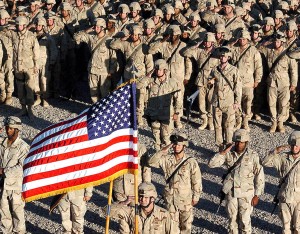
For many of our military men and women who return from combat there is a burning question; a question that asks, “Who am I?” Who am I now that I have seen so much, done so much, and heard the despair of so many? For some there may be a feeling of unworthiness, a gnawing numbness of pain. They seek answers that seem to elude them; answers hidden somewhere between the battle fields and the present.
Every person wants to be validated in the world: to be seen, to be heard, to be felt. Returning from war often leaves a person with a sense of invisibility. A feeling that adds to the question, Who am I … this other person who wanders a world that once was so familiar now feels like a drifter in a land that may not seem recognizable.
Know this one simple truth, You are worthy of love. You are worthy of goodness. You are worthy of a life of joy and personal fulfillment. The trick is not that others view you as worthy. You must believe this for yourself. “You are responsible for your life”. And only You can create and live such a life. You alone must believe that you are worthy to live a good life and a life of meaning.
Combat can take one’s sense of self, but it does not take away one’s need to be a part of something, some mission, some worthy cause. The heartbreaking reality for many veterans is returning from battle with a frame of mind of being untrained to live in civilian society. You will need to work hard to find your path in this world after combat. No one can do this for you. It is a journey each individual will need to travel and seek out.
Some doubt they are up to the challenge. This is purely self deception. If you could be trained to perform all of the incredible feats of a skilled warrior, you certainly have the strength, intelligence and willpower to succeed in becoming your very best “I AM”. The gift has always been yours. It was bestowed on you at birth. The outside world may work hard to convince you otherwise. Some days it may be tempting to give up the search. But carry on. In your hands lies the power to choose.
Choose to accept your very best I AM.
May
28
THANK YOU FOR SERVING
Filed Under American Patriotism, Dogs, Events, Memorial Day, PTSD, PTSD treatment, Tears of a Warrior, Veterans, War, Wisdom | Comments Off on THANK YOU FOR SERVING
by Janet J. Seahorn, Ph.D

Such a simple phrase stated on too few occasions by too few individuals.
During our travels we get opportunities to visit some special places that offer discounts or free admission to veterans. Most of the time people are pretty gracious. Then there are those situations where the “keeper of the gate” are, in my opinion, just plain ignorant on how to treat veterans.
We have heard stories over and over again on this topic. Some are quite sad, while others are pretty darn funny. On one recent occasion we were visiting a National Park. Tony was asked to show the gatekeeper his driver’s license along with other proof of identity. He had already given her his National Park’s Access Pass for Disabled Vets along with his VA Identification card with picture and signature. Animals with embedded ID’s aren’t scrutinized as rigidly. After all the ID confirmations, she could clearly see he had more than provided adequate identification, yet she still insisted on seeing his driver’s license and two other forms of identification with his signature on it.

This scenario that was absurdly comical. Yet, another part was perfectly annoying. After we jumped through the “gate keeper’s” hoops, we moved forward. Only later after driving several miles down the road did I think of the perfect reply. The next time (and there will be a next time) we’re asked to wiggle through silly bureaucratic hoops, when they are finished with their requests, I am going to respond kindly with the following:

You really meant to say: “Welcome Home and Thank You for Your Service.”
I must admit it will be a bit amusing to see the reaction.
Memorial Day is a time to give recognition and say a prayer of gratitude for all who have paid the supreme sacrifice for serving their country. We should never forget.
 All our military personnel and veterans are our quiet role models and noble heroes.
These deserve our respect.
FREEDOM IS NOT FREE.
May
19
TOUCHED BY COURAGE
Filed Under Brain Injury, Combat PTSD, Events, Family, Giving, Life, Love, PTSD, TBI & PTSD, Tears of a Warrior, Trauma, Veterans, Wisdom | Comments Off on TOUCHED BY COURAGE
by Janet J. Seahorn, Ph.D

A few weeks ago, Tony and I spent several days in the Grand Strand area of Myrtle Beach, South Carolina.
It was Military Appreciation Week.
Due to the special invitation of Retired Army Officer Sinclair Swan, we had the privilege of working with two local groups of military veterans, their spouses and family members.
During the day we met with several group members and their spouses. It was an amazing opportunity to not just speak to the individuals in attendance, but to listen and hear their stories as well. Each account reminded us of the enormous amount of courage it takes to get up each day, live it as best one can, and give back to others.
Two of the veterans have adult children who experienced traumatic car accidents which left them with severe head injuries. These vets are now the primary care givers. Not only have they endured their own trauma; now they must bear the suffering of their children. Several are challenged by serious health issues for them and/or their spouses.
Yet, they continue with great effort and fortitude to move forward. It is a humbling gift to have others shares their trauma and heartbreaks.
Contrary to some public perspective, most of these vets have lived and are living successful and productive lives. In spite of their demons, they have deliberately chosen to not let the past destroy the future. They have elected to make a difference for themselves, their families, their communities. Sinclair Swan meets every Saturday with vets who need help in filling out government forms to obtain services. Each has made significant contributions to serving others.
One individual wrote a special poem many years ago. Upon returning from Vietnam he described how he became homeless, sleeping in parks, and getting his “fixes” when needed. Then, one day, another homeless friend suggested they go to a church soup kitchen for a meal. It was there that a miracle occurred and his life changed. He got his faith back, his spirit, and eventually his life. At that time he wrote a poem which he has allowed us to share with you.
A Poem
By William Huffaker
If I only had one wish to make,
but that wish would surely come true.
I’d wish that I would be given the light
to turn the darkest sky into blue.
Now to you this may sound
like my mythical dreams
have blurred my vision
so that this only seems
to be an illusion
of hopeful abound,
and that my wish
I’ve not really found.
But I’ve found it I tell you.
As I’ve sought it in truth.
And I know now this answers’
been here since my youth.
But I just couldn’t see
through the clouds in my mind.
Through delusions of grandeur
I just couldn’t find.
This fabulous dream
that just had to be,
waiting and knowing,
someday that I’d see.
And even though skies
still sometimes turn black.
And visions of grandeur
still sometimes come back.
I know that there’s light
in the darkest of night.
And the tenderest loves
never far from my sight.
And now that my dream
has become something true.
If I had one more wish,
I would wish it for you.
Apr
24
LIVING INSIDE OURSELVES
Filed Under Combat PTSD, Life, Peace, PTSD, Tears of a Warrior, Trauma, Treating PTSD, Veterans | Comments Off on LIVING INSIDE OURSELVES
by Janet J. Seahorn, Ph.D

We reside within our own wondrous environment, within ourselves, and wander about the internal hills and valleys everyday. If we are lucky and have lived a full life, the landscape of our inner country is filled with incredible diversity.
Mountains and valleys only have depth based on the extent of our experiences. The brilliant hues of colors cannot be painted on an empty canvas. Nope, such vividness is achieved through a great many life events: joy, grief, humility, arrogance, chaos, serenity… all mixed throughout the years.
Yet, through all our trials and triumphs, with a bit of luck, our inner artist refuses to put down the paintbrush. Each day offers elements to add to the internal country; an element that increases the vastness of the spirit. Within ourselves we wander with purpose and courage. Trauma takes a toll which only hope can overcome.
We become our best selves not because we lived a safe, comfortable life, but because we have fully lived. There is a huge difference between a life of ease and one of worth. The first took little effort; the latter required a deep sense of duty, sacrifice, relentless perseverance, and sometimes tears. All of these make a life of worth a special gift to the world. A gift that lives far beyond our short existence.
Which life have your lived so far. Which life are you living now? What would your canvas look like? Certainly, like any remarkable work of art, it would have its dark contrasts; yet, I hope it would also contain sweeps of light, touches of brilliant colors, and areas of tender hues which embrace a sense of peace and serenity.
Mar
17
AGING WITH TRAUMA
Filed Under Aging, Healing Waters, Life, PTSD, Tears of a Warrior, Trauma | Comments Off on AGING WITH TRAUMA
by Janet J. Seahorn, Ph.D

Yikes! When we read about the Golden Years they don’t always seem so wonderful. Most of you have read that old saying, “aging is not for sissies”, and that cliché was written for the average person who has a lighter set of luggage to carry. For veterans and their families, many don’t carry bags of crap; they have a huge trunk of it, and it doesn’t seem to get lighter with time.
For almost two years I have resisted writing this particular blog. Why? Because it scares the #### out of me. I admit it; I am a sissy for growing old. Not because I am afraid of needing an expensive face lift, or having to wear fancy old people diapers. OK, those things do concern me, but they aren’t nearly as distressing as the more intrusive symptoms of age. Now, add the effects of living a lifetime suffering with PTSD or living with someone with PTSD and the image gets uglier. Even strong, rose colored glasses haven’t been able to calm my apprehension. Therefore, it is time I write what I know, and have known for a very long time. Aging with trauma is not for fragile minds or bodies.
Here are some facts that have been around for a long time regarding aging and PTSD.
- People with type 2 diabetes who also suffer with PTSD face a 36% higher risk of going blind or developing kidney disease (American Diabetes Association).
- Heart problems and high blood pressure are more common — DUH!
- Mood disorders such as depression are more prevalent if one has not sought help. Double Duh!
- Depression increases the risk of heart attack by 25% (VFW, March 2011)
- Alzheimer and/or dementia increases.
We have long known that PTSD affects the body and the brain, so it is not a big aha that any of these conditions gets worse with age since the body’s immune system is weakened and not as robust as when we are young. In giving all of these amusing statistics, I can’t stop without putting in some actions that will prolong the drought of age. Again, we all know these but sometimes do little to practice what know. Call it lack of well-power or procrastination, the two twins of sin.
- 1. Exercise everyday. This promotes blood flow to the brain which is pretty darn important for keeping the feeble thinking and crippled rascals at bay. It also increases muscle mass and strengthens bones keeping us from being in a wheel-chair instead of on a ski lift.
- 2. Watch what you eat… “What’s on your plate determines your fate.” Damn, I love a warm, gooey chocolate donut, a double scoop of ice cream, or a basket of salty French fires, and they seem to love me, my thighs and clotted arteries just as much.
- 3. Drink lots of water. It is the best purifier of the body and removes all that excess material, especially sodium that helps lower heart pressure.
- 4. Practice deep breathing and meditation. Lots of research shows how these actions promote a sense of well-being… only problem is my lack of concentration. Practice makes this better and really does improve the entire mind/body.
- 5. Add more fiber to your diet. J I don’t think I need to go into detail with this one, but fiber literally will help lighten our trunks of crap.
- 6. Get plenty of sleep. Nothing can take the place of rest for promoting good health.
- 7. At least I can still have my lattes and tea… at least four hours before bedtime.
- 8. Oh, and don’t forget laughter, it is the best of all exercises for our mind, our bodies, and our hearts.
Aging is inevitable, but aging with grace and good health will take courage, will-power, and making good personal choices.
Feb
22
Community Event
Filed Under American Patriotism, Human Rights, PTSD treatment, Tears of a Warrior, War | Comments Off on Community Event
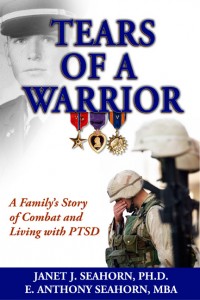
Thought you may be interested to know the Richfield, MN Human Rights Commission is using our book for a community event.
We are very please to learn that “Tears of a Warrior” is generating interest from the general public!
Click on website:
http://www.startribune.com/local/west/116500038.html
Feb
15
WICKED PROBLEMS
Filed Under Combat PTSD, PTSD, PTSD treatment, Tears of a Warrior, Trauma, Treating PTSD, War | Comments Off on WICKED PROBLEMS
by Janet J. Seahorn, Ph.D
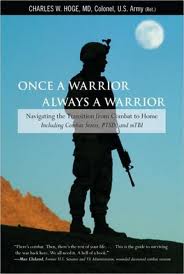
No doubt about it, PTSD is a very Wicked Problem. Wicked Problems, by definition, are those dilemmas that cannot be solved easily by using a typical approach. Anyone living with traumatic stress, especially those pressures caused by combat, will attest to the challenges of trying to solve the predicament of moving through his/her life carrying the memories and phantoms of war. If the solution was easy, it would have been found centuries ago. Yet, here we are today, in 2011, and the Wicked Problem still exists.
One of the Wicked Problems of trauma is surviving the depression that can be a part of the conflict. How does a person live with long-term depression that often becomes the new normal after battle? Constance Gibbons, one of our readers, wrote last week and shared how depression has been the new normal for many vets including her husband. After years of having it a part of their daily being, it becomes their after war identity. She stated: Another interesting aspect from those of us observers – spouses, et al – was that universally we noted the levels of sort of a baseline enthusiasm, whereas, the vet thought they were quite fine.
She explained further: As you continue to think of ‘depression’ as it may be portrayed by the vet, maybe think of a sense of resolution, unknowing acceptance, somewhere in a lower zonal level (between overconfidence and fear) from the years of living on the cusp of life and death, at a level of continuing risk so great that without the impact of the continuing penetration, after, into youthful vulnerability, it appears to those of us in observation to be baseline depression…where it is not to the vet; just an absence of heightened stimulation. Wow, now how would anyone solve such a Problem?
Veterans carry many Wicked Problems – ghosts of death and shocks of battle, memories that make if difficult to stay grounded in every day activities, and struggles to avoid the sleepless nights where staying awake is one way to keep the dreams of foreign battles from returning. New therapies and medications have helped lower the impact of PTSD but it has not solved the Problem. I read many blogs and articles relating combat PTSD to the trauma that the average person might experience. Things such as car accidents, rape, assault… all which are terrible and difficult to cope. Yet, these are hard to compare to combat where trauma occurs every day, often numerous times in a day. One of the biggest differences is besides being the prey, in combat you must also become the predator. Instead of being involved in one brutal injury or death, you may experience many.
Fighting the Wicked Problems of war takes work. It requires listening to your gut feelings as well as how others around you perceive your behaviors. The good fight involves muffling the loud voices in the head long enough to examine realistic solutions. Perhaps there will be no absolute solution to PTSD, but every day there are warriors who conquer their demons and live full and meaningful lives. Wicked Problem you may remain, but you will not take more of a warrior’s life than you already stole. You will not win this internal war, even if you succeed in taking an emotional battle now and then. You see, Wicked PTSD Problem, in spite of your persistent, you are no match for the courage and willpower of a WARRIOR.
Feb
2
A HUMBLED JOY
Filed Under American Patriotism, Civilian life, Combat PTSD, Family, Life, Love, PTSD treatment, Tears of a Warrior, Treating PTSD, War | Comments Off on A HUMBLED JOY
by Janet J. Seahorn, Ph.D
They stood before us, this beautiful, young couple. He had just returned home from a tour in Afghanistan, his second time away. They had many things they could have done that would have been much more fun than taking time to visit with us.
She was a student in my fall semester course at the University. At the beginning of the new semester she let me know her husband would be returning home soon and she wanted Tony and me to meet him. Just the request was a humbled joy. Actually meeting them on that cool winter day even meant more.
During our short time together, we did not talk much about his experiences at war except to listen to a few short phrases indicating he had been in some difficult situations.
I didn’t mention that his wife had to take an “Incomplete” for the college course because she became seriously ill and spent several days in the hospital. Somehow, all of this was now unimportant. The only thing we noticed was how the two people standing before us just couldn’t stop smiling and giggling continually as they held hands, grateful to finally be together.
My goodness, this was truly the picture of humbled joy.
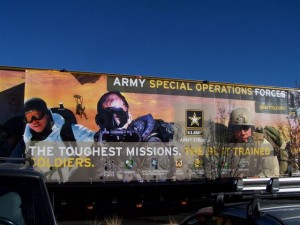
That same day we spoke with an army Special Forces warrant officer who was helping to show students on campus the various skills and equipment used in the military. The young man explained that he had been in the army for sixteen years, joining-up right after high school. Honestly, he didn’t look like he was that old; he smiled widely when I shared my observation with him.
He talked about how joining the military at age seventeen was the best thing he has ever done. The army, he noted, gave him direction, guidance, and supported his development as a confident adult. The interesting detail about our conversation was how much I learned in a short time about his confidence as career military person.
At the beginning of our chat I asked how many times he had been overseas; five – six times if you counted a stint in Romania. The duration of each tour was between three and eight months depending on the mission. During several of his assignments he experienced the reality of war, including several casualties within his unit.
Yet, in spite of the stress, he seemed to be coping with the emotional and physical side effects of combat pretty well. It was challenging, he noted, to reintegrate into “normal” life on each return home, but the army gave him plenty of support and time to decompress.
He pointed out that on several occasions he was given a lengthy mental survey of over 115 items which sometimes highlighted his PTSD tendencies. Nevertheless, because he was career army, his adjustment process appeared to be faster and more comprehensive than veterans who left the service shortly after returning from battle. There does seem to be some significant benefits for the men/women who are in the military long term.
Perhaps being in a community of individuals who have experienced similar battle conditions helps the healing and understanding process. Being around other soldiers who can identify with the pain of combat; others who quietly appreciate the sacrifice of serving our country may lessen the feelings of emotional trauma of being alone in a world where most people haven’t experienced war. This, by itself, would be an immense relief because one wouldn’t have to pretend everything is OK when it isn’t. You wouldn’t have to go through each day feeling lost and alone because there would be a band of brothers surrounding you with knowledgeable support. At any rate, this young soldier certainly gave me some things to think about.
Humbled Joy, invisible, yet real. Thank you.
Jan
26
HIDDEN IN PLAIN SIGHT
Filed Under Combat PTSD, Life, Peace, PTSD, TBI & PTSD, Tears of a Warrior, Trauma, War, Wisdom | Comments Off on HIDDEN IN PLAIN SIGHT
by Janet J. Seahorn, Ph.D
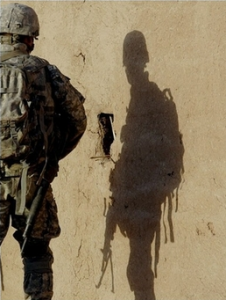
There is a phrase that one hears every now and then, Hidden in Plain Sight. Four simple words that eloquently reveal the complexity of the impact of trauma on one’s mind, heart, and soul. We see the person; we look at the eyes, the body language, the being’s form. The suffering is present in plain sight for all to witness. Yet, few do, lacking the keen observational heart skills required to notice anguish.
There are days I wish I didn’t see it – the faces of children battered by abuse and neglect; the adolescent’s depressive absorption into the ugly world of alcohol and drugs, and the veiled, but ever present ghosts of veterans, young and old carrying their memories of war. They haunt me as the world moves around their pain because it is hidden in plain sight.
Much like ‘Don’t Ask, Don’t Tell’, we are a nation that prefers to maintain our equilibrium at all cost. We tend to be uncomfortable with sorrow even when it stands knocking at our front door asking only for recognition and a bit of compassion.
We say we are a nation of empathy, yet often dismiss the humanity that exists in every person, especially those with whom we don’t agree. We argue we are intelligent, proficient thinkers, yet fight rigorously to disqualify any information that does not align with our personal paradigms/beliefs, whether true or misleading, without accurate evidence or data.
The answers to our current and future problems are available, but for too many they are hidden in plain sight. It will take incredible courage to look into our own minds and hearts searching for what is right and true. It will take courage and honest self-reflection to heal the hidden wounds of the wounded, but it can be done. What lies before us does not need to consume us with fear or apprehension. When confronted, trauma and pain can be overcome and no longer hidden or carried alone.
Light and sunshine are incredible healers.
Dec
9
DO YOU SEE WHAT I SEE
Filed Under Christmas, Combat PTSD, Life, Love, Peace, Tears of a Warrior | Comments Off on DO YOU SEE WHAT I SEE
by Janet J. Seahorn

A favorite Christmas carol asks the questions, “Do You See What I See”? “Do you hear what I hear?” “Do you know what I know?” During this holiday season, where many do not feel so holy; where many do not hear the sounds of joy that carols bring and angels sing; where many have yet to believe that good still exists, perhaps there is a message of gentleness if we are strong enough to trust.
Yes, I realize I am an optimist. Truly, it is one of my best qualities, besides a distorted sense of humor. There would be no “today” for me if these gifts were not part of my being. I am pretty certain I would have given up a long time ago for that choice certainly seemed easier. Yet, I’ve always known giving up wasn’t an option or a model I wanted to give others, especially my sons.
So, what do you see? In this challenging world of war, political disgust, and self-centeredness there are abundant examples of crap. But look around. Beauty is, also, everywhere – in the face of an innocent child, in the brilliance of holiday lights; in the fresh whiteness of snow… it exists if we look. On my refrigerator I have a post-it-note that says, “Focus on the possibilities, not the limitations”. It is life-saving advice.
Next, what do you hear? Undoubtedly I hear the weeping of those in pain both physical and mental. Those who have experienced inconceivable loss. Those who live with the memories of combat past and present. Those who are challenged by sickness. Physical aches are difficult, but emotional wounds are far more exhausting, for emotional pains are the ones others cannot see or hear. These are the silent screams of the soul, and they demand a great deal more stamina. Often these cries seem to overpower the humanity of our being. Such times will demand we listen for what is decent and soothing; a breeze rustling in the leafless trees, a favorite song, a small child giggling over a ringing silver bell, or the quiet gaze of love that says more loudly than any words… we are cared for more than we can imagine.
What do you believe? Do you believe in the seen or what is unseen? Believing is a choice. As a scientist I rely on hard, quantifiable data to answer research questions. However, the world’s most noteworthy gifts cannot be counted or even proven. Gifts such as goodness, love, and miracles are beyond the “proofs” of men, yet they exist. One cannot measure honesty; he cannot measure wonder, nor is he capable of determining the reality of love. Yet, these exist. These are the staples of our days. They allow us to continue living in spite of our frustrations and grief. They are more powerful than any pill, any counseling program, or any doubts.
As you move through your sometimes difficult days, focus on the good things you see; listen for what soothes your heart; believe in your personal power and the vast energies of good which are still present in our lives. And believe, “what is needed is on its way, right now”!
Look, listen, Believe.